There’s a special kind of satisfaction in realizing dinner is faster to make than it would be to order, and this 15-minute shrimp seafood fried rice delivers exactly that. Golden fried rice studded with tender shrimp, a soft scramble of egg, and a savory soy-sesame flavor comes together in one pan, using shrimp straight from the freezer and rice you probably already have on hand.
I started leaning on this recipe on nights when the fridge felt empty but the freezer had a bag of shrimp and the rice cooker had leftovers from a night or two before. It turns out that combination is basically the perfect shortcut dinner — no thawing, no marinating, no complicated technique, just a hot pan and about fifteen minutes of your attention.
The real trick to great fried rice, especially when you’re working from frozen shrimp, is managing moisture. Frozen seafood releases water as it cooks, and rice that’s too fresh and soft can turn the whole dish mushy instead of that satisfying, slightly crisp texture you get at a good takeout spot. We’ll cover exactly how to avoid both of those pitfalls below.
Why You’ll Love This Recipe
- Genuinely 15 minutes — from frozen shrimp and fridge-cold rice to dinner on the table.
- One pan, minimal cleanup — everything cooks in a single skillet or wok.
- Great way to use leftovers — a perfect home for day-old rice and odds-and-ends vegetables.
- Customizable — swap in whatever protein or vegetables you have on hand.
- Kid-friendly flavor — savory and mild, easy to dial the seasoning up or down.
Ingredient Notes
The core of this dish is simple: cold, cooked rice, frozen shrimp (or a mixed frozen seafood blend), eggs, frozen peas and carrots, garlic, green onion, soy sauce, and a touch of sesame oil. Day-old rice that’s been refrigerated is genuinely the secret weapon here — the grains firm up and separate as they cool, which is exactly what keeps fried rice from turning into a sticky clump in the pan. If you only have freshly cooked rice, spreading it on a baking sheet to cool and dry out for 10–15 minutes helps mimic that day-old texture.
For the seafood, a bag of frozen shrimp works beautifully on its own, or you can use a frozen “seafood mix” that includes shrimp, imitation crab, or small pieces of squid for a more varied bite. Either option can go straight into the pan frozen; there’s no need to thaw ahead of time for a dish that’s already moving quickly on the stove.
For the vegetables, a frozen peas-and-carrots blend is the classic choice because it’s inexpensive, always on hand, and needs no prep, but diced frozen bell peppers or corn work well too. If you want a more traditional flavor base, look for toasted sesame oil rather than the plain, light-colored variety — it has a much more pronounced, nutty aroma and only a small amount is needed to make a real difference.
A quality tip that changes the whole dish: use a splash more oil than feels necessary and get the pan properly hot before adding the rice — a too-cool pan is the number one reason homemade fried rice turns soft and clumpy instead of having those lightly crisp edges.
[Recipe card goes here]
Step-by-Step Instructions
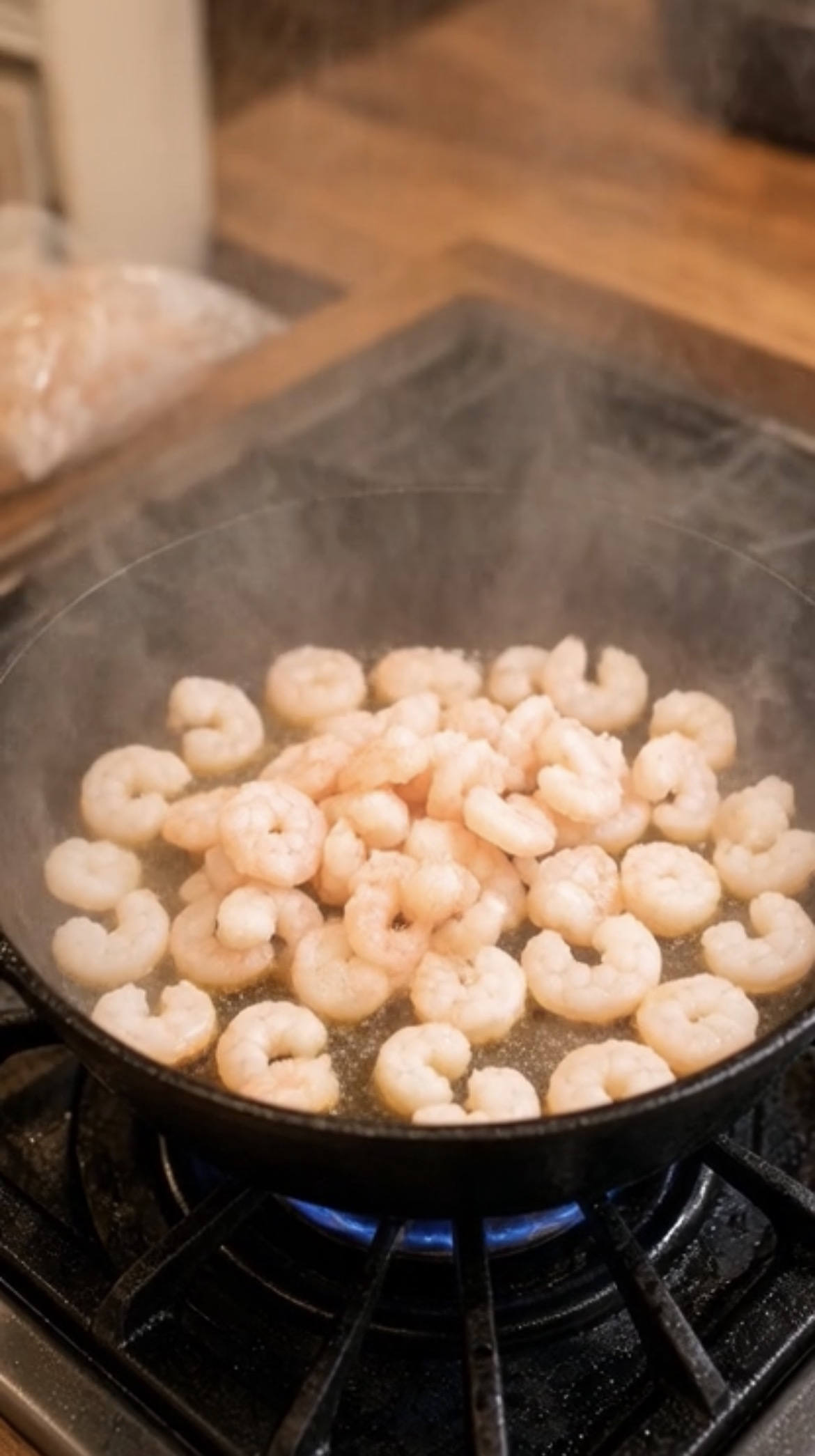
- Cook the shrimp first. Heat a tablespoon of oil in a large skillet or wok over high heat. Add the frozen shrimp in a single layer and cook for 3–4 minutes, stirring occasionally, until they turn pink and opaque and any released liquid has mostly cooked off. Remove the shrimp to a plate and set aside. Tip: don’t skip removing the shrimp — cooking it separately keeps it from overcooking while the rest of the dish comes together.
- Scramble the eggs. In the same pan, add a small amount of oil and pour in the beaten eggs. Scramble quickly, breaking them into small pieces, then remove to the same plate as the shrimp. Tip: slightly undercooking the eggs here is fine, since they’ll finish cooking once mixed back into the hot rice.
- Sauté the aromatics and vegetables. Add a little more oil to the pan along with the minced garlic and frozen peas and carrots. Stir-fry for 1–2 minutes until the vegetables are heated through and the garlic is fragrant. Tip: keep the heat high and keep everything moving so the garlic doesn’t burn.
- Add the cold rice. Add the cold, day-old rice to the pan, breaking up any large clumps with your spatula. Stir-fry for 3–4 minutes, pressing the rice against the hot pan occasionally to encourage light crisping. Tip: if your rice is very clumpy, breaking it apart with wet hands before it goes into the pan makes this step much easier.
- Season the rice. Push the rice to one side, pour the soy sauce directly onto the empty side of the pan so it sizzles slightly, then stir it through the rice evenly. Tip: adding soy sauce to the hot pan first, rather than pouring it straight over the rice, helps distribute the flavor more evenly instead of leaving dark, salty streaks.
- Combine everything. Return the cooked shrimp and scrambled eggs to the pan, along with the sliced green onions. Toss everything together for 1–2 minutes until evenly combined and heated through. Tip: taste before adding extra soy sauce, since the exact saltiness can vary depending on your rice and brand of soy sauce.
- Finish with sesame oil. Drizzle the sesame oil over the top and give the rice one final toss. Tip: add sesame oil at the very end rather than during cooking, since high heat can dull its distinct nutty aroma.
- Serve hot. Spoon into bowls immediately and top with extra green onion or a sprinkle of sesame seeds if desired. Tip: fried rice is best enjoyed right away, while the shrimp is tender and the rice still has a bit of texture.
Nutrition Snapshot (Per Serving, Estimated)
Based on a generous 1.5-cup serving with shrimp:
- Calories: ~420
- Protein: ~22g
- Carbohydrates: ~48g
- Fat: ~15g
These figures are estimates only and will vary based on the exact amount of rice, oil, and soy sauce used, as well as the type of seafood mix chosen.
Storage & Reheating
Store leftovers in an airtight container in the fridge for up to 3 days. To reheat, use a hot skillet with a small splash of oil or water, stirring frequently, which helps revive the rice’s texture better than the microwave does; if using the microwave, cover loosely and reheat in short bursts, stirring in between. This dish also freezes reasonably well for up to 1 month, though the shrimp’s texture will soften slightly upon thawing and reheating.
Budget Note
This recipe typically costs around $2–$3 per serving, making it one of the more affordable ways to serve shrimp for dinner. To stretch it further, use a smaller amount of shrimp bulked out with a frozen mixed seafood blend, lean on inexpensive frozen vegetables like peas and carrots, and use leftover rice from a previous meal instead of cooking a fresh batch just for this dish.
Variations to Try
Lighter Version: Use two whole eggs plus two egg whites instead of four whole eggs, and cut the oil slightly, relying on a nonstick pan to keep the rice from sticking without extra fat.
Low-Carb/Cauliflower Rice Swap: Replace the rice with frozen riced cauliflower, adding it straight to the pan without thawing; reduce the soy sauce slightly at first, since cauliflower releases more moisture than rice and can make the dish taste saltier as it cooks down.
Meal-Prep Friendly: Double the recipe and portion it into individual containers for grab-and-go lunches through the week; reheating in a hot skillet rather than the microwave helps maintain the texture best.
Gluten-Free Swap: Swap the soy sauce for a gluten-free tamari or coconut aminos, both of which offer a similar savory flavor while keeping the dish safe for gluten-sensitive eaters.
Frequently Asked Questions
Can I really use frozen shrimp without thawing it first? Yes — cooking the shrimp in a hot pan for a few minutes at the start of the recipe works well from frozen, just be sure to drain off any excess liquid before moving on so the rice doesn’t turn soggy.
Why does my fried rice always turn out mushy? The most common culprits are using freshly cooked, still-warm rice instead of cold day-old rice, and not getting the pan hot enough before adding the rice, both of which lead to steaming instead of light frying.
Can I use fresh shrimp instead of frozen? Yes, fresh or thawed shrimp will cook slightly faster than frozen, so reduce the initial cooking time in step one to about 2–3 minutes.
What if I don’t have day-old rice on hand? Spread freshly cooked rice out on a baking sheet in a thin layer and let it cool and air-dry for 10–15 minutes, which helps mimic the firmer texture of refrigerated rice.
Can I add other vegetables or proteins? Absolutely — diced bell peppers, corn, edamame, or leftover cooked chicken all work well; just add heartier vegetables earlier in the cooking process so they have time to soften.
Related Recipes
- One-Pot Lemon Garlic Shrimp
- Crockpot Creamy Garlic Parmesan Shrimp
- Easy Chicken and Vegetable Stir-Fry