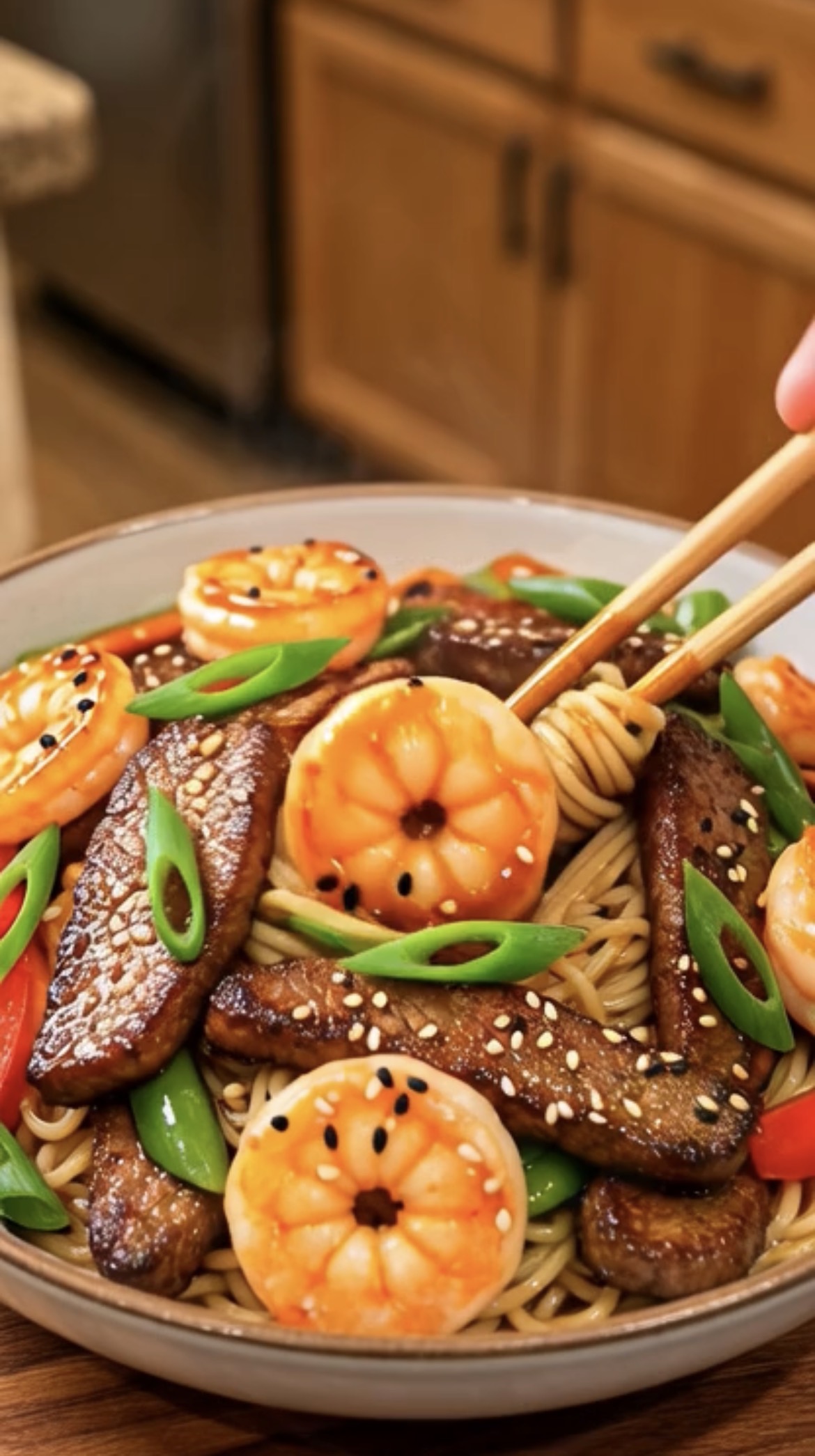
Stir-fry night gets a serious upgrade when you combine two proteins instead of just one, and this beef and shrimp stir-fry noodle dish does exactly that. Tender strips of beef and juicy shrimp come together in one pan with a savory, garlicky sauce, all tossed with noodles for a complete meal that feels a lot more special than your average weeknight stir-fry.
The key to combining beef and shrimp successfully in one stir-fry is cooking them separately first, since they have very different cook times and textures. Beef needs a hot, quick sear to stay tender, while shrimp cook even faster and can turn rubbery if left in the pan too long. This recipe cooks each protein on its own, then brings everything back together with the noodles and sauce at the end so both come out perfectly cooked.
What you end up with is a restaurant-style stir-fry that’s genuinely faster than most delivery orders, with a rich, savory sauce clinging to every noodle, piece of beef, and shrimp. It’s a great way to stretch a smaller amount of each protein further, since having two proteins in the mix makes the dish feel more substantial without needing a large amount of either one.
Why You’ll Love This Recipe
- Two proteins in one dish — great for households with different protein preferences.
- Ready in about 30 minutes — faster than most takeout.
- Rich, savory garlic sauce — restaurant-style flavor at home.
- One pan for the whole meal — noodles, protein, and vegetables all come together.
- Easy to customize — swap vegetables or noodle types based on what you have.
Ingredient Notes
For the beef, flank steak or sirloin, sliced thinly against the grain, works best for a quick stir-fry, since thin slices cook fast and stay tender. Slicing the beef while it’s still slightly frozen makes it much easier to get clean, thin slices than trying to cut fully thawed meat.
For the shrimp, medium to large shrimp (31/40 or 26/30 count), peeled and deveined, cook quickly and pair nicely with the beef in the same savory sauce. If using frozen shrimp, thaw them first under cold running water and pat very dry, since excess moisture can prevent a good sear in the hot pan.
For the noodles, lo mein noodles, udon, or even spaghetti in a pinch all work well here, since the sauce is fairly adaptable to different noodle textures. A good soy sauce, oyster sauce, and a touch of sesame oil form the backbone of the stir-fry sauce, and fresh garlic and ginger add the aromatic base that ties the whole dish together.
[Recipe card goes here — ingredients, step-by-step instructions, and a “Jump to Recipe” button render automatically in this spot.]
Step-by-Step Instructions
- Cook the noodles. Bring a pot of water to a boil and cook the noodles according to package directions, then drain and set aside, tossing with a small drizzle of oil to prevent sticking. Tip: slightly undercooking the noodles by a minute helps them hold up better once tossed in the hot sauce later.
- Sear the beef. Heat oil in a large skillet or wok over high heat, add the thinly sliced beef in a single layer, and sear for about 1–2 minutes per side until browned. Remove and set aside. Tip: don’t overcrowd the pan — cook the beef in batches if needed, since crowding causes it to steam instead of sear.
- Cook the shrimp. In the same pan, add a bit more oil and cook the shrimp for about 2–3 minutes per side until pink and cooked through, then remove and set aside with the beef. Tip: shrimp cook much faster than beef, so keep a close eye on them to avoid overcooking.
- Sauté the aromatics and vegetables. Add the minced garlic, ginger, and any vegetables (bell peppers, broccoli, or snap peas work well) to the same pan, stir-frying for 2–3 minutes until just tender-crisp.
- Make the sauce and combine. Whisk together the soy sauce, oyster sauce, a splash of broth, and sesame oil, then pour it into the pan along with the cooked noodles, beef, and shrimp, tossing everything together over high heat for 1–2 minutes until well coated and heated through. Tip: tossing everything over high heat at the end helps the sauce cling to the noodles rather than pooling at the bottom of the pan.
- Finish and serve. Sprinkle with sesame seeds and sliced green onion, then serve immediately while everything is hot.
Nutrition Snapshot (Estimated, Per Serving)
These are approximate values based on a 4-serving batch and will vary depending on exact brands, noodle type, and portion sizes used.
- Calories: ~560
- Protein: ~36g
- Carbs: ~52g
- Fat: ~22g
Storage & Reheating
Leftovers keep in an airtight container in the fridge for up to 3 days. Reheat gently in a skillet over medium heat with a small splash of water or broth to loosen the noodles, or in the microwave at reduced power in short bursts, stirring in between to heat evenly without overcooking the shrimp further.
This dish isn’t the best candidate for freezing, since both the noodles and the shrimp change texture noticeably after thawing. It’s best enjoyed fresh or as next-day leftovers rather than a make-ahead freezer meal.
Budget Note
This recipe comes out to roughly $5–$6 per serving, with beef and shrimp together being the main cost drivers. To bring the cost down, use a smaller amount of shrimp paired with a larger portion of beef (or vice versa, depending on which is more affordable where you shop), and bulk up the dish with extra noodles and vegetables to stretch the protein further.
Variations to Try
Spicy version: Add a spoonful of chili garlic sauce or a drizzle of sriracha to the stir-fry sauce for a spicier variation that still keeps the same savory base.
Vegetable-forward version: Load up on extra vegetables like carrots, snap peas, and bok choy to make the dish heartier and stretch the protein even further per serving.
Rice bowl version: Skip the noodles and serve the beef, shrimp, and vegetables over steamed rice instead, for a slightly different but equally satisfying presentation.
Meal-prep friendly: Portion the finished stir-fry into individual containers, and it holds up reasonably well in the fridge for a couple of days. A splash of water or broth when reheating helps loosen the sauce and noodles back to their original texture.
Frequently Asked Questions
Can I use frozen beef and shrimp for this recipe? Yes — for the beef, slicing it while still slightly frozen actually makes for cleaner cuts; for the shrimp, thaw them first under cold water and pat dry before cooking for the best sear.
Why did my beef turn out tough? This usually happens when the beef is sliced too thick or cooked too long. Slice it thinly against the grain and sear it quickly over high heat, removing it from the pan as soon as it’s browned.
Can I make this ahead of time? The sauce can be mixed a day ahead and stored in the fridge, and vegetables can be sliced in advance, but the proteins and noodles are best cooked fresh and combined right before serving.
What can I use instead of oyster sauce? A mixture of soy sauce and a touch of hoisin sauce can work as a substitute, though the flavor will be slightly different from the deep, savory notes oyster sauce typically provides.
Is this recipe spicy? No, this is a savory, garlicky dish rather than a spicy one — a drizzle of sriracha or a spoonful of chili garlic sauce is an easy way to add some heat if you’d like.
Related Recipes
- Skillet Bang Bang Shrimp
- Skillet Lemon Garlic Butter Shrimp
- Skillet Creamy Coconut Curry Shrimp