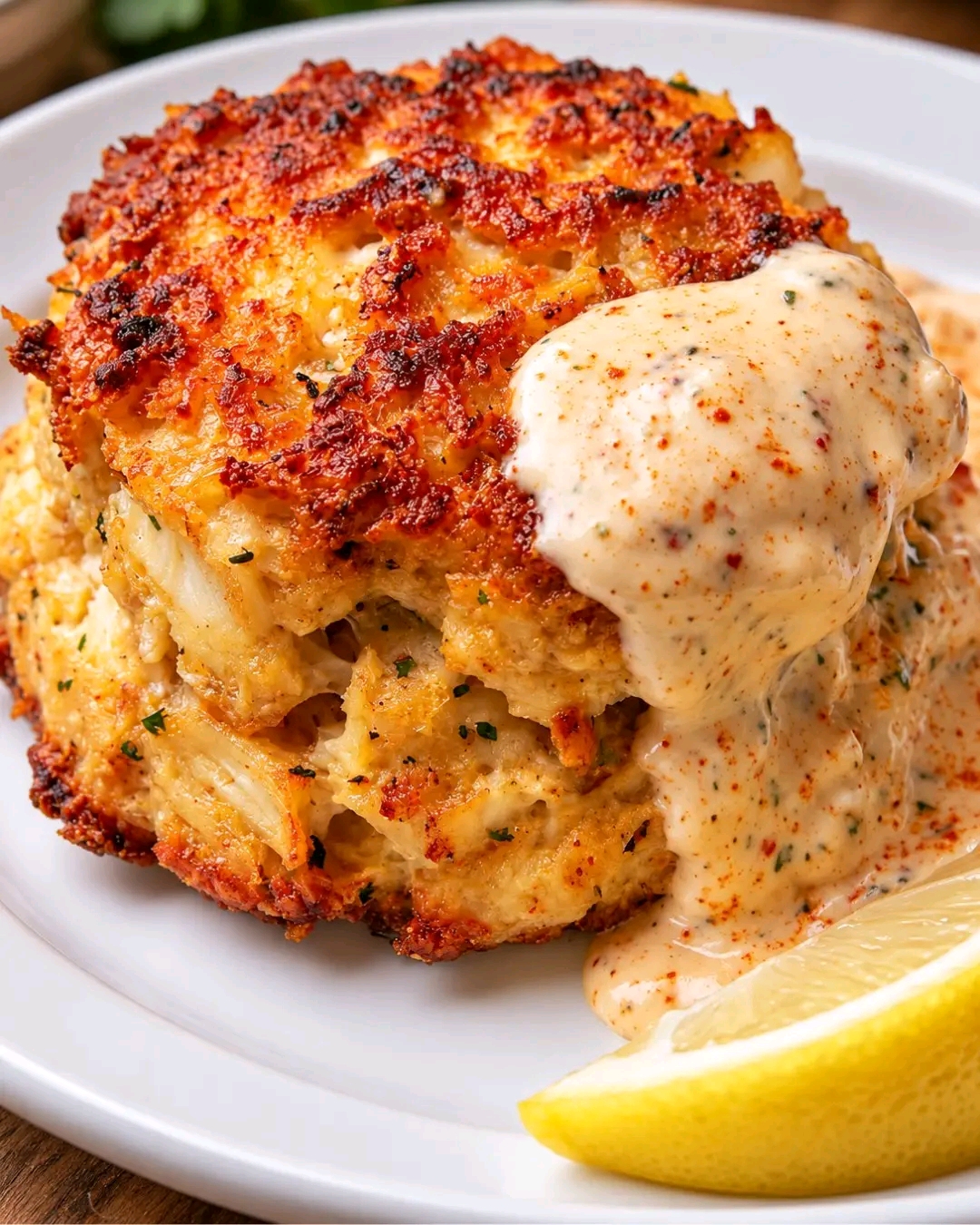
There’s a reason Maryland crab cakes have such a devoted following — done right, they’re almost entirely crab, barely held together with just enough binder to keep their shape, and seared until the outside turns deep golden-brown while the inside stays tender and sweet. The first bite should taste like the ocean, not like breadcrumbs.
I used to think crab cakes were something you only got at a good seafood restaurant, until I realized the secret is really about restraint — using jumbo lump crab meat, going light on the filler, and letting the crab do all the talking. A quick sear in a hot pan gives them that deeply caramelized, almost lacy crust, and a rich, creamy remoulade spooned over the top (with a good squeeze of lemon) ties the whole thing together.
These aren’t a weeknight-in-a-hurry kind of dish, but they’re far more approachable than most people assume. With a handful of quality ingredients and about 30 minutes, you can have crab cakes on the table that taste like they came straight from a boardwalk seafood shack.
Why You’ll Love This Recipe
- It’s genuinely restaurant-quality — jumbo lump crab, a crisp golden crust, and a creamy sauce that ties it all together.
- It’s surprisingly quick — about 15 minutes of prep and a fast sear, no long cook times involved.
- The filler is minimal, so the crab flavor stays front and center instead of getting buried in breadcrumbs.
- It’s versatile — serve as a main dish, a sandwich, or a smaller appetizer portion for entertaining.
- It reheats well, making leftovers just as satisfying the next day.
Ingredient Notes
The single most important choice here is the crab meat itself. Jumbo lump crab meat gives you those big, satisfying chunks and the sweetest flavor, but it’s also the most expensive option — lump crab meat is a slightly more affordable substitute that still holds up well in texture. Whichever you choose, gently pick through it for any stray bits of shell before mixing, since that’s easy to miss and unpleasant to bite into.
For the binder, mayonnaise, a beaten egg, and just enough breadcrumbs (panko works beautifully for a lighter texture) hold the cakes together without overwhelming the crab. Old Bay seasoning is the classic choice for that distinctly Maryland flavor, but a mix of paprika, celery salt, and a pinch of cayenne makes a reasonable substitute if you can’t find it.
The remoulade sauce is built on a mayonnaise base brightened with lemon juice, a little Dijon mustard, and a pinch of paprika or cayenne for warmth — fresh parsley stirred in at the end adds color and a fresh, herby note that balances the richness of the crab cakes.
[Recipe card goes here — ingredients, step-by-step instructions, and a “Jump to Recipe” button render in this spot.]
Step-by-Step Instructions
- Pick through the crab meat. Gently sift through the crab meat with your fingers to remove any small pieces of shell or cartilage, being careful not to break up the larger lumps. Tip: this step is tedious but essential — it’s the difference between a great crab cake and a disappointing bite.
- Mix the binder separately. In a bowl, whisk together the egg, mayonnaise, Dijon mustard, Worcestershire sauce, and Old Bay seasoning until fully combined. Tip: mixing the binder before adding the crab prevents overworking the meat once it’s in the bowl.
- Fold in the crab and breadcrumbs. Gently fold the crab meat and breadcrumbs into the binder mixture using a spatula, mixing just until combined. Tip: overmixing breaks up the lump crab and results in a denser, less impressive texture — stop as soon as it holds together.
- Chill the mixture. Cover and refrigerate the mixture for at least 30 minutes before shaping. Tip: don’t skip this step — chilled crab cakes hold their shape far better in the pan and are much less likely to fall apart.
- Shape the crab cakes. Divide the mixture into equal portions and gently form into thick patties, being careful not to pack them too tightly.
- Sear until golden. Heat butter and a little oil in a skillet over medium heat, then cook the crab cakes for 4–5 minutes per side, until deeply golden brown and heated through. Tip: resist the urge to flip too early — let a proper crust form before turning, or the cakes may break apart.
- Make the remoulade. While the crab cakes cook, whisk together mayonnaise, lemon juice, Dijon mustard, paprika, and chopped parsley in a small bowl.
- Serve immediately. Plate the crab cakes hot, spoon the remoulade generously over the top, and serve with a lemon wedge on the side.
Nutrition Snapshot (Per Serving, Estimated)
- Calories: approximately 340–380
- Protein: approximately 24–28g
- Carbs: approximately 8–10g
- Fat: approximately 24–28g
These are estimates based on standard ingredient measurements and will vary depending on exact brands, crab type, and portion sizes used.
Storage & Reheating
Leftover cooked crab cakes keep well in an airtight container in the fridge for up to 2 days. Reheat gently in a skillet over medium-low heat for a few minutes per side to re-crisp the exterior — microwaving works in a pinch, but it tends to soften the crust.
Uncooked, shaped crab cakes freeze well for up to 1 month. Freeze them in a single layer on a tray before transferring to a freezer bag, then thaw in the fridge overnight before cooking as directed. Avoid freezing them after cooking, as the texture of the crab can turn watery once thawed.
Budget Note
This recipe runs on the higher end, roughly $6–8 per serving, since jumbo lump crab meat is genuinely expensive. To bring the cost down without sacrificing too much quality, use a mix of lump and claw meat rather than all jumbo lump, or look for pasteurized canned crab meat at the seafood counter, which is often more affordable than fresh. Making a double batch and freezing half also helps offset the cost of buying crab meat in the first place.
Variations to Try
Healthy/Lighter Version: Bake the crab cakes at 400°F for about 15 minutes instead of pan-searing in butter, and use a light mayonnaise in both the binder and remoulade to cut back on fat while keeping the texture intact.
Air Fryer Method: Lightly spray the shaped crab cakes with oil and air fry at 375°F for about 10–12 minutes, flipping halfway through, for a crisp exterior with far less oil than pan-frying.
Gluten-Free Swap: Swap regular breadcrumbs for gluten-free panko or crushed gluten-free crackers, which hold the mixture together just as well without changing the flavor.
Meal-Prep Friendly: Shape the crab cakes ahead of time and store them uncooked in the fridge for up to a day, so all that’s left to do at dinnertime is a quick sear.
Frequently Asked Questions
Can I make the crab cake mixture ahead of time? Yes — you can mix and shape the crab cakes up to a day in advance and keep them covered in the fridge, which actually helps them hold together even better when cooked.
What can I use instead of jumbo lump crab meat? Regular lump crab meat or a mix of lump and claw meat both work well and are more budget-friendly, though the texture will be slightly less chunky.
Why do my crab cakes fall apart when cooking? This usually happens when the mixture isn’t chilled long enough or when too much breadcrumb filler is used. Chilling for a full 30 minutes and handling the cakes gently when flipping both help a lot.
Can I bake instead of pan-frying? Yes — baking at 400°F for about 15–18 minutes produces a slightly less crisp crust than pan-searing, but it’s a great hands-off option, especially when making a larger batch.
What should I serve with crab cakes? A simple green salad, coleslaw, or roasted asparagus pairs well, along with extra lemon wedges and remoulade on the side for dipping.
Related Recipes You Might Like
- Classic Shrimp Scampi with Garlic Butter
- Old Bay Baked Cod with Lemon Butter
- Creamy Lobster Bisque