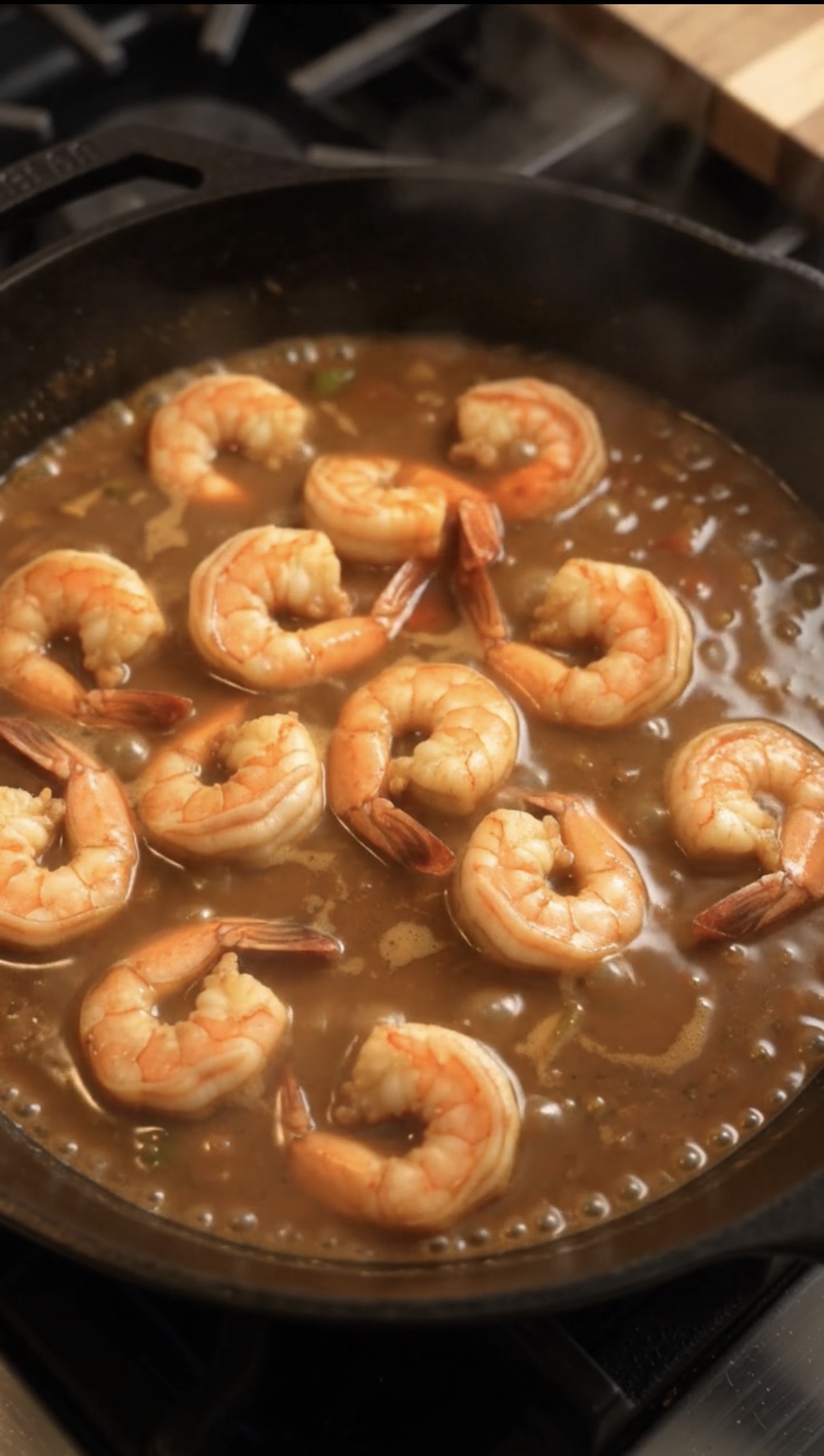
Shrimp étouffée is a true Louisiana classic, built on a deeply savory roux and the “holy trinity” of Cajun cooking — onion, celery, and bell pepper — simmered together into a thick, richly flavored sauce that’s traditionally spooned generously over rice. This version keeps all of that classic flavor but speeds up the process considerably, using a fast blonde roux and shrimp straight from the freezer to get dinner on the table in about 15 minutes.
Traditional étouffée often involves a longer-cooked, darker roux for deep flavor, but this quicker version uses a lighter roux cooked just long enough to lose its raw flour taste and take on a pale golden color, which still builds real richness without requiring the extended stovetop attention a classic dark roux needs. The holy trinity vegetables get a quick sauté before the roux and broth come together into that classic thick, savory sauce.
Because the shrimp go in frozen, they cook gently in that already-flavorful sauce, soaking up all the Cajun seasoning and savory depth in just a few minutes. Spooned over a mound of white rice, this quick étouffée delivers real Louisiana comfort food flavor without needing hours on the stove.
Why You’ll Love This Recipe
- No thawing required — the shrimp cook directly from frozen.
- Real Louisiana flavor, sped up — a fast roux instead of a long-cooked one.
- Ready in about 15 minutes — genuinely fast for this style of dish.
- Rich, savory, deeply seasoned sauce — classic Cajun comfort food.
- One pan, easy cleanup — everything comes together in a single pot.
Ingredient Notes
The “holy trinity” of Cajun and Creole cooking — diced onion, celery, and bell pepper — forms the aromatic base of a proper étouffée, and having these pre-chopped or using a frozen pre-diced trinity blend (sold in many grocery stores) can save valuable time on a busy night. Equal parts of each vegetable give the most traditional balance of flavor.
A basic roux made from equal parts butter and flour, cooked just until it turns a light golden color, thickens the sauce and gives it that classic étouffée body. Cooking it for only a couple of minutes rather than the 20-plus minutes a traditional dark roux requires is what keeps this version genuinely quick, while still providing real thickening power and a hint of nutty flavor.
A good Cajun or Creole seasoning blend, along with a bay leaf and a splash of hot sauce, rounds out the classic flavor profile. For the shrimp, frozen, peeled, and deveined shrimp in the medium-to-large range (31/40 or 26/30 count) work well, cooking through fully in the short simmer time this quicker method uses.
[Recipe card goes here — ingredients, step-by-step instructions, and a “Jump to Recipe” button render automatically in this spot.]
Step-by-Step Instructions
- Make the quick roux. Melt the butter in a large skillet or pot over medium heat, then whisk in the flour, stirring constantly for about 2 minutes until it turns a light golden color. Tip: keep whisking constantly during this step — roux can go from perfectly golden to burnt very quickly, and a burnt roux will taste bitter.
- Sauté the trinity. Add the diced onion, celery, and bell pepper to the roux, stirring to coat, and cook for 2–3 minutes until they begin to soften. Tip: using a pre-diced trinity blend from the freezer section is a great time-saver here without sacrificing much flavor.
- Add the broth and seasoning. Gradually whisk in the broth to avoid lumps, then stir in the Cajun seasoning, bay leaf, and a dash of hot sauce, bringing the mixture to a gentle simmer.
- Let the sauce thicken slightly. Simmer for 3–4 minutes, stirring occasionally, until the sauce thickens enough to coat the back of a spoon. Tip: this short simmer is what allows the roux to fully activate and thicken the sauce, so don’t rush past it even though the recipe overall is fast.
- Add the frozen shrimp. Add the shrimp straight from frozen, breaking apart any large clumps, and simmer for 5–6 minutes, stirring occasionally, until they turn pink and are cooked through. Tip: keep an eye on the shrimp during this step, since they can overcook quickly once they’re fully pink and opaque.
- Finish and serve. Remove the bay leaf, stir in chopped green onion and a bit of fresh parsley, taste and adjust the seasoning or hot sauce as needed, then serve immediately spooned over warm white rice.
Nutrition Snapshot (Estimated, Per Serving)
These are approximate values based on a 4-serving batch, not including rice, and will vary depending on exact brands and portion sizes used.
- Calories: ~290
- Protein: ~26g
- Carbs: ~13g
- Fat: ~16g
Storage & Reheating
Leftovers keep well in an airtight container in the fridge for up to 3 days. Reheat gently on the stovetop over low heat, stirring occasionally and adding a small splash of broth if the sauce has thickened too much, or in the microwave in short bursts at reduced power.
This dish freezes reasonably well, since roux-based sauces tend to hold up better than cream-based ones after thawing. Freeze in an airtight container for up to 2 months, thaw overnight in the fridge, and reheat gently on the stovetop, adding a splash of broth to loosen the sauce as needed.
Budget Note
This recipe comes out to roughly $3–$4 per serving, with frozen shrimp being the main cost. To stretch it further, buy shrimp in bulk frozen bags, and use a frozen pre-diced trinity blend, which is often more economical than buying fresh onion, celery, and bell pepper separately in small quantities.
Variations to Try
Extra spicy version: Increase the Cajun seasoning and hot sauce, or add a pinch of cayenne, for a spicier take on this classic dish.
Chicken and sausage version: Add sliced andouille sausage and diced, cooked chicken along with the shrimp for a heartier, more traditional Louisiana-style étouffée with multiple proteins.
Darker roux version: If you have a bit more time, cook the roux for closer to 10–15 minutes, stirring constantly, until it reaches a deeper caramel color for a more traditional, deeply flavored étouffée.
Meal-prep friendly: Portion the finished étouffée into individual containers with rice, and it holds up nicely in the fridge for a few days, reheating well thanks to the roux-based sauce.
Frequently Asked Questions
Can I use fresh shrimp instead of frozen? Yes — if using fresh or thawed shrimp, reduce the simmer time in step 5 to about 3–4 minutes, since they cook faster than shrimp starting from frozen.
Why is my roux lumpy? This usually happens when the broth is added too quickly or the roux isn’t fully smooth before liquid goes in. Add the broth gradually while whisking constantly to help prevent lumps from forming.
Can I make this ahead of time? The roux and trinity base (through step 3) can be made a day ahead and refrigerated, then reheated gently before adding the frozen shrimp fresh, which helps cut down on the actual cook time.
What can I use instead of a trinity blend? If you don’t have celery or bell pepper on hand, a slightly larger amount of onion can be used in a pinch, though the flavor won’t be quite as traditional or well-rounded.
Is this recipe very spicy? It’s mild to medium as written, with the heat depending mostly on the Cajun seasoning and hot sauce used — start light and add more to taste if you’re unsure of your spice preference.
Related Recipes
- Skillet Cajun Tomato Cream Shrimp
- Slow Cooker Creamy Cajun Shrimp
- Skillet Bang Bang Shrimp