There’s a specific sizzle-and-smoke theater to hibachi dinners that makes them feel special, but the truth is, the real magic behind that unforgettable flavor isn’t the flat-top grill or the chef’s tricks — it’s the hibachi steak marinade. Soy sauce, garlic, a touch of sweetness, and a splash of sesame oil come together into something that transforms an ordinary cut of steak into that deeply savory, slightly caramelized bite you keep thinking about between restaurant visits.
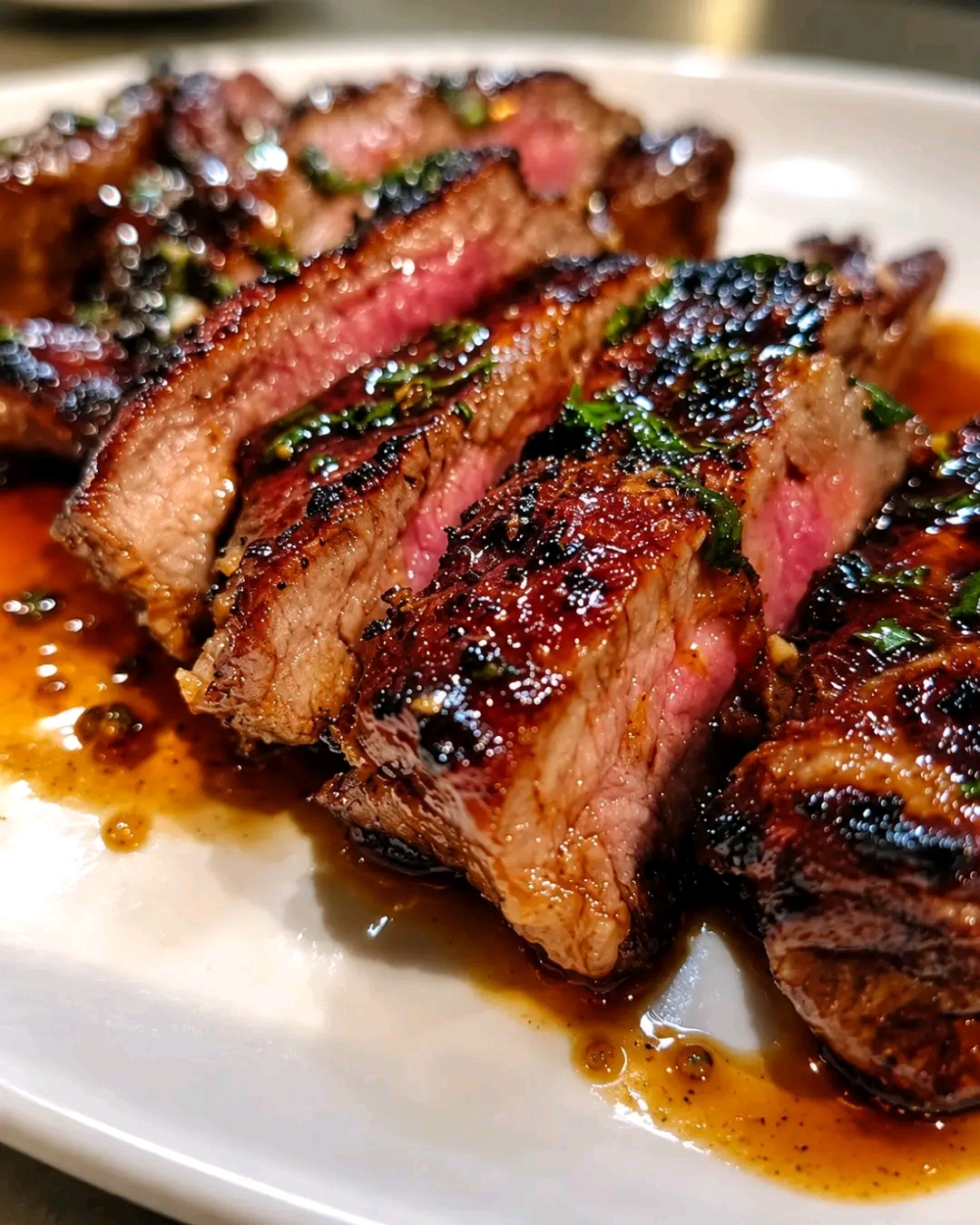
This marinade does double duty: it tenderizes the steak while it soaks, and it builds a glossy, almost lacquered crust once the meat hits a hot pan or grill. That dark, seared exterior you see in the photo, with little flecks of herbs caught in the char, comes directly from how well this marinade caramelizes under high heat. Slice into it and you get that same juicy pink center paired with all that bold, savory flavor on the outside.
The best part is you don’t need a teppanyaki grill or any special equipment to make this happen. A hot cast iron skillet or a grill will get you every bit as close to that hibachi-restaurant experience, minus the reservation and the tip. Once you’ve got this marinade down, it becomes one of those go-to recipes you’ll reach for anytime a steak craving hits.
Why You’ll Love This Recipe
- Restaurant-quality flavor at home — this marinade recreates that iconic hibachi steakhouse taste.
- Simple, pantry-friendly ingredients — soy sauce, oils, and a handful of seasonings are all you need.
- Works with any cooking method — pan-sear, grill, or broil, and it turns out great every time.
- Quick to prepare — a short marinating time is all it takes to build serious flavor.
- Great for meal prep — marinate ahead and cook whenever you’re ready for dinner.
Ingredient Notes
Soy sauce forms the salty, umami-rich base of this marinade, and a regular soy sauce works perfectly, though a low-sodium version is a good option if you’re watching your salt intake — just note the flavor will be slightly milder. Sesame oil is what gives this marinade its distinctly nutty, toasty aroma that’s so recognizable in hibachi-style cooking; a little goes a long way, so stick close to the recommended amount rather than doubling it, since too much can turn overpowering and slightly bitter.
Worcestershire sauce and lemon juice round out the marinade with extra depth and a touch of brightness that cuts through the richness of the soy and oils. Garlic, either fresh minced or a good quality jarred variety, adds that essential savory backbone that hibachi steak is known for — fresh garlic gives the most vibrant flavor, but jarred minced garlic works fine as a time-saving substitute.
For the steak itself, cuts like New York strip, ribeye, or sirloin all work beautifully with this marinade, since they’re tender enough to sear quickly over high heat while still holding up to the bold flavors. Look for steaks around 1 inch thick, which gives you enough thickness to develop a deep sear on the outside while keeping the inside juicy and pink.
[Recipe card goes here — Jump to Recipe]
Step-by-Step Instructions
- In a medium bowl, whisk together ¼ cup soy sauce, 2 tablespoons vegetable oil, 1 tablespoon sesame oil, 1 tablespoon Worcestershire sauce, and 1 tablespoon lemon juice. Add 2–3 minced garlic cloves and a teaspoon of grated fresh ginger if desired.
- Place 1½–2 lbs steak (New York strip, ribeye, or sirloin) into a resealable bag or shallow dish and pour the marinade over the top, making sure the steak is well coated on all sides. Tip: pressing the air out of the bag before sealing helps the marinade make full contact with the meat.
- Marinate in the refrigerator for at least 30 minutes, or up to 4 hours. Tip: don’t marinate much longer than 4 hours, since the acidity from the lemon juice can start to break down the texture of the meat if left too long.
- Remove the steak from the marinade and let it come to room temperature for about 15–20 minutes before cooking, patting off any excess marinade with a paper towel. Tip: excess surface moisture prevents a good sear, so don’t skip the patting-dry step.
- Heat a cast iron skillet or grill over high heat until very hot, adding a small amount of oil to the pan if using a skillet.
- Sear the steak for 3–4 minutes per side for medium-rare, adjusting the time slightly based on the thickness of your steak and desired doneness. Tip: resist moving or flipping the steak too early — letting it sit undisturbed is what creates that deep, caramelized crust.
- Check for doneness with a meat thermometer: 130–135°F for medium-rare, 140–145°F for medium. Remove the steak from the heat once it reaches your desired temperature, since it will continue cooking slightly while resting.
- Let the steak rest for 5–10 minutes before slicing, which allows the juices to redistribute throughout the meat instead of spilling out onto the cutting board. Tip: slice against the grain for the most tender bite.
- Garnish with fresh chopped parsley or green onions, and drizzle any resting juices from the cutting board back over the sliced steak before serving.
Nutrition Snapshot (Per Serving, Estimated)
Based on 4 servings:
- Calories: ~380
- Protein: ~35g
- Carbohydrates: ~4g
- Fat: ~24g
These figures are approximate estimates and will vary based on the exact cut and size of steak used.
Storage & Reheating
Leftover steak keeps well in the refrigerator, covered, for up to 3–4 days. To reheat without overcooking, warm slices gently in a skillet over low heat for just a minute or two, or enjoy it cold sliced over a salad or rice bowl. This steak also freezes well for up to 2–3 months — thaw overnight in the fridge before reheating gently.
Budget Note
This recipe costs roughly $4.00–$5.50 per serving, with the steak itself being the main expense. To save a bit, look for sirloin instead of ribeye or strip steak, since it’s typically more affordable while still working beautifully with this marinade, and watch for sales on steak cuts to stock up when prices drop.
Variations to Try
Healthy/Lighter Version: Trim any excess visible fat from the steak before marinating, and serve it alongside a big pile of steamed vegetables instead of rice to keep the meal lighter. The marinade itself is already fairly lean, so most of the calorie adjustment comes down to portion size and sides.
Keto / Low-Carb Swap: This recipe is already naturally low-carb as written, making it an easy fit for a keto lifestyle without any changes needed. Pair it with cauliflower rice or a simple sautéed vegetable medley to keep the whole meal low-carb.
Hibachi-Style Vegetable Pairing: Sauté zucchini, onions, and mushrooms in a hot skillet with a little butter and soy sauce right after cooking the steak, using the same pan to pick up any leftover flavorful browned bits. This recreates that classic hibachi combination of steak and grilled vegetables served together.
Grilled Version: Cook the marinated steak directly on a hot outdoor grill instead of a skillet for a smokier flavor and those classic char marks. Follow the same timing guidelines, adjusting slightly based on your grill’s heat intensity.
Frequently Asked Questions
Can I make this ahead of time? Yes, the steak can marinate for up to 4 hours in the fridge, making it easy to prep in the morning or afternoon before cooking it fresh for dinner. Avoid marinating much longer than that, since the lemon juice’s acidity can start to affect the meat’s texture.
What can I use instead of sesame oil? A neutral oil like vegetable or canola oil can be used in a pinch, though you’ll lose some of that distinct nutty, toasted flavor that sesame oil provides. If you have toasted sesame seeds on hand, sprinkling some over the finished steak can help bring back a bit of that flavor.
Can I use a different cut of steak? Yes, flank steak or skirt steak both work well with this marinade, especially since their more open texture soaks up the marinade’s flavor easily. Just remember to slice these cuts thinly against the grain for the most tender result.
Why is my steak tough after marinating? This usually happens from marinating too long, since the acidic components in the marinade can start to break down the proteins if left for many hours rather than the recommended 30 minutes to 4 hours. Sticking within that window helps keep the texture tender rather than mushy or overly soft.
What should I serve with hibachi steak? Fried rice, sautéed vegetables, or a simple side salad all pair wonderfully, echoing that classic hibachi restaurant meal. A drizzle of extra hibachi-style dipping sauce, like a ginger or yum yum sauce, also makes a great addition.
Related Recipes You’ll Love
- Hibachi Fried Rice — the classic side dish to pair with this steak for a full restaurant-style meal at home.
- Garlic Butter Steak Bites — another quick, flavorful steak recipe using a similar high-heat searing method.
- Yum Yum Sauce (Copycat Recipe) — the perfect creamy, tangy dipping sauce to serve alongside your hibachi steak.