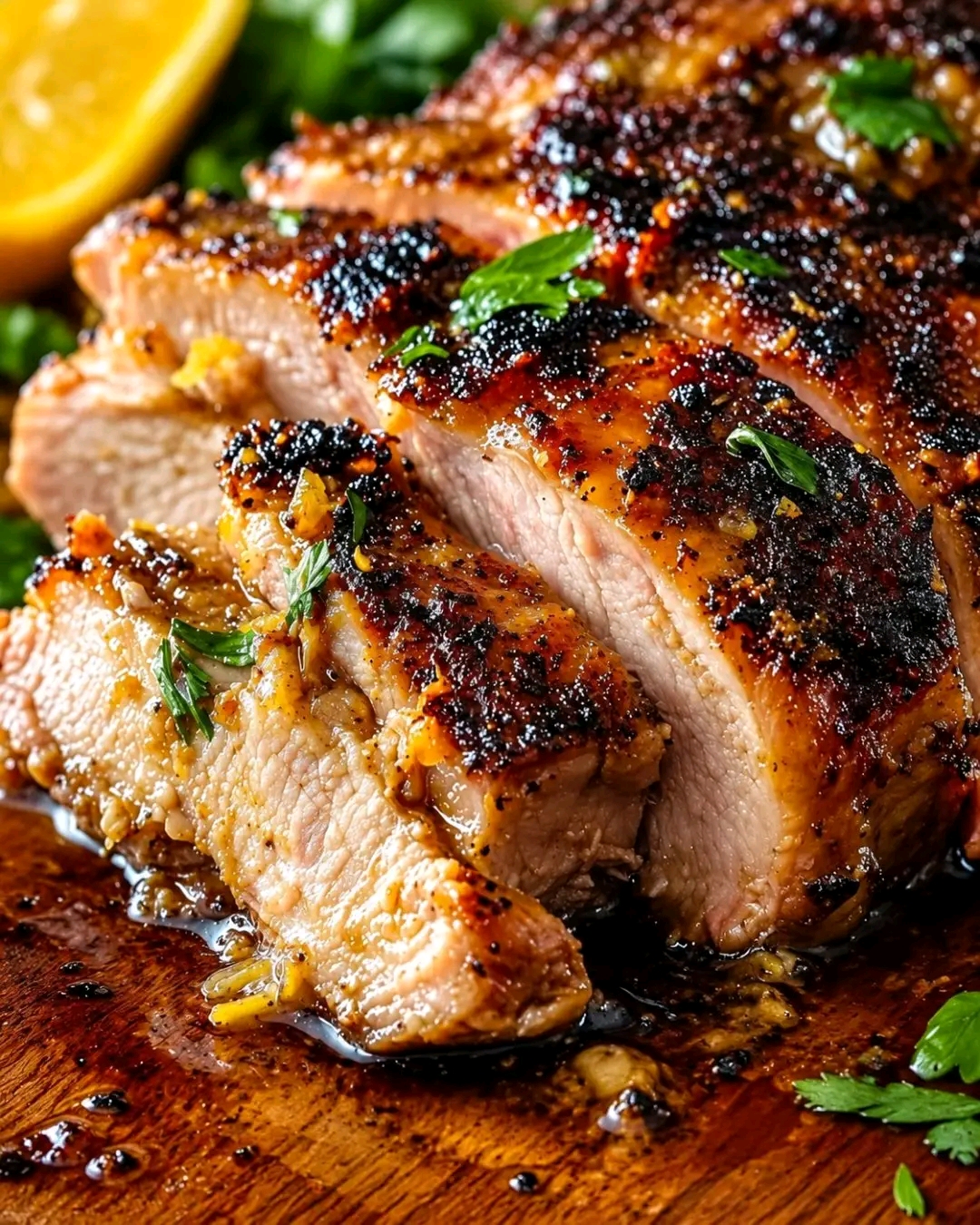
There’s a reason Cuban roasted mojo pork shows up at celebrations, family gatherings, and Sunday dinners across generations — that bright, garlicky, citrus-soaked flavor has a way of making a simple pork shoulder feel like the centerpiece of something special. The mojo marinade, built from orange juice, lime juice, and an almost startling amount of garlic, works its way deep into the meat, tenderizing it while packing in flavor that no dry rub could ever replicate.
What you end up with after a long, slow roast is a piece of pork with an almost impossibly dark, craggy, caramelized crust on the outside, giving way to meat so tender it practically shreds with a fork. The citrus marinade caramelizes as it roasts, creating those deep brown, slightly charred bits you see clinging to the surface, while the inside stays moist and infused with all that bright, garlicky flavor throughout.
This is a dish that rewards a little planning — the longer the pork sits in that marinade, the deeper the flavor goes — but the actual hands-on effort is minimal. Marinate it the night before, then let the oven do the heavy lifting the next day. Slice it up for a main dish, or shred it for sandwiches, tacos, or rice bowls; either way, it’s the kind of pork that makes people ask for the recipe before they’ve even finished their plate.
Why You’ll Love This Recipe
- Bold, bright flavor — citrus and garlic infuse the meat with unmistakable Cuban-style flavor.
- Incredibly tender — a slow roast breaks the pork down until it’s fall-apart tender.
- Great for a crowd — a large cut of pork stretches easily to feed a family or a gathering.
- Versatile leftovers — shred it for sandwiches, tacos, rice bowls, or salads.
- Make-ahead friendly — marinate the night before so most of the work is done ahead of time.
Ingredient Notes
The mojo marinade is really the heart of this recipe, built from a bold combination of fresh orange juice, fresh lime juice, and a generous amount of garlic. Using freshly squeezed citrus juice rather than bottled makes a real difference here, since fresh juice has a brighter, more vibrant flavor that carries through even after hours of roasting. Ten cloves of garlic might sound like a lot, but it mellows significantly as it cooks, turning sweet and deeply savory rather than sharp or overpowering.
For the cut of meat, pork shoulder or pork butt is ideal because its higher fat content keeps the meat moist and tender through a long roasting time, and it responds beautifully to the tenderizing effects of the citrus marinade. Leaner cuts like pork loin can dry out during the long cook time this recipe calls for, so it’s worth sticking with a well-marbled shoulder cut for the best results.
Additional seasonings like cumin, oregano, and bay leaves are traditional additions to a classic mojo marinade, rounding out the citrus and garlic with warm, earthy undertones. If you can find sour orange juice (naranja agria) at a Latin grocery store, it’s the traditional base for an authentic mojo marinade and offers a slightly more complex tartness than a combination of regular orange and lime juice, though the substitute works wonderfully if sour orange isn’t available near you.
[Recipe card goes here — Jump to Recipe]
Step-by-Step Instructions
- In a blender or food processor, combine 1 cup fresh orange juice, ½ cup fresh lime juice, ⅓ cup olive oil, 10 minced garlic cloves, 1 tablespoon ground cumin, 1 tablespoon dried oregano, and 2 teaspoons salt. Blend until smooth. Tip: blending the marinade fully helps distribute the garlic and spices evenly, rather than leaving pockets of concentrated flavor.
- Place a 4 lb pork shoulder or pork butt in a large resealable bag or shallow dish, and pour the marinade over the top, making sure it’s well coated on all sides. Tip: piercing the pork all over with a fork before adding the marinade helps it penetrate more deeply into the meat.
- Marinate in the refrigerator for at least 4 hours, or up to overnight (24 hours) for the best flavor. Tip: the longer marinating time really does make a noticeable difference here, so plan ahead if you can.
- Remove the pork from the refrigerator about 30 minutes before cooking to take some of the chill off, and preheat your oven to 300°F (150°C).
- Place the pork and its marinade in a roasting pan or Dutch oven, fat-side up. Cover tightly with foil or a lid.
- Roast for 3½ to 4 hours, until the pork is fork-tender and easily pulls apart. Tip: check occasionally and add a splash of water or broth to the pan if the liquid starts to dry out too much during the long roast.
- Uncover the pork for the final 30–45 minutes of roasting, increasing the oven temperature to 425°F (220°C), to let the exterior caramelize and darken into that deep, craggy crust. Tip: keep an eye on it during this step, since the sugars in the citrus marinade can go from perfectly caramelized to burnt fairly quickly at higher heat.
- Remove the pork from the oven and let it rest for 15–20 minutes before slicing or shredding. Tip: resting allows the juices to redistribute throughout the meat instead of running out the moment you cut into it.
- Slice or shred the pork, spooning some of the pan juices back over the top before serving.
Nutrition Snapshot (Per Serving, Estimated)
Based on 8 servings:
- Calories: ~410
- Protein: ~34g
- Carbohydrates: ~6g
- Fat: ~27g
These figures are approximate estimates and will vary based on the exact cut and fat content of the pork used.
Storage & Reheating
Leftover pork keeps well in the refrigerator, covered, for up to 4 days. Reheat gently in a skillet with a splash of the reserved pan juices or broth to keep it moist, or warm individual portions in the microwave. To freeze, shred or slice the cooled pork and store in a freezer-safe container for up to 3 months — thaw overnight in the fridge before reheating.
Budget Note
This recipe costs roughly $3.00–$3.75 per serving, making it a great option for feeding a crowd affordably given how far a single pork shoulder stretches. To save further, watch for sales on pork shoulder, which is often one of the more budget-friendly cuts, and use bottled citrus juice instead of fresh if you’re working with a tighter grocery budget, keeping in mind the flavor will be slightly less vibrant.
Variations to Try
Healthy/Lighter Version: Trim some of the excess visible fat from the pork shoulder before marinating, and serve smaller portions alongside a large side of roasted vegetables or a fresh salad to balance out the richness. The marinade itself is already quite lean, so most of the adjustment comes down to portion size and trimming.
Instant Pot / Pressure Cooker Method: Sear the marinated pork briefly using the sauté function, then add the remaining marinade and pressure cook on high for 70–80 minutes with a natural release for 15 minutes. Broil the pork briefly afterward to develop some caramelization on the exterior, since the pressure cooker won’t create that same roasted crust on its own.
Meal-Prep Friendly: This pork shreds and reheats beautifully, making it an excellent protein to prep ahead for the week. Use it in tacos, rice bowls, sandwiches, or salads throughout several days without it ever feeling repetitive thanks to how versatile the flavor is.
Cuban Sandwich Twist: Use leftover mojo pork to build classic Cuban sandwiches, layered with ham, Swiss cheese, pickles, and mustard on Cuban bread, then pressed until golden and melty. This is one of the most popular ways to use up leftovers from this recipe.
Frequently Asked Questions
Can I make this ahead of time? Yes, in fact marinating the pork overnight is recommended for the best flavor, so most of the prep can happen a full day before cooking. The cooked pork also reheats and stores well, making it a great make-ahead protein for the week.
What can I use instead of pork shoulder? Pork butt is essentially interchangeable with pork shoulder and works equally well in this recipe. Leaner cuts like pork loin can be used in a pinch, but they cook much faster and are more prone to drying out, so the cooking time and method would need significant adjustment.
Can I use bottled citrus juice instead of fresh? Yes, bottled orange and lime juice can work as a time-saving substitute, though the flavor will be noticeably less bright and vibrant compared to freshly squeezed juice. If possible, fresh juice is worth the extra effort for this particular recipe.
Why is my pork tough instead of tender? This usually means the pork needs more time in the oven, since a shoulder cut needs a long, slow cook to properly break down its connective tissue. If it’s still tough after the recommended time, continue roasting covered for another 30–45 minutes and check again.
What should I serve with Cuban mojo pork? Black beans and rice, fried plantains, and a simple cabbage slaw are all classic, traditional pairings that round out the meal beautifully. It also works wonderfully piled onto sandwiches or into tacos for a different presentation.
Related Recipes You’ll Love
- Classic Cuban Sandwich — the perfect way to use up leftover mojo pork.
- Cuban Black Beans and Rice — a traditional side dish that pairs perfectly with this roast.
- Garlic Citrus Roasted Chicken — another bright, citrus-marinated main using a similar flavor profile.