Time: 20 minutes of active work, plus 4 hours of chilling
Serves: 6 to 8
Difficulty: Easy
Ingredients
For the custard
- 1 liter (4 cups) whole milk
- 150 g (¾ cup) granulated sugar
- 45 g (6 tablespoons) cornstarch
- 4 egg yolks
- 1 tablespoon pure vanilla extract (or the seeds of 1 vanilla bean)
- 1 small pinch of salt
- 2 tablespoons unsalted butter
- 200 ml (¾ cup + 1 tbsp) heavy cream, at least 30% fat
- 100 g (⅓ cup) sweetened condensed milk (optional, for a richer, creamier custard)
For the biscuit topping
- 250 g (about 9 oz) Maria biscuits, tea biscuits, petit beurre, or digestive biscuits
- 3 tablespoons melted butter (optional, for a more cohesive, golden crumb)
- 1 tablespoon powdered sugar (optional)
Equipment
- Medium heavy-bottomed saucepan
- Whisk and a silicone spatula
- Fine sieve
- Glass serving dish, about 20 cm (8 in) round or oval, or individual cups
- Plastic wrap
Method
Step 1: Prepare the biscuit crumbs
Put the biscuits in a zip bag or between two sheets of baking paper. Crush them with a rolling pin until you get a mix of fine powder and small crumbs. Don’t grind them to dust, because the little pieces give the topping its texture. If you have a food processor, pulse 5 or 6 times.
Set about one-third of the crumbs aside for the layer inside the dish, if you want one. Keep the rest for the topping. If you like a crunchier, toasted look, mix the crumbs with the melted butter and bake on a tray at 160°C (320°F) for 8 to 10 minutes, stirring once. Let them cool fully. This step is optional but gives a deeper golden color.
Step 2: Mix the cold base
In the saucepan, off the heat, whisk the sugar, cornstarch, and salt together. Adding the liquid to dry ingredients that are already mixed prevents lumps.
Pour in about 200 ml of the cold milk and whisk until completely smooth, with no visible starch. Add the egg yolks and whisk again until the mixture is pale and uniform. Pour in the remaining milk and the condensed milk, if using.
Step 3: Cook the custard
Place the pan over medium-low heat. Whisk constantly, reaching the corners and bottom of the pan. This is the most important part of the recipe. Don’t walk away.
After 6 to 10 minutes the mixture will start to thicken suddenly. When the first large bubbles appear, keep whisking for another 1 to 2 minutes. This fully cooks the cornstarch, so the custard doesn’t taste chalky or turn runny later.
The custard is ready when it is thick and glossy and coats the back of a spoon. If you draw a line through it with your finger, the line should stay clean.
Step 4: Finish with butter and vanilla
Remove the pan from the heat. Stir in the vanilla and the butter until the butter has melted completely. This gives the custard its shine and a rounder flavor.
For an extra-smooth result, pass the hot custard through a fine sieve into a bowl. This catches any tiny bits of cooked egg.
Step 5: Fold in the cream
Let the custard cool for about 10 minutes, stirring now and then. Whip the cold heavy cream to soft peaks and fold it in gently in two additions. This lightens the custard so it feels creamy and airy rather than heavy.
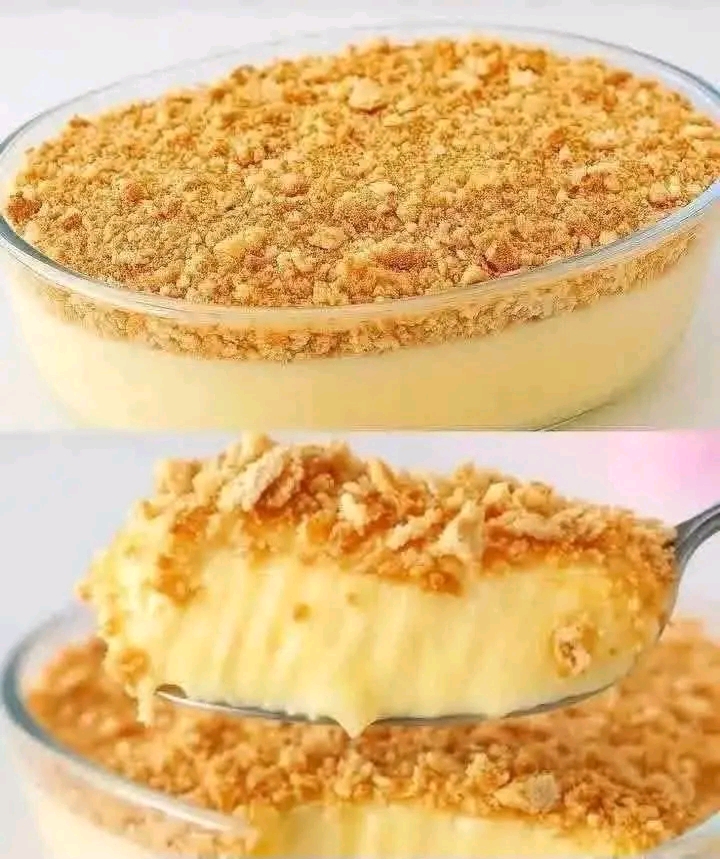
Skip this step for a firmer, more classic pudding texture like the spoonful in your photo. In that case, use the custard as it is.
Step 6: Assemble
Spread a thin layer of crumbs on the bottom of the dish if you like. Pour in the custard and smooth the top with a spatula. Tap the dish gently on the counter to release air bubbles.
Press plastic wrap directly onto the surface of the custard so no skin forms. Refrigerate for at least 4 hours, ideally overnight.
Step 7: Add the topping and serve
Just before serving, remove the plastic wrap and cover the entire surface generously with biscuit crumbs, pressing very lightly so they stay in place. Add the powdered sugar if you like. Don’t add the crumbs too early, because they absorb moisture and turn soft and pasty.
Serve cold. Use a large spoon and scoop all the way to the bottom to get custard and crumbs in every bite.
Tips for a Perfect Result
Use whole milk. Low-fat milk makes a thinner, less flavorful custard. Whole milk and a little cream give that rich, velvety texture.
Whisk without stopping. Cornstarch settles and scorches on the bottom of the pan. Constant whisking and medium-low heat prevent lumps and burning.
Cook it fully. Many failed custards are simply undercooked. If it tastes starchy, it needs another minute or two at a gentle bubble.
Cover while it cools. Plastic wrap touching the surface is the easiest way to avoid a rubbery skin.
Chill long enough. The custard sets as it cools. At 2 hours it will still be soft, at 4 hours it holds a clean scoop, and overnight it is perfect.
Keep the topping dry. Add the biscuit crumbs shortly before serving for the best crunch.
Troubleshooting
My custard is lumpy. The starch was probably not dissolved in cold liquid first, or the heat was too high. Pour it through a sieve, or blend it for 10 seconds with a hand blender.
It’s too runny. It likely wasn’t cooked long enough after thickening. Return it to the pan and cook for a few more minutes while whisking. Next time, use 50 g of cornstarch for a firmer set.
It tastes eggy. Use fresh yolks and make sure the vanilla is good quality. Adding the vanilla at the end, off the heat, keeps the flavor bright.
It’s too sweet. Reduce the sugar to 120 g and skip the condensed milk. The biscuits add sweetness too.
The crumbs went soggy. They were added too early, or the dish was covered after topping. Store the crumbs separately and add them just before serving.
Variations
- Chocolate: Whisk 40 g of cocoa powder into the sugar and cornstarch, and add 80 g of chopped dark chocolate with the butter.
- Caramel: Swirl 3 tablespoons of dulce de leche or caramel sauce into the custard before chilling.
- Lemon: Add the zest of 1 lemon and 2 tablespoons of juice at the end, and reduce the vanilla.
- Coconut: Replace half the milk with coconut milk and top with toasted coconut flakes mixed into the crumbs.
- Coffee: Dissolve 2 teaspoons of instant coffee in the milk for a mocha-style custard.
- Fruit layer: Add sliced bananas or strawberries between the crumbs and custard.
- Individual cups: Layer crumbs, custard, and crumbs again in small glasses for an elegant presentation.
Storage
- Refrigerator: Keeps well for up to 3 days, covered. Keep the crumb topping in a separate airtight container and add it fresh.
- Freezer: Not recommended. Cornstarch custards can turn watery and grainy after thawing.
- Make ahead: You can make the custard a full day ahead, which actually improves the flavor and texture. Top it with crumbs a few minutes before guests arrive.
Approximate Nutrition (per serving, 8 servings)
About 380 calories, 20 g fat, 44 g carbohydrates, 7 g protein. These numbers vary with the biscuits, cream, and condensed milk you use.
Quick Recap
- Crush the biscuits.
- Whisk sugar, cornstarch, salt, cold milk, and yolks until smooth.
- Cook over medium-low heat, whisking constantly, until thick and bubbling.
- Stir in vanilla and butter, then strain.
- Cool slightly, fold in whipped cream (optional), and pour into the dish.
- Chill for at least 4 hours with plastic wrap on the surface.
- Top with biscuit crumbs just before serving.