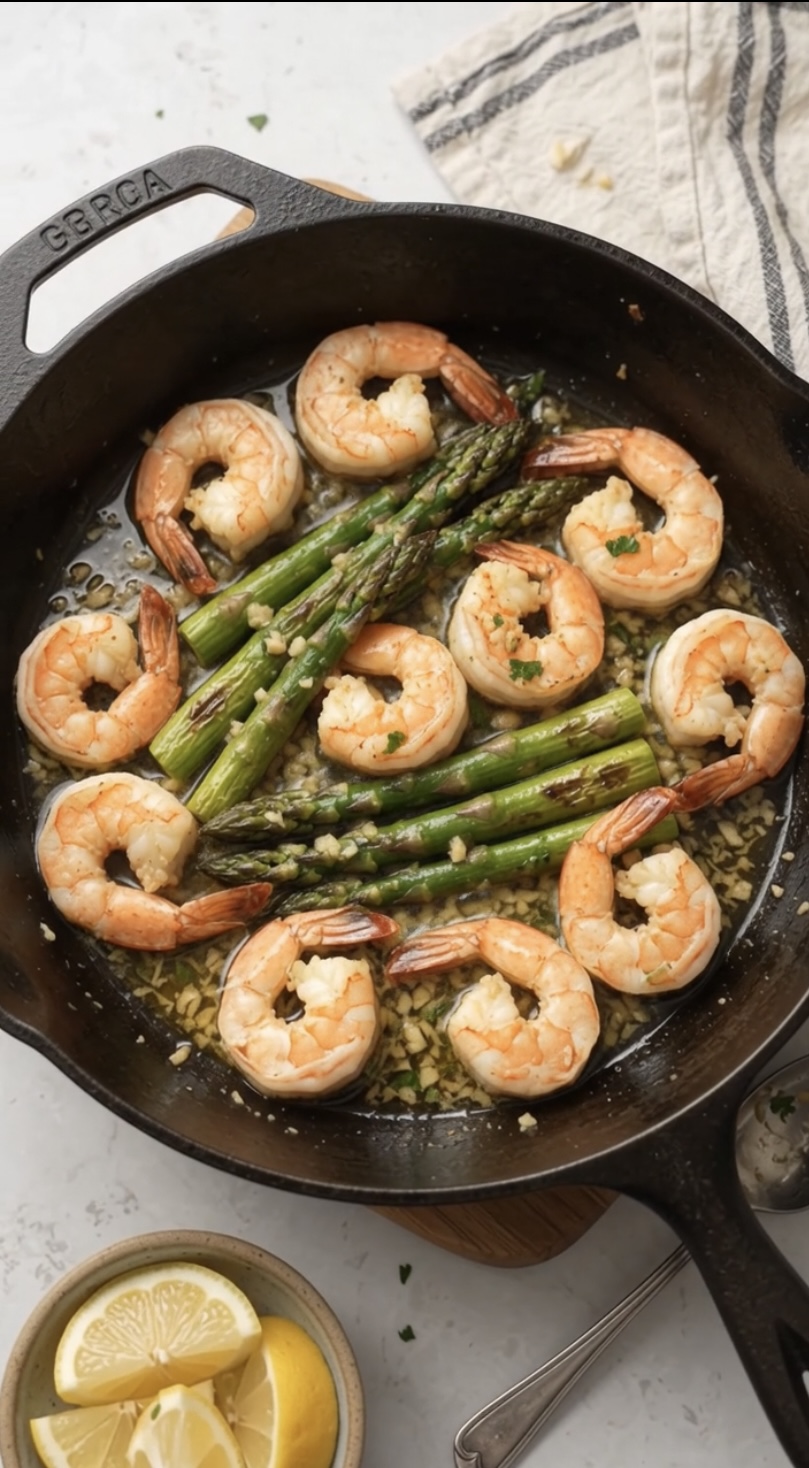
The culinary world is filled with complex dishes that require hours of preparation, intricate techniques, and a laundry list of hard-to-find ingredients. However, some of the most memorable and satisfying meals come from the exact opposite philosophy: simplicity, premium ingredients, and precise execution. Garlic Butter Shrimp Over Grilled Asparagus is the ultimate embodiment of this culinary truth. It is a dish that feels undeniably luxurious, decadent, and restaurant-quality, yet it can be effortlessly prepared in your own kitchen in under twenty minutes.
Whether you are looking for a quick yet elegant weeknight dinner after a long day at the office, a low-carb or keto-friendly meal that does not compromise on flavor, or a romantic date-night centerpiece that leaves you more time to spend with your guest rather than chained to the stove, this recipe delivers on every front. The combination of succulent, tender shrimp swimming in a rich, aromatic garlic and herb butter sauce, paired with the earthy, smoky char of crisp-tender grilled asparagus, creates a symphony of textures and flavors that is impossible to resist.
The Philosophy of Simple, High-Quality Ingredients
When a recipe relies on only a handful of components, every single ingredient must pull its own weight. There are no heavy sauces or complex spices to hide behind; the success of this dish depends entirely on the quality and freshness of what you bring into your kitchen.
1. The Shrimp
Shrimp is the star of the plate, and choosing the right variety matters immensely.
- Size matters: Opt for large or jumbo shrimp (such as 16/20 or 21/25 count per pound). Smaller shrimp overcook in a matter of seconds and can easily turn rubbery, whereas larger shrimp provide that coveted plump, meaty bite.
- Shell-on vs. Peeled: While pre-peeled shrimp offers ultimate convenience, buying shell-on, deveined shrimp and peeling them yourself yields a better flavor if you choose to save the shells for a quick seafood stock. However, for a weeknight meal, peeled and deveined tail-on shrimp saves time while still looking elegant on the plate.
- Fresh versus Frozen: Fresh shrimp straight from the fishmonger is wonderful if available, but high-quality frozen, wild-caught shrimp (thawed properly in cold water just before cooking) is often fresher than “fresh” shrimp sitting behind a seafood counter that was previously frozen. Avoid pre-cooked shrimp entirely, as cooking them a second time will ruin their texture.
2. The Asparagus
Asparagus brings a vibrant green color, a satisfying crunch, and a subtle earthy bitterness that cuts through the richness of the garlic butter.
- Thickness counts: Look for medium-thick stalks. Extremely thin asparagus stalks will overcook and turn mushy on the grill before they develop a good char, while pencil-thin spears can easily slip through grill grates. Thick stalks retain a wonderful snap in the center while getting nicely charred on the outside.
- Freshness check: The ends should look moist and fresh, not woody or dried out. If you rub two spears together, they should squeak slightly.
3. The Garlic and Butter Foundation
- Butter: Use high-quality, unsalted European-style butter if possible. European butter has a lower water content and a higher butterfat percentage, resulting in a richer, silkier sauce that coats the shrimp beautifully.
- Garlic: Fresh cloves are non-negotiable. Pre-minced garlic from a jar lacks the vibrant pungency and natural oils of freshly minced or pressed garlic, which forms the aromatic heart of the butter sauce.
- Acid and Herbs: Freshly squeezed lemon juice is essential to brighten the dish and balance the richness of the butter, while fresh flat-leaf parsley adds a clean, herbaceous finish.
Comprehensive Ingredients List
To make this dish for four servings, gather the following ingredients:
- For the Shrimp and Sauce:
- 1.5 pounds large shrimp, peeled and deveined (tails left on for presentation)
- 4 tablespoons unsalted butter (divided)
- 2 tablespoons extra-virgin olive oil (prevents the butter from burning)
- 5 to 6 cloves garlic, finely minced
- 1/4 teaspoon red pepper flakes (optional, for a subtle background kick)
- 2 tablespoons fresh lemon juice (plus extra lemon wedges for serving)
- 1/4 cup chopped fresh flat-leaf parsley
- Kosher salt and freshly cracked black pepper, to taste
- For the Grilled Asparagus:
- 1 bunch fresh asparagus (about 1 pound), woody ends trimmed
- 1 tablespoon extra-virgin olive oil
- Kosher salt and freshly cracked black pepper, to taste
- Optional: Freshly grated Parmesan cheese for finishing
Step-by-Step Preparation Guide
Step 1: Prep the Asparagus
- Washing and Drying: Rinse the asparagus thoroughly under cold water and pat completely dry with paper towels. Excess moisture will prevent a good sear and cause the asparagus to steam rather than grill.
- Trimming the Ends: Hold an asparagus spear near the ends and bend it gently until it snaps naturally at its own breaking point, where the tough woody stem transitions into the tender stalk. Alternatively, line them up and slice off the bottom inch or two with a sharp chef’s knife.
- Seasoning: Place the trimmed asparagus on a baking sheet or cutting board. Drizzle evenly with 1 tablespoon of olive oil, and toss to coat every spear. Season generously with kosher salt and freshly cracked black pepper.
Step 2: Grill the Asparagus
- Preheating the Heat Source: Preheat an outdoor grill, indoor grill pan, or cast-iron skillet over medium-high heat. You want it hot enough to create appealing grill marks without burning the exterior before the inside cooks.
- Cooking: Lay the asparagus spears perpendicular to the grates so they don’t fall through. Cook for about 4 to 6 minutes, turning occasionally with tongs, until the asparagus is bright green, tender-crisp, and lightly charred in spots.
- Resting: Remove the asparagus from the heat and transfer it to a warm serving platter. Squeeze a tiny squeeze of fresh lemon juice over the top and cover loosely with foil to keep warm.
Step 3: Prepare and Season the Shrimp
- Drying the Shrimp: Place the peeled and deveined shrimp on a plate lined with paper towels and pat them completely dry. Dry shrimp sear much better in the pan, developing a light golden crust rather than stewing in their own liquids.
- Seasoning: Season both sides of the shrimp lightly with kosher salt and freshly cracked black pepper. Keep in mind that butter can sometimes be salty if you use salted varieties, so season conservatively at this stage.
Step 4: Sauté the Shrimp in Garlic Butter
- Heating the Pan: Place a large skillet (cast-iron or stainless steel works wonderfully) over medium-high heat. Add the extra-virgin olive oil and 2 tablespoons of unsalted butter. The oil raises the smoking point of the butter, preventing it from burning while infusing the fat with rich flavor.
- Building the Base: Once the butter is melted and foaming, add the minced garlic and red pepper flakes (if using). Sauté for approximately 30 to 45 seconds, stirring constantly. Watch the garlic closely—it should become intensely fragrant and golden, but never brown, as burnt garlic turns bitter and ruins the sauce.
- Cooking the Shrimp: Arrange the shrimp in a single layer across the bottom of the skillet. Let them sear undisturbed for about 1.5 to 2 minutes until the bottoms turn pink and opaque.
- Flipped and Finished: Flip each shrimp over and cook for another 1 to 2 minutes on the reverse side. Shrimp cook exceptionally fast; the moment they curl into a loose “C” shape and turn completely pink, they are done. Do not overcook, or they will become tough.
Step 5: Create the Emulsified Sauce
- Melting the Remaining Butter: Reduce the heat to low. Add the remaining 2 tablespoons of cold butter and the fresh lemon juice directly into the skillet with the shrimp.
- Swirling and Coating: Swirl the pan or stir gently with a spatula. As the cold butter melts into the pan juices, it emulsifies with the olive oil and lemon juice, creating a glossy, velvety sauce that coats every piece of shrimp.
- Herb Integration: Turn off the heat immediately and stir in the freshly chopped parsley. Taste the sauce and adjust salt and pepper if necessary.
Plating and Presentation
Presentation is half the battle when making a dish feel sophisticated. Because this recipe uses simple, clean ingredients, letting their natural beauty shine through is key.
- The Bed of Asparagus: Create a neat, uniform bed of the grilled asparagus in the center of each shallow bowl or dinner plate, aligning the spears so they sit side-by-side.
- The Shrimp Placement: Spoon the garlic butter shrimp generously over and around the asparagus. Make sure every serving gets an equal share of those plump, juicy shrimp.
- Drizzling the Liquid Gold: Spoon the remaining garlic, herb, and lemon butter sauce from the skillet directly over both the shrimp and the asparagus below. The sauce will seep down, seasoning the vegetables deliciously.
- Final Garnishes: Garnish with an extra sprinkle of fresh chopped parsley and a dusting of freshly grated Parmesan cheese if desired. Place a fresh lemon wedge on the side of the plate for those who enjoy an extra citrus kick.
Nutritional Profile and Health Benefits
Beyond its exquisite taste, Garlic Butter Shrimp Over Grilled Asparagus is a nutritional powerhouse that fits seamlessly into various modern dietary lifestyles.
- Low-Carb and Keto Friendly: Containing virtually zero carbohydrates (aside from trace amounts in the garlic and lemon), this dish is ideal for those following ketogenic, low-carb, or diabetic-friendly meal plans.
- Lean Protein: Shrimp is an exceptional source of high-quality, lean protein while being remarkably low in calories and total fat. It provides essential amino acids and micronutrients like selenium and vitamin B12.
- Healthy Fats: While butter provides saturated fat, pairing it with extra-virgin olive oil introduces heart-healthy monounsaturated fats. You can also adjust the butter-to-oil ratio depending on your dietary preferences.
- Nutrient-Dense Asparagus: Asparagus is packed with dietary fiber, folate, vitamins A, C, E, and K, as well as chromium—a trace mineral that enhances the ability of insulin to transport glucose from the bloodstream into cells.
Variations and Customizations
While the classic recipe is near-perfection, you can easily tweak it to match your pantry inventory or personal palate:
- The Wine Upgrade: Deglaze the pan with a splash of dry white wine (like Sauvignon Blanc or Pinot Grigio) right after searing the garlic, letting it reduce by half before adding the butter and shrimp. This adds a sophisticated depth of acidity.
- Spice It Up: If you love heat, increase the red pepper flakes or add a dash of your favorite hot sauce or Calabrian chili paste to the butter mixture.
- Cheese Lover’s Twist: Fold a handful of freshly grated Parmigiano-Reggiano into the sauce right at the end for a richer, umami-packed cheese coating.
- Carb Addition: If you aren’t watching your carbs, serve this glorious garlic butter mixture and shrimp over a bed of angel hair pasta, creamy polenta, or alongside a crusty loaf of artisanal sourdough bread to mop up every single drop of the sauce.
Conclusion
Garlic Butter Shrimp Over Grilled Asparagus proves that you do not need complicated techniques or long cooking times to create an extraordinary meal. By honoring the core ingredients—fresh succulent shrimp, bright aromatic garlic, rich butter, and smoky grilled asparagus—you can elevate a simple weeknight dinner into a dining experience worthy of a high-end bistro. Master this quick recipe, and you will always have a reliable, elegant, and deeply satisfying dish up your sleeve for any occasion.