The idea sounds appealing because baking soda is inexpensive, easy to find, and already used for many household purposes. However, when it comes to skincare, something being common in the kitchen doesn’t necessarily mean it is safe or effective for your skin.
So, can baking soda really remove dark spots, wrinkles, and dark circles?
The short answer is not reliably. There is no strong clinical evidence showing that applying baking soda to the face can erase wrinkles, remove pigmentation, or eliminate dark circles. In fact, applying concentrated baking soda directly to the skin may do more harm than good.
Here is what you should know—and what you can do instead.
Why Baking Soda Became Popular in Skincare
Baking soda, also known as sodium bicarbonate, is a fine white powder commonly used for cooking, baking, cleaning, and deodorizing.
Because it has a slightly abrasive texture and is alkaline, some DIY beauty recipes suggest mixing it with water, honey, yogurt, lemon juice, or other ingredients and applying the mixture as a facial mask or scrub.
The theory is usually that baking soda can exfoliate dead skin cells and make the skin appear brighter.
You might notice temporarily smoother-looking skin after scrubbing because some surface cells have been removed. However, that doesn’t mean baking soda is treating the underlying cause of pigmentation, wrinkles, or dark circles.
Can Baking Soda Remove Dark Spots?
Dark spots can develop for many reasons, including sun exposure, acne marks, inflammation, hormonal changes, and the natural aging process.
Simply exfoliating the surface of the skin doesn’t necessarily remove the pigment responsible for these spots.
More importantly, irritating the skin can sometimes make pigmentation worse. This is particularly relevant for people who develop dark marks easily after pimples, cuts, or irritation.
Instead of relying on baking soda, ingredients with better evidence for improving uneven pigmentation include:
- Vitamin C
- Niacinamide
- Azelaic acid
- Retinoids
- Certain exfoliating acids
- Sunscreen
The right ingredient depends on the cause and severity of the pigmentation.
What About Wrinkles?
Wrinkles are a natural part of aging. They develop partly because the skin gradually produces less collagen and elastin, while repeated facial movement, sun exposure, and other environmental factors contribute to visible lines.
Baking soda cannot rebuild collagen or reverse this process.
A DIY baking soda mask may temporarily make your skin feel different because of its exfoliating effect, but that isn’t the same thing as reducing wrinkles.
For long-term skin aging concerns, daily sun protection is one of the most important steps. Retinoids also have considerably more evidence behind them for improving the appearance of fine lines than kitchen-based DIY treatments.
Can It Get Rid of Dark Circles?
Dark circles are another problem that baking soda cannot reliably fix.
Under-eye darkness can have several causes, including genetics, pigmentation, visible blood vessels, shadows created by facial structure, thinning skin, allergies, and lack of sleep.
Because the skin around the eyes is particularly delicate, applying abrasive or irritating ingredients there is especially risky.
Rather than scrubbing the area with baking soda, use a gentle moisturizer and sunscreen formulated for the face. If dark circles are persistent or suddenly become significantly different, discussing them with a dermatologist can help determine the cause.
A Safer DIY Option for a Fresh-Looking Face
If what you want is a simple homemade treatment that leaves your skin feeling soft and hydrated, you don’t need baking soda.
Try this gentle oatmeal and yogurt face mask instead.
Ingredients
- 1 tablespoon finely ground plain oats
- 1 tablespoon plain, unsweetened yogurt
- ½ teaspoon honey, optional
Instructions
Add the ground oats and yogurt to a clean bowl. Mix until you have a smooth, creamy consistency.
If you’re using honey, add a small amount and mix well.
Apply a thin layer to clean skin, avoiding the eye area and lips.
Leave it on for approximately 5–10 minutes.
Gently rinse with lukewarm water. Don’t scrub aggressively while removing it.
Pat your face dry with a clean, soft towel and follow with your usual moisturizer.
Why This Is a Better Choice
Oats are commonly used in skincare because they can be soothing and moisturizing, while yogurt provides a creamy base.
However, even natural ingredients can cause irritation or allergies in some people. Always test a small amount on an inconspicuous area before applying a new DIY mixture to your entire face.
And remember: this mask isn’t a treatment for wrinkles or pigmentation. Its purpose is simply to provide a gentle, moisturizing skincare experience.
The Most Important Step for Dark Spots
If you’re trying to improve the appearance of dark spots, one of the biggest mistakes is focusing only on products that “remove” pigmentation while ignoring the sun.
UV exposure can contribute to pigmentation and can make existing dark spots more noticeable.
That’s why a broad-spectrum sunscreen with SPF 30 or higher is one of the most useful additions to a skincare routine.
Apply it every morning, particularly when you’ll be spending time outdoors. Reapply as needed according to the product’s directions and your level of sun exposure.
Without consistent sun protection, it can be much harder to maintain improvements in uneven skin tone.
A Simple Daily Routine
You don’t need a complicated 10-step routine.
Morning
1. Gentle cleanser
Use a mild cleanser if you need one.
2. Treatment serum
Depending on your skin concerns, this could contain vitamin C or niacinamide.
3. Moisturizer
Choose one appropriate for your skin type.
4. Sunscreen
Finish with broad-spectrum SPF 30 or higher.
Evening
1. Cleanse
Remove makeup, sunscreen, and daily buildup.
2. Treatment
A dermatologist-approved retinoid or another appropriate active can be considered depending on your skin and goals.
3. Moisturizer
Keep the skin barrier comfortable and hydrated.
Consistency is usually much more valuable than constantly trying viral kitchen remedies.
What You Should NOT Mix With Baking Soda
If you see viral recipes suggesting baking soda combined with lemon juice, be especially cautious.
Lemon juice can be irritating, and combining irritating ingredients can leave the skin red, dry, or uncomfortable. Sun exposure after certain citrus ingredients can also create additional skin problems.
Avoid using baking soda as a facial scrub, particularly if you already have sensitive, dry, irritated, acne-prone, or damaged skin.
Never apply a DIY mixture close to the eyes.
Final Thoughts
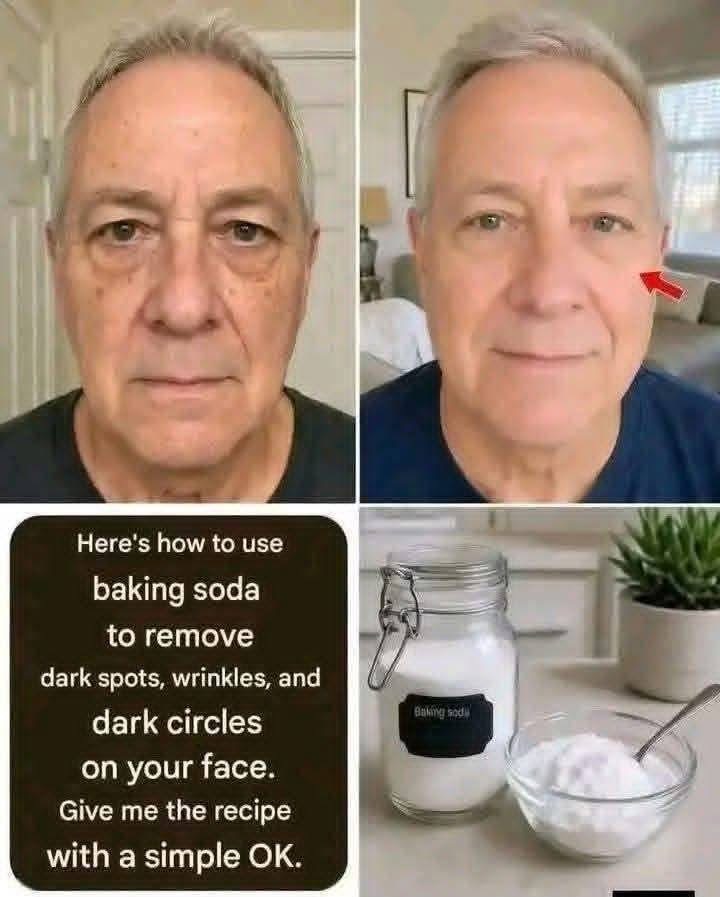
The viral baking soda skincare recipe may look convincing because before-and-after photos can make the results seem dramatic. But photographs can be affected by lighting, camera settings, facial expression, makeup, filters, and other factors.
Baking soda isn’t a proven treatment for dark spots, wrinkles, or dark circles, and applying it directly to the face can irritate the skin.
If your goal is brighter, smoother, healthier-looking skin, a simple routine built around gentle cleansing, moisturizing, effective skincare ingredients, and daily sunscreen is a much safer approach.
And if pigmentation, wrinkles, or dark circles are a major concern, a dermatologist can help identify the actual cause and recommend treatments that are appropriate for your skin.
Bottom line: Your kitchen may be full of useful ingredients, but your face doesn’t need every one of them. When it comes to skincare, gentle and evidence-based usually beats viral DIY hacks.
The internet is full of simple beauty remedies promising smoother, brighter, younger-looking skin. One of the most common viral suggestions is using baking soda on the face to reduce dark spots, wrinkles, and under-eye circles.
The idea sounds appealing because baking soda is inexpensive, easy to find, and already used for many household purposes. However, when it comes to skincare, something being common in the kitchen doesn’t necessarily mean it is safe or effective for your skin.
So, can baking soda really remove dark spots, wrinkles, and dark circles?
The short answer is not reliably. There is no strong clinical evidence showing that applying baking soda to the face can erase wrinkles, remove pigmentation, or eliminate dark circles. In fact, applying concentrated baking soda directly to the skin may do more harm than good.
Here is what you should know—and what you can do instead.
Why Baking Soda Became Popular in Skincare
Baking soda, also known as sodium bicarbonate, is a fine white powder commonly used for cooking, baking, cleaning, and deodorizing.
Because it has a slightly abrasive texture and is alkaline, some DIY beauty recipes suggest mixing it with water, honey, yogurt, lemon juice, or other ingredients and applying the mixture as a facial mask or scrub.
The theory is usually that baking soda can exfoliate dead skin cells and make the skin appear brighter.
You might notice temporarily smoother-looking skin after scrubbing because some surface cells have been removed. However, that doesn’t mean baking soda is treating the underlying cause of pigmentation, wrinkles, or dark circles.
Can Baking Soda Remove Dark Spots?
Dark spots can develop for many reasons, including sun exposure, acne marks, inflammation, hormonal changes, and the natural aging process.
Simply exfoliating the surface of the skin doesn’t necessarily remove the pigment responsible for these spots.
More importantly, irritating the skin can sometimes make pigmentation worse. This is particularly relevant for people who develop dark marks easily after pimples, cuts, or irritation.
Instead of relying on baking soda, ingredients with better evidence for improving uneven pigmentation include:
- Vitamin C
- Niacinamide
- Azelaic acid
- Retinoids
- Certain exfoliating acids
- Sunscreen
The right ingredient depends on the cause and severity of the pigmentation.
What About Wrinkles?
Wrinkles are a natural part of aging. They develop partly because the skin gradually produces less collagen and elastin, while repeated facial movement, sun exposure, and other environmental factors contribute to visible lines.
Baking soda cannot rebuild collagen or reverse this process.
A DIY baking soda mask may temporarily make your skin feel different because of its exfoliating effect, but that isn’t the same thing as reducing wrinkles.
For long-term skin aging concerns, daily sun protection is one of the most important steps. Retinoids also have considerably more evidence behind them for improving the appearance of fine lines than kitchen-based DIY treatments.
Can It Get Rid of Dark Circles?
Dark circles are another problem that baking soda cannot reliably fix.
Under-eye darkness can have several causes, including genetics, pigmentation, visible blood vessels, shadows created by facial structure, thinning skin, allergies, and lack of sleep.
Because the skin around the eyes is particularly delicate, applying abrasive or irritating ingredients there is especially risky.
Rather than scrubbing the area with baking soda, use a gentle moisturizer and sunscreen formulated for the face. If dark circles are persistent or suddenly become significantly different, discussing them with a dermatologist can help determine the cause.
A Safer DIY Option for a Fresh-Looking Face
If what you want is a simple homemade treatment that leaves your skin feeling soft and hydrated, you don’t need baking soda.
Try this gentle oatmeal and yogurt face mask instead.
Ingredients
- 1 tablespoon finely ground plain oats
- 1 tablespoon plain, unsweetened yogurt
- ½ teaspoon honey, optional
Instructions
Add the ground oats and yogurt to a clean bowl. Mix until you have a smooth, creamy consistency.
If you’re using honey, add a small amount and mix well.
Apply a thin layer to clean skin, avoiding the eye area and lips.
Leave it on for approximately 5–10 minutes.
Gently rinse with lukewarm water. Don’t scrub aggressively while removing it.
Pat your face dry with a clean, soft towel and follow with your usual moisturizer.
Why This Is a Better Choice
Oats are commonly used in skincare because they can be soothing and moisturizing, while yogurt provides a creamy base.
However, even natural ingredients can cause irritation or allergies in some people. Always test a small amount on an inconspicuous area before applying a new DIY mixture to your entire face.
And remember: this mask isn’t a treatment for wrinkles or pigmentation. Its purpose is simply to provide a gentle, moisturizing skincare experience.
The Most Important Step for Dark Spots
If you’re trying to improve the appearance of dark spots, one of the biggest mistakes is focusing only on products that “remove” pigmentation while ignoring the sun.
UV exposure can contribute to pigmentation and can make existing dark spots more noticeable.
That’s why a broad-spectrum sunscreen with SPF 30 or higher is one of the most useful additions to a skincare routine.
Apply it every morning, particularly when you’ll be spending time outdoors. Reapply as needed according to the product’s directions and your level of sun exposure.
Without consistent sun protection, it can be much harder to maintain improvements in uneven skin tone.
A Simple Daily Routine
You don’t need a complicated 10-step routine.
Morning
1. Gentle cleanser
Use a mild cleanser if you need one.
2. Treatment serum
Depending on your skin concerns, this could contain vitamin C or niacinamide.
3. Moisturizer
Choose one appropriate for your skin type.
4. Sunscreen
Finish with broad-spectrum SPF 30 or higher.
Evening
1. Cleanse
Remove makeup, sunscreen, and daily buildup.
2. Treatment
A dermatologist-approved retinoid or another appropriate active can be considered depending on your skin and goals.
3. Moisturizer
Keep the skin barrier comfortable and hydrated.
Consistency is usually much more valuable than constantly trying viral kitchen remedies.
What You Should NOT Mix With Baking Soda
If you see viral recipes suggesting baking soda combined with lemon juice, be especially cautious.
Lemon juice can be irritating, and combining irritating ingredients can leave the skin red, dry, or uncomfortable. Sun exposure after certain citrus ingredients can also create additional skin problems.
Avoid using baking soda as a facial scrub, particularly if you already have sensitive, dry, irritated, acne-prone, or damaged skin.
Never apply a DIY mixture close to the eyes.
Final Thoughts
The viral baking soda skincare recipe may look convincing because before-and-after photos can make the results seem dramatic. But photographs can be affected by lighting, camera settings, facial expression, makeup, filters, and other factors.
Baking soda isn’t a proven treatment for dark spots, wrinkles, or dark circles, and applying it directly to the face can irritate the skin.
If your goal is brighter, smoother, healthier-looking skin, a simple routine built around gentle cleansing, moisturizing, effective skincare ingredients, and daily sunscreen is a much safer approach.
And if pigmentation, wrinkles, or dark circles are a major concern, a dermatologist can help identify the actual cause and recommend treatments that are appropriate for your skin.
Bottom line: Your kitchen may be full of useful ingredients, but your face doesn’t need every one of them. When it comes to skincare, gentle and evidence-based usually beats viral DIY hacks.