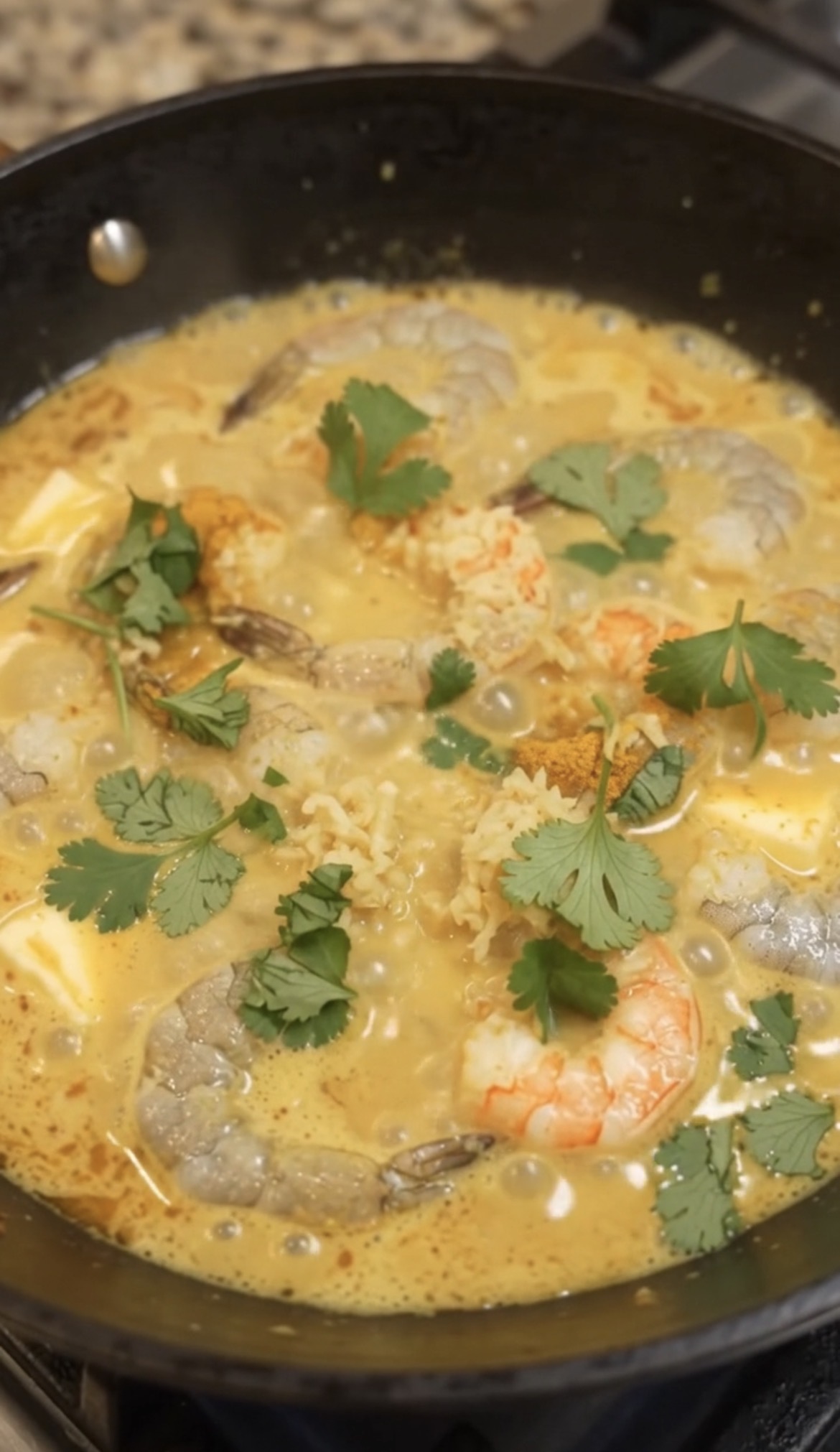
Coconut curry shrimp has that magical combination of rich, warm spices and silky coconut milk that makes it feel like a treat, even on a totally ordinary weeknight. This stovetop skillet version keeps things simple by letting you cook the shrimp straight from frozen — no thawing, no planning ahead, just a hot pan and a fast, fragrant curry sauce.
The sauce comes together with curry powder, garlic, ginger, and full-fat coconut milk, simmered just long enough to bloom the spices and turn silky and rich. The shrimp cook gently right in that same sauce, soaking up all that warm curry flavor as they go from frozen to perfectly tender in a matter of minutes. Serve it over rice or with warm naan, and it tastes like something from your favorite curry house, minus the wait for delivery.
Because frozen shrimp release extra water as they thaw and cook, this recipe is built to account for that so your curry sauce stays rich and coconutty instead of watered down. A quick simmer before the coconut milk goes in, plus a careful eye on cook time once the shrimp are added, keeps everything balanced and prevents the shrimp from turning rubbery.
Why You’ll Love This Recipe
- No thawing required — the shrimp cook directly from frozen.
- Warm, fragrant curry flavor — rich coconut milk with garlic, ginger, and curry spice.
- Ready in about 20 minutes — faster than most takeout curry.
- One skillet, easy cleanup — everything cooks in a single pan.
- Naturally gluten-free — easy to adapt for different dietary needs.
Ingredient Notes
Full-fat coconut milk is what gives this curry its rich, silky texture, so it’s worth avoiding the “lite” version if you can — lite coconut milk has a much higher water content and can leave the sauce thin and watery. Shake the can well before opening, since coconut milk tends to separate in the can, with the thick cream rising to the top.
Curry powder blends vary quite a bit in heat and flavor depending on the brand, so it’s worth tasting yours if you’re unfamiliar with it, or starting with a slightly smaller amount and adding more to taste. If you enjoy a more complex curry flavor, a spoonful of red curry paste alongside the curry powder adds extra depth and a gentle kick without much extra effort.
For the shrimp, frozen, peeled, and deveined shrimp in the medium-to-large range (31/40 or 26/30 count) work best, since they cook through fully in the short simmer time without turning tough. Fresh ginger and garlic make a noticeable difference over the jarred or powdered versions, giving the sauce a brighter, more aromatic base that really carries the dish.
[Recipe card goes here — ingredients, step-by-step instructions, and a “Jump to Recipe” button render automatically in this spot.]
Step-by-Step Instructions
- Sauté the aromatics. Heat oil in a large skillet over medium heat, then add the minced garlic, grated ginger, and curry powder, stirring for about 1 minute until fragrant. Tip: cooking the curry powder briefly in the oil “blooms” the spices, which makes the final sauce taste noticeably richer.
- Add the coconut milk and broth. Pour in the coconut milk and a splash of chicken or vegetable broth, stirring to combine, and bring to a gentle simmer for 2–3 minutes to let the flavors meld. Tip: simmering the sauce briefly before adding the shrimp helps it thicken slightly, which keeps the finished dish from feeling too thin.
- Add the frozen shrimp. Add the shrimp straight from frozen, breaking apart any large clumps, and stir gently to coat in the curry sauce.
- Simmer until just cooked through. Let the shrimp simmer gently in the sauce for 6–8 minutes, stirring occasionally, until they turn pink and opaque all the way through. Tip: keep the heat at a gentle simmer rather than a hard boil — boiling coconut milk too aggressively can cause it to separate and turn oily.
- Adjust the sauce consistency. If the sauce seems thin from the shrimp releasing extra water, let it simmer uncovered for an extra couple of minutes to reduce slightly. Tip: this is the step most people skip, and it’s the difference between a rich curry and a watery one.
- Finish and serve. Stir in fresh lime juice and chopped cilantro, taste and adjust salt or curry powder as needed, then serve immediately over rice or with warm naan.
Nutrition Snapshot (Estimated, Per Serving)
These are approximate values based on a 4-serving batch and will vary depending on exact brands and portion sizes used.
- Calories: ~395
- Protein: ~26g
- Carbs: ~7g
- Fat: ~29g
Storage & Reheating
Leftovers keep well in an airtight container in the fridge for up to 3 days. Reheat gently on the stovetop over low heat, stirring occasionally, or in the microwave in short bursts at reduced power — coconut milk-based sauces can separate slightly if reheated too hot or too fast, though a quick stir usually brings them back together.
This dish actually freezes reasonably well compared to dairy-cream sauces, since coconut milk holds up a bit better after thawing. Freeze in an airtight container for up to 2 months, thaw overnight in the fridge, and reheat gently on the stovetop, stirring well to recombine the sauce.
Budget Note
This recipe comes out to roughly $3.50–$4.50 per serving, with frozen shrimp being the main cost driver. To stretch it further, buy shrimp in bulk frozen bags rather than small portions, and bulk up the dish with vegetables like bell peppers, snap peas, or spinach so you can use slightly less shrimp per serving without sacrificing how filling the meal feels.
Variations to Try
Lighter version: Use light coconut milk instead of full-fat, and add a cornstarch slurry (a teaspoon of cornstarch mixed with a little water) toward the end to help thicken the thinner sauce back up. It won’t be quite as rich, but the curry flavor still shines through.
Vegetable-packed version: Stir in a couple of handfuls of bell peppers, snap peas, or baby spinach along with the shrimp, letting the vegetables cook down in the sauce for extra volume, color, and nutrition without much added effort.
Extra spicy version: Add a spoonful of red curry paste along with the curry powder, or stir in sliced fresh chili with the aromatics, for a curry with noticeably more heat.
Meal-prep friendly: Portion the finished curry into individual containers with rice, and it holds up well in the fridge for a few days. A fresh squeeze of lime juice right before eating helps brighten the flavor back up after reheating.
Frequently Asked Questions
Can I use fresh shrimp instead of frozen? Yes — if using fresh or thawed shrimp, reduce the simmer time in step 4 to about 3–4 minutes, since they cook faster than frozen shrimp.
Why is my sauce thin? This usually happens when the frozen shrimp release extra water as they cook, or when lite coconut milk is used instead of full-fat. Let the sauce simmer uncovered for a few extra minutes to reduce, or stir in a small cornstarch slurry to thicken it.
Can I make this ahead of time? The curry sauce base (through step 2) can be made a day or two ahead and refrigerated, then reheated before adding the frozen shrimp fresh, which helps cut down on the actual cook time.
What can I use instead of curry powder? A tablespoon of red or yellow curry paste can work in its place, though the flavor will be a bit different — curry paste tends to be more pungent and slightly spicier than most curry powder blends.
Is this recipe very spicy? As written, it’s mild to medium, with the heat mostly depending on the curry powder used. Add red curry paste or fresh chili if you’d like more of a kick.
Related Recipes
- Slow Cooker Creamy Tuscan Shrimp
- Creamy Garlic Parmesan Shrimp
- Skillet Creamy Lemon Shrimp