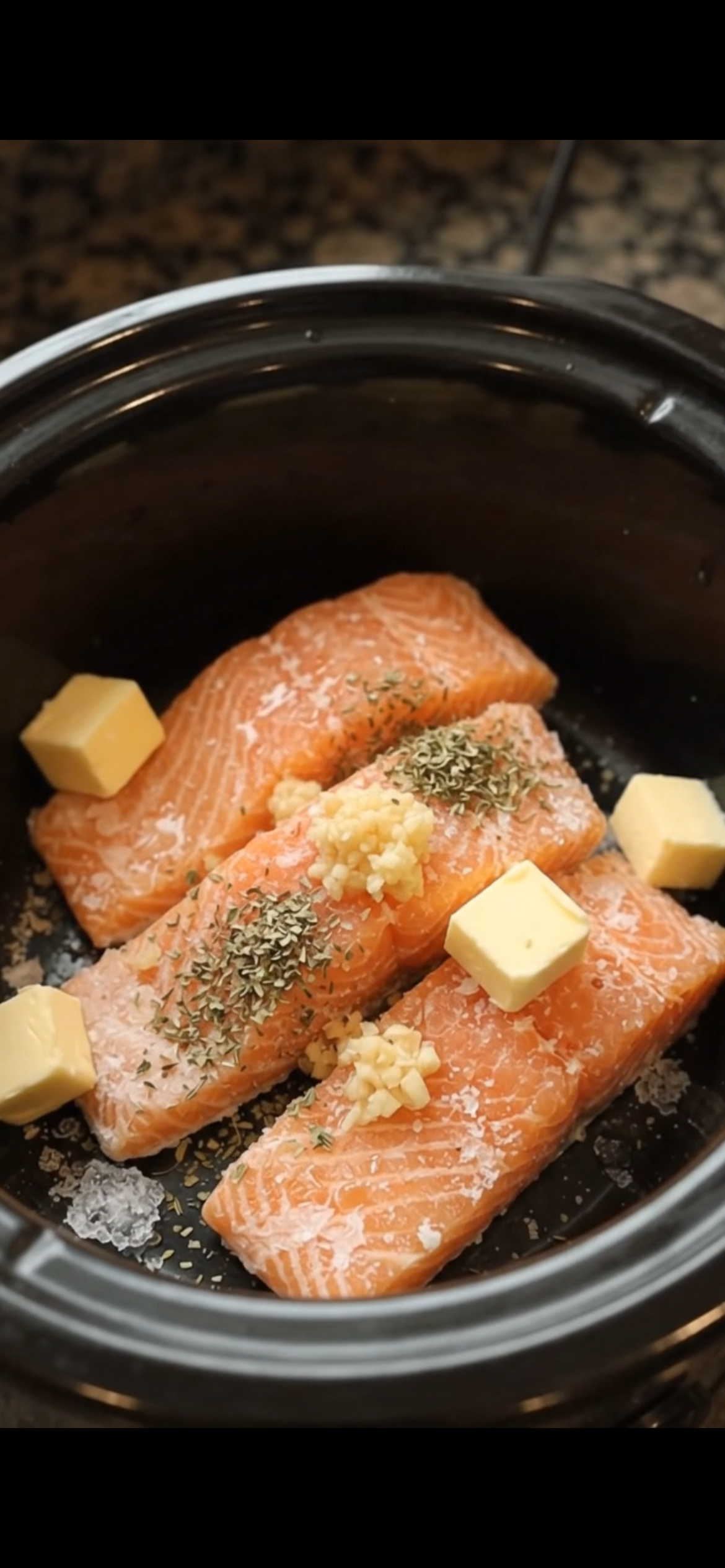
Salmon has a reputation for being finicky — overcook it by even a couple of minutes and it goes from tender to dry fast. This slow cooker lemon herb salmon takes a lot of that pressure off by using gentle, moist heat instead of a hot oven or skillet, and it works beautifully with salmon straight from the freezer. No thawing, no timing anxiety, just a foolproof method that turns out moist, flaky fish practically every time.
The gentle heat of a slow cooker is actually one of the best-kept secrets for cooking delicate proteins like salmon, since there’s no risk of a blast of high heat drying it out the way an oven or stovetop sometimes can. Wrapped in a bright, herby lemon butter sauce, the salmon steams gently in its own little packet of flavor, coming out tender and infused all the way through.
This is the kind of recipe that’s perfect for anyone who’s been intimidated by cooking salmon before, or anyone who just wants a nearly hands-off way to get a healthy, flavorful dinner on the table. Pair it with rice, roasted vegetables, or a simple salad, and you’ve got a meal that feels like it took far more effort than it actually did.
Why You’ll Love This Recipe
- No thawing required — the salmon cooks directly from frozen.
- Nearly foolproof texture — gentle slow cooker heat helps prevent dry, overcooked salmon.
- Bright, herby lemon flavor — simple ingredients, big fresh taste.
- Minimal hands-on time — just a few minutes of prep, then walk away.
- Naturally healthy — a lean, protein-packed dinner that still feels indulgent.
Ingredient Notes
Individually frozen salmon fillets (skin-on or skinless, whichever you prefer) work best for this recipe, since they’re easy to portion and tend to cook more evenly than one large frozen block. Try to choose fillets of similar thickness so they finish cooking around the same time — a few thin tail-end pieces mixed in with thicker center-cut portions can throw off the timing.
Fresh lemon juice and zest make a noticeable difference over bottled lemon juice, giving the sauce a brighter, more fragrant quality that really complements the richness of the salmon. Fresh dill is the classic herb pairing here, but parsley, thyme, or a mix of whatever soft herbs you have on hand all work well too.
A good quality butter forms the base of the sauce, though olive oil can be used instead for a slightly lighter, dairy-free version. If you like a little extra depth, a small spoonful of Dijon mustard whisked into the butter and lemon mixture adds a subtle tang that pairs nicely with the herbs without overpowering the salmon itself.
[Recipe card goes here — ingredients, step-by-step instructions, and a “Jump to Recipe” button render automatically in this spot.]
Step-by-Step Instructions
- Make the lemon herb butter. Whisk together the melted butter, lemon juice, lemon zest, minced garlic, and chopped fresh herbs in a small bowl. Tip: whisking the sauce separately first, rather than adding ingredients straight into the slow cooker, helps it come together more evenly before it coats the salmon.
- Place the frozen salmon in the slow cooker. Arrange the frozen fillets in a single layer in the bottom of the slow cooker, spacing them out as much as possible rather than stacking them. Tip: if your slow cooker is small, cook in batches or on a lower fillet count so everything gets even contact with the sauce.
- Pour the sauce over the salmon. Spoon the lemon herb butter mixture evenly over each fillet, making sure most of the surface is covered.
- Cook on low, gentle heat. Cover and cook on LOW for 1.5–2 hours, checking at the earlier end of the range, since slow cooker wattages and salmon thicknesses vary. Tip: resist the urge to cook on HIGH for a shorter time — the gentle LOW setting is what gives this method its moist, tender texture.
- Check for doneness. The salmon is ready when it flakes easily with a fork and reaches an internal temperature of about 145°F at the thickest part. Tip: check the thinnest fillet first and remove it earlier if needed, letting thicker pieces finish for a few extra minutes.
- Finish and serve. Spoon the buttery lemon sauce from the bottom of the slow cooker back over the salmon, garnish with extra fresh herbs and a lemon wedge, and serve immediately with rice, potatoes, or a simple green salad.
Nutrition Snapshot (Estimated, Per Serving)
These are approximate values based on one 6-ounce salmon fillet per serving and will vary depending on exact cuts and portion sizes used.
- Calories: ~340
- Protein: ~34g
- Carbs: ~2g
- Fat: ~22g
Storage & Reheating
Leftovers keep in an airtight container in the fridge for up to 2 days. Reheat gently in a low oven (around 275°F) covered with foil for about 10 minutes, or in the microwave at reduced power in short bursts, to help prevent the salmon from drying out or turning rubbery.
Cooked salmon can be frozen for up to 1 month, though the texture will soften somewhat after thawing and reheating. If you plan to freeze leftovers, flake the salmon first so it’s easy to fold into salads, pasta, or grain bowls rather than trying to reheat whole fillets.
Budget Note
This recipe runs on the higher end at roughly $5–$7 per serving, since salmon tends to be one of the pricier proteins. To bring the cost down, watch for sales on frozen salmon portions, buy in bulk bags rather than individually wrapped fillets, and consider using smaller portions paired with a filling side like rice or roasted potatoes to stretch the meal further.
Variations to Try
Dairy-free version: Use olive oil in place of the butter for the sauce, keeping all the other lemon and herb ingredients the same for a lighter, dairy-free take that’s just as flavorful.
Garlic parmesan twist: Stir a couple tablespoons of grated Parmesan into the butter sauce along with an extra clove of garlic for a richer, cheesier variation on the classic lemon herb flavor.
Air fryer finish: After slow cooking, transfer the salmon to an air fryer at 400°F for 2–3 minutes to add a bit of light color and texture to the top, since the slow cooker method won’t produce any browning on its own.
Meal-prep friendly: Flake the cooked salmon and portion it into containers with rice and steamed vegetables for an easy grab-and-go lunch throughout the week, reheating gently to preserve the texture as much as possible.
Frequently Asked Questions
Can I use fresh salmon instead of frozen? Yes — if using fresh or thawed salmon, reduce the cook time to about 45–60 minutes on LOW, checking for doneness a bit earlier than you would with frozen fillets.
Why did my salmon turn out dry? This usually happens when the salmon cooks too long or the slow cooker runs hotter than expected. Start checking for doneness at the earlier end of the time range, especially with thinner fillets, and avoid the HIGH setting for this particular method.
Can I make this ahead of time? The lemon herb butter sauce can be mixed a day ahead and refrigerated, but the salmon itself is best cooked fresh, since reheating can dry it out more than reheating heartier proteins.
What can I use instead of dill? Fresh parsley, thyme, or a combination of soft herbs all work well in place of dill, giving a slightly different but equally fresh flavor profile.
Is this recipe spicy? No, this is a bright, herby, mild dish rather than a spicy one — a pinch of red pepper flakes in the butter sauce is an easy way to add a little heat if you’d like.
Related Recipes
- Slow Cooker Salmon & Shrimp Surf Combo
- Skillet Creamy Lemon Shrimp
- Slow Cooker Creamy Tuscan Shrimp