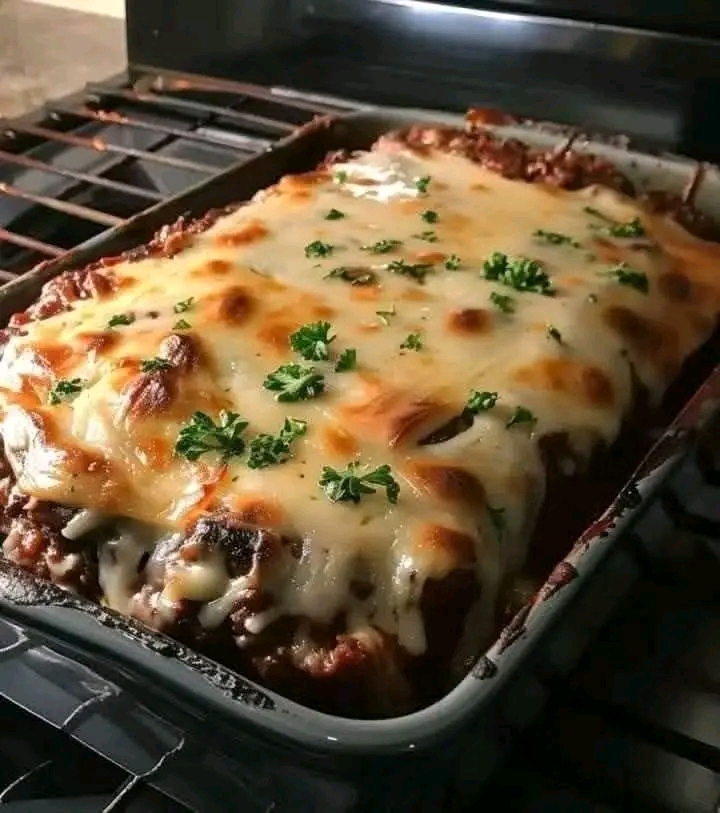
There’s nothing quite like pulling a pan of cheesy baked lasagna out of the oven — layers of tender pasta, rich meat sauce, and melted cheese bubbling and golden on top, with that first slice practically stretching with cheese as you lift it out. It’s the kind of dish that fills the whole house with the smell of a Sunday dinner, even on a random weeknight.
I started making this version of lasagna after one too many soggy, watery attempts, and the fix turned out to be simpler than expected — a well-reduced sauce, properly drained pasta, and a generous, well-seasoned cheese layer that holds everything together. The result is a lasagna that slices cleanly, holds its layers, and has that deeply golden, slightly crisp cheese top that everyone fights over.
What makes this recipe worth keeping in your regular rotation is how well it feeds a crowd, how easily it reheats, and how forgiving it is if you need to swap ingredients based on what’s in your fridge. Whether you’re making it for a family dinner, a potluck, or stocking your freezer for busy weeks ahead, this lasagna delivers every time.
Why You’ll Love This Recipe
- Rich, cheesy, and satisfying — layers of gooey melted cheese over a hearty meat sauce.
- Great for feeding a crowd — one pan easily serves 8–10 people.
- Make-ahead and freezer-friendly — assemble now, bake later.
- Customizable — easy to swap meats, cheeses, or add vegetables.
- Reheats beautifully — often tastes even better the next day.
Ingredient Notes
Ground beef is the classic choice for the meat sauce, but a mix of ground beef and Italian sausage adds an extra layer of flavor if you want something a bit heartier. For the sauce itself, a good jarred marinara can work in a pinch, but simmering it with extra garlic, a splash of red wine, and a pinch of sugar to balance the acidity makes a noticeable difference in the final flavor.
For the cheese layers, a combination of ricotta, mozzarella, and parmesan gives the best balance of creaminess and that golden, stretchy top layer. If ricotta isn’t available or you’d prefer a substitute, cottage cheese blended smooth works surprisingly well and is often more budget-friendly. Freshly grated mozzarella melts more evenly than pre-shredded bags, which are coated in anti-caking agents that can leave the cheese slightly grainy once baked.
As for the noodles, traditional lasagna noodles need to be boiled until just short of al dente, since they’ll continue cooking in the oven — no-boil noodles are a convenient shortcut, but make sure your sauce has enough moisture to fully soften them as they bake, or the edges can stay a bit firm.
[Recipe card goes here]
Step-by-Step Instructions
1. Cook the noodles. Boil the lasagna noodles in salted water until just short of al dente, then drain and lay flat to prevent sticking. Tip: slightly undercooking the noodles here keeps them from turning mushy after baking.
2. Brown the meat and build the sauce. Brown the ground beef (and sausage, if using) with diced onion and garlic, then stir in marinara sauce and simmer for 15–20 minutes to deepen the flavor.
3. Mix the ricotta filling. Combine ricotta, an egg, a handful of parmesan, and chopped fresh parsley in a bowl until smooth. Tip: the egg helps the ricotta layer set rather than stay loose once baked.
4. Layer the lasagna. Spread a thin layer of sauce on the bottom of the baking dish, then alternate layers of noodles, ricotta mixture, meat sauce, and shredded mozzarella, repeating until the pan is filled.
5. Top with the final cheese layer. Finish with a generous layer of mozzarella and a sprinkle of parmesan over the top. Tip: don’t skimp here — this is the layer that gives you that golden, bubbly finish.
6. Bake covered, then uncovered. Cover with foil and bake at 375°F (190°C) for 25 minutes, then remove the foil and bake for another 20–25 minutes until golden and bubbling. Tip: covering the pan for the first half prevents the cheese from browning too early before the inside is fully heated through.
7. Rest before slicing. Let the lasagna rest for 10–15 minutes before slicing — this allows the layers to set so your slices hold together instead of sliding apart.
Nutrition Snapshot (Per Serving, Approximate)
- Calories: 430
- Protein: 27g
- Carbohydrates: 32g
- Fat: 22g
These figures are estimates based on standard ingredients and a 10-serving pan, and will vary depending on brands and portion sizes.
Storage & Reheating
Leftovers keep well in an airtight container in the fridge for up to 5 days. For the best texture, reheat individual slices in the oven at 350°F for about 15–20 minutes, covered loosely with foil to prevent the cheese from drying out. To freeze, you can freeze the lasagna either baked or unbaked, tightly wrapped, for up to 3 months — if baking from frozen, add about 30–40 extra minutes to the bake time, keeping it covered for most of that time.
Budget Note
This recipe costs roughly $1.80–$2.20 per serving, making it a budget-friendly option for feeding a large group. To save further, buy block cheese and shred it yourself rather than pre-shredded bags, and stretch the meat sauce with an extra can of diced tomatoes if you’re serving a larger crowd.
Variations to Try
Healthy/lighter version: Use ground turkey instead of beef, part-skim ricotta and mozzarella, and add a layer of sautéed spinach or zucchini for extra volume with fewer calories per serving.
Meal-prep friendly: Assemble the lasagna in individual foil pans instead of one large dish, freezing several portions at once for easy weeknight dinners that just need reheating.
Vegetarian swap: Skip the meat entirely and add sautéed mushrooms, spinach, and zucchini to the sauce for a hearty, vegetable-forward version that still holds up well in layers.
Gluten-free swap: Use gluten-free lasagna noodles, which are widely available and hold up well in baked dishes, making this an easy adjustment without changing the rest of the recipe.
Frequently Asked Questions
Can I make this ahead of time? Yes — you can fully assemble the lasagna up to a day ahead and store it covered in the fridge, then bake it fresh when you’re ready, adding a few extra minutes to the covered bake time since it will start cold.
What can I use instead of ricotta? Cottage cheese blended until smooth is a great substitute, and some cooks also use a bechamel sauce in place of ricotta for a different, creamier style of lasagna.
Why is my lasagna watery? This is usually from excess moisture in the sauce or vegetables — make sure your meat sauce is well-reduced before layering, and drain any vegetables like spinach or zucchini thoroughly if adding them.
Can I freeze lasagna before baking it? Yes — assembling and freezing unbaked is one of the best ways to prep this dish ahead, just be sure to wrap it tightly to prevent freezer burn and thaw overnight in the fridge before baking, or bake straight from frozen with extra time.
How do I keep the noodles from sticking together after boiling? Toss the drained noodles lightly with a bit of olive oil and lay them flat in a single layer rather than stacking them, which helps prevent them from clumping together while you assemble the layers.
Related Recipes You Might Like
- Baked Ziti with Ground Beef and Mozzarella
- Classic Homemade Meat Sauce
- Cheesy Garlic Bread
Recipe developed for home cooks who want a hearty, crowd-pleasing baked pasta dinner. Enjoy!