- No Thawing Necessary: Cook frozen salmon fillets directly in your skillet without waiting hours for them to defrost in the fridge.
- One-Pan Sauce Simplicity: The velvety garlic parmesan cream sauce is built directly in the same skillet used for the salmon, saving on cleanup and capturing every drop of savory flavor.
- Luxurious Flavor Profile: Rich heavy cream, nutty parmesan, sweet garlic, and vibrant lemon create a restaurant-grade sauce that elevates humble freezer ingredients.
- Quick 30-Minute Meal: From opening the freezer to plating your dinner, this complete pasta meal comes together in half an hour.
Ingredient Notes & Quality Tips
When cooking frozen salmon fillets, quality ingredients and proper technique ensure a luscious finish. Look for individually quick-frozen (IQF) salmon portions with the skin removed or on. If using skin-on fillets, you can easily slide the skin off midway through the cooking process once the fish thaws in the pan.
For the sauce, use real fresh garlic over jarred minced garlic whenever possible. Fresh garlic delivers a bright, aromatic punch that balances the richness of the heavy cream and butter. Always grate your parmesan cheese fresh from a block; pre-shredded bagged cheeses contain anti-caking agents that can cause your cream sauce to become grainy instead of smooth. Lastly, choose a sturdy pasta shape like penne, rigatoni, or fettuccine that can hold up to a thick, indulgent cream sauce.
[Recipe card goes here — assume the site plugin renders ingredients, steps, and a “Jump to Recipe” button in this spot]
Step-by-Step Instructions - Boil the Pasta: Bring a large pot of salted water to a boil. Cook your preferred pasta according to the package directions until al dente. Reserve ½ cup of starchy pasta water, then drain the pasta and set it aside.
- Tip: Never skip salting your pasta water; it seasons the pasta from the inside out and ensures your final dish isn’t bland.
- Prep the Frozen Salmon: Remove the frozen salmon fillets from their packaging. Rinse briefly under cold tap water to melt away any exterior ice glaze, then thoroughly pat them dry with paper towels. Season both sides generously with salt, black pepper, and garlic powder.
- Tip: Drying the surface thoroughly prevents excess water from boiling the fish in the skillet, helping you get a better sear.
- Sear and Steam the Frozen Fillets: Heat 1 tablespoon of olive oil and 1 tablespoon of butter in a large skillet over medium heat. Add the seasoned frozen salmon fillets. Cover the skillet with a lid and cook for 5 to 6 minutes. Flip the fillets, cover again, and cook for an additional 4 to 5 minutes until the center is cooked through and flakes easily with a fork (internal temperature should reach 145°F or 63°C).
- Tip: Covering the pan traps steam, thawing and cooking the frozen interior without burning the outside of the fish.
- Flake and Set Aside: Transfer the cooked salmon to a plate. Flake it into large bite-sized chunks using two forks, discarding the skin if applicable.
- Tip: Keep the flakes relatively large so the fish doesn’t disintegrate when tossed with the pasta later.
- Build the Creamy Garlic Sauce: In the same skillet over medium-low heat, add 2 tablespoons of butter and 4 minced garlic cloves. Sauté for 1 minute until fragrant. Pour in ½ cup of low-sodium chicken or vegetable broth (or white wine), scraping up any browned bits from the bottom of the pan. Let it simmer for 2 minutes to reduce slightly.
- Tip: Deglazing the pan with broth or wine unlocks the deep flavor built up from searing the salmon.
- Whisk in Cream and Cheese: Reduce heat to low. Pour in 1 cup of heavy cream and let it gently simmer for 3 minutes. Stir in ½ cup of freshly grated parmesan cheese until melted and smooth. Stir in 1 tablespoon of lemon juice and a handful of fresh baby spinach if desired, letting it wilt.
- Tip: Keep the heat low when adding dairy to prevent the sauce from separating or breaking.
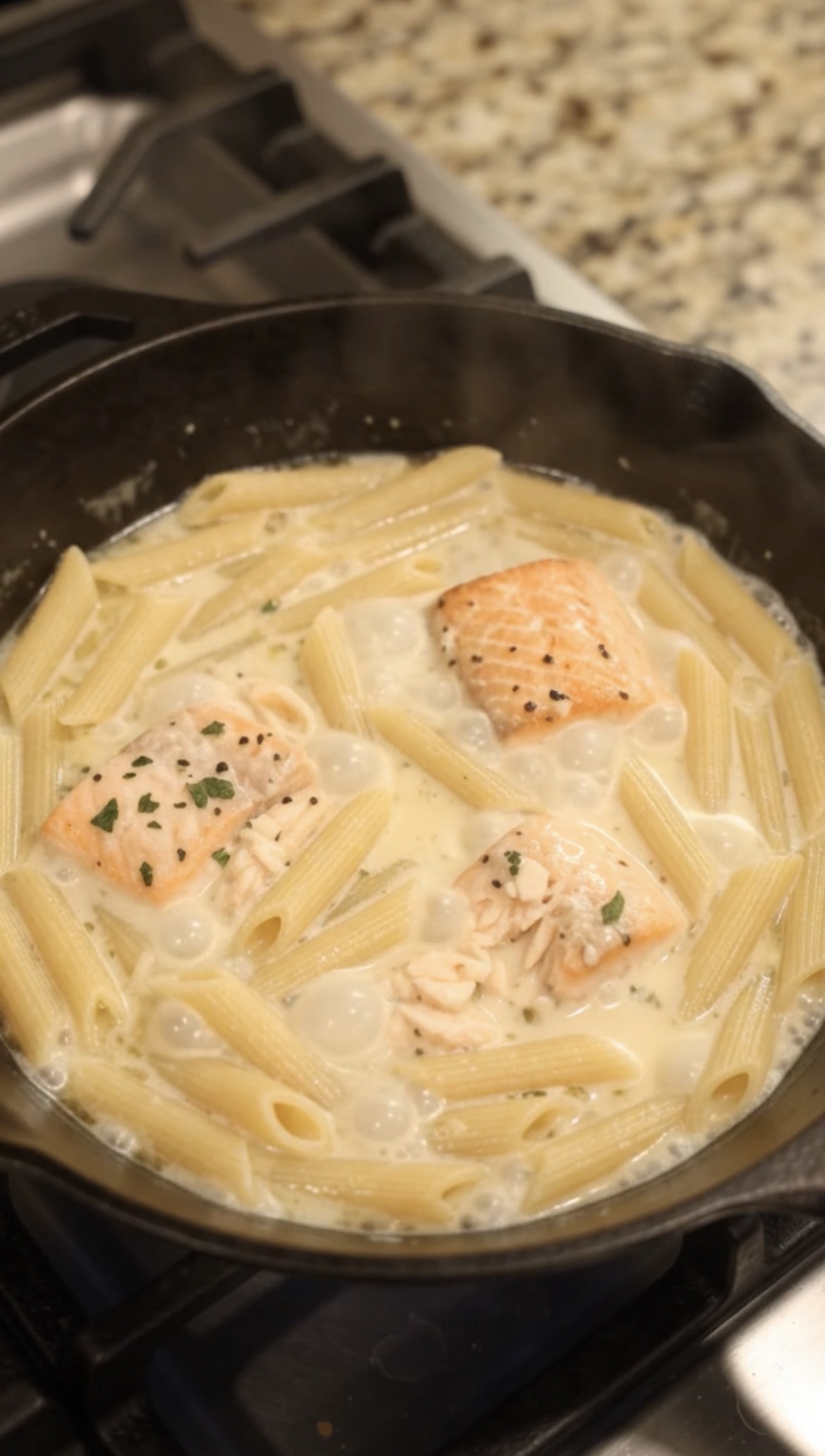
- Combine and Serve: Add the cooked pasta and flaked salmon directly into the skillet sauce. Toss gently to coat everything evenly. If the sauce feels too thick, splash in a little reserved pasta water until it reaches your desired consistency. Garnish with fresh parsley and serve warm.
- Tip: Starchy pasta water acts as an emulsifier, helping the sauce cling perfectly to every noodle.
Nutrition Snapshot
Approximate values per serving (based on 4 servings):
- Tip: Starchy pasta water acts as an emulsifier, helping the sauce cling perfectly to every noodle.
- Calories: 580 kcal
- Protein: 34 g
- Carbohydrates: 45 g
- Fat: 28 g
- Saturated Fat: 14 g
- Sodium: 520 mg
(Note: Nutritional values are estimates based on standard calculations and will vary depending on pasta type, cream fat percentage, and portion size.)
Storage & Reheating Instructions - Refrigeration: Store leftover salmon pasta in an airtight container in the refrigerator for up to 2 days. Because seafood deteriorates quickly, consume leftovers promptly.
- Reheating: Reheat gently on the stovetop over low heat, adding a splash of milk, cream, or water to loosen up the sauce as it warms. Alternatively, microwave in 30-second intervals at medium power, stirring in between.
- Freezing Notice: It is not recommended to freeze cooked cream sauces or previously frozen salmon, as the texture of both the dairy and fish will degrade significantly upon thawing.
Budget Note
Buying frozen salmon fillets in bulk bags is often substantially cheaper than purchasing fresh fish from the seafood counter, typically saving 20% to 30% per pound. A complete batch of this pasta costs around $10.00 to $13.00 total, translating to approximately $2.75 to $3.25 per serving for a luxurious, restaurant-quality meal.
To lower costs even further: - Use frozen spinach or dried herbs instead of fresh produce.
- Substitute half-and-half for heavy cream (just be sure to keep the heat low so it doesn’t curdle).
Recipe Variations - Lighter / Healthier Version: Substitute heavy cream with unsweetened canned coconut milk or a blend of low-fat Greek yogurt and whole milk. Swap standard pasta for whole wheat or chickpea pasta to boost fiber content.
- Gluten-Free Option: Use your favorite gluten-free pasta (such as rice or corn-based varieties) and double-check that your broth brand is certified gluten-free.
- Add-In Vegetable Variation: Expand the volume and color of the dish by adding cherry tomatoes, sun-dried tomatoes, sliced mushrooms, or asparagus tips into the garlic butter before adding the cream.
- Spicy Garlic Cajun Salmon: Toss the frozen salmon in Cajun seasoning instead of simple garlic powder, and add a pinch of red pepper flakes to the garlic cream sauce for an extra kick.
Frequently Asked Questions
Is it really safe to cook salmon straight from frozen?
Yes, it is entirely safe! Because salmon fillets are relatively thin, using a covered skillet allows the trapped steam to thaw the interior quickly while the heat cooks the fish safely to the recommended internal temperature of 145°F (63°C).
How do I prevent my cream sauce from breaking or separating?
Cream sauces break when exposed to excessive heat or acidic ingredients added too quickly. Keep the heat on low when adding heavy cream and parmesan cheese, and stir continuously until smooth before turning off the burner.
Can I use skin-on frozen salmon fillets for this skillet pasta?
Absolutely. Cook the fillets with the skin side down first. Once the fish steams and thaws in the pan (after about 5 minutes), you can easily slide a spatula under the skin to strip it off before flaking the meat.
What pasta shapes work best with creamy garlic salmon?
Short, ridged pasta shapes like penne, rigatoni, or cavatappi excel at catching creamy sauce, while long noodles like fettuccine or linguine provide a classic, comforting bed for flaky salmon chunks.
Related Recipes - One-Pan Garlic Butter Tuscan Chicken: A fast skillet meal packed with spinach, sun-dried tomatoes, and a savory cream sauce.
- Easy Creamy Lemon Herb Shrimp Pasta: A quick seafood pasta that comes together in under 20 minutes using frozen shrimp.
- Pan-Seared Salmon with Lemon Caper Butter: Learn how to cook perfect fresh or thawed salmon fillets on the stovetop with a bright, tangy sauce.