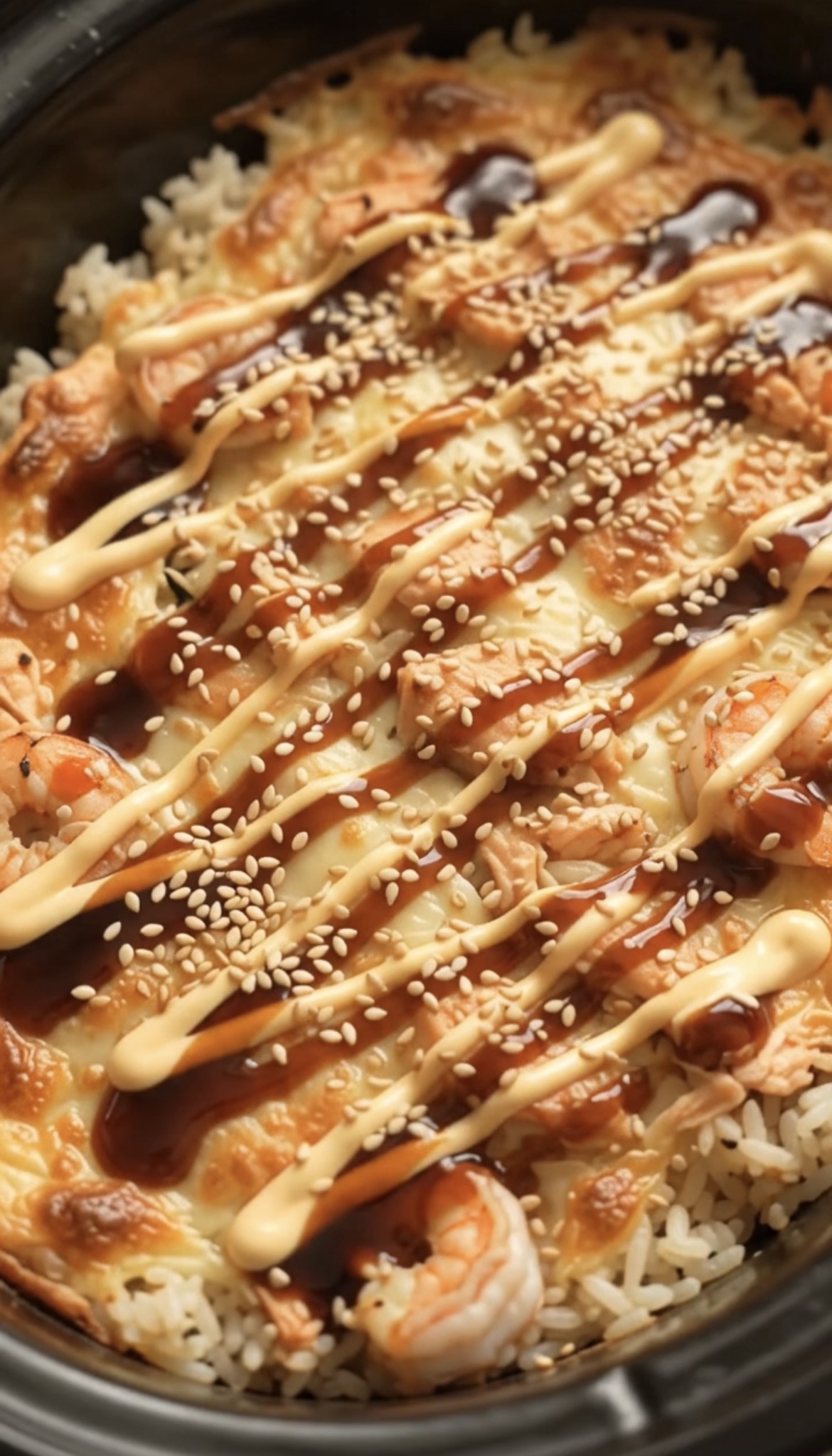
Sushi bake has become a favorite for anyone who loves the flavors of a good sushi roll but doesn’t want to deal with rolling one, and this skillet version takes that idea and makes it even more approachable by using frozen shrimp and salmon straight from the freezer. No thawing, no sushi rice mat, no careful rolling technique — just a stovetop skillet, a creamy seafood topping, and warm seasoned rice underneath.
This dish takes everything people love about a spicy salmon or shrimp roll — the seasoned rice, the creamy, slightly spicy seafood topping, the nori and sesame garnish — and layers it into a warm, scoopable casserole-style dish instead. It’s the kind of recipe that satisfies sushi cravings on a weeknight without needing any specialty ingredients beyond what most grocery stores already carry.
Because this version is made in a skillet rather than baked in the oven, it comes together a little faster than a traditional oven-baked sushi bake, with the creamy seafood topping cooked directly on the stovetop before being spooned over warm rice. Scoop it up with nori sheets like a taco, or eat it straight with a fork — either way, it’s a fun, craveable twist on a familiar favorite.
Why You’ll Love This Recipe
- No thawing required — both the salmon and shrimp cook directly from frozen.
- All the sushi roll flavors — seasoned rice, creamy spicy topping, sesame and nori.
- No rolling skills needed — a scoopable, casserole-style dish instead.
- Faster than a traditional bake — made entirely on the stovetop.
- Fun for sharing — great for a casual get-together or family dinner night.
Ingredient Notes
Sushi rice (short-grain rice) gives the most authentic texture and stickiness, though any short or medium-grain white rice will work in a pinch if sushi rice isn’t available. Seasoning the cooked rice with a mixture of rice vinegar, sugar, and salt while it’s still warm is what gives it that classic, slightly tangy sushi rice flavor, so don’t skip this step even though it’s easy to overlook.
For the creamy seafood topping, a combination of mayonnaise (Japanese kewpie mayo if you can find it, for extra richness) and sriracha creates that familiar spicy, creamy sauce found in a classic spicy roll. Cream cheese is also a common addition in sushi bake recipes, adding extra richness and helping the topping hold together a bit more as it cooks.
For the seafood, frozen, peeled, and deveined shrimp along with frozen salmon fillets both work well here, since both proteins will be flaked or chopped after cooking rather than served as whole pieces. Roasted seaweed (nori) sheets, cut into smaller pieces, are the traditional way to scoop up sushi bake, giving you that authentic sushi-eating experience without any actual rolling involved.
[Recipe card goes here — ingredients, step-by-step instructions, and a “Jump to Recipe” button render automatically in this spot.]
Step-by-Step Instructions
- Cook and season the rice. Cook the sushi rice according to package directions, then stir in a mixture of rice vinegar, sugar, and salt while the rice is still warm, fluffing gently to combine. Tip: seasoning the rice while it’s warm helps it absorb the vinegar mixture much more evenly than adding it to cooled rice.
- Cook the frozen salmon. Heat a little oil in a large skillet over medium-high heat, add the frozen salmon, and cook for about 4–5 minutes per side until cooked through and flaky. Remove and flake into bite-sized pieces. Tip: salmon is done when it flakes easily with a fork and is opaque all the way through — err on the side of slightly less time, since it will continue cooking a bit from residual heat.
- Cook the frozen shrimp. In the same skillet, add the frozen shrimp and cook for 4–5 minutes, stirring occasionally, until pink and cooked through, then chop into smaller pieces. Tip: chopping the shrimp into smaller bits helps it mix more evenly into the creamy topping, similar to how it’s typically prepared in a traditional sushi bake.
- Make the creamy topping. In a bowl, stir together the mayonnaise, softened cream cheese, sriracha, and a splash of soy sauce until smooth, then fold in the cooked, flaked salmon and chopped shrimp. Tip: adjust the sriracha up or down depending on how spicy you like the topping — this sauce is easy to customize to taste.
- Warm the topping through. Return the seafood and creamy sauce mixture to the skillet over low heat, stirring gently for 2–3 minutes just until everything is warmed through and well combined. Tip: keep the heat low here, since the goal is just to warm and meld the flavors, not to cook the mayonnaise-based sauce further.
- Assemble and serve. Spoon the seasoned rice into bowls or a serving dish, top generously with the warm creamy seafood mixture, and finish with sesame seeds, sliced green onion, and a drizzle of extra sriracha or soy sauce. Serve with nori sheets on the side for scooping.
Nutrition Snapshot (Estimated, Per Serving)
These are approximate values based on a 4-serving batch and will vary depending on exact brands and portion sizes used.
- Calories: ~520
- Protein: ~28g
- Carbs: ~44g
- Fat: ~26g
Storage & Reheating
Leftovers keep in an airtight container in the fridge for up to 2 days, ideally with the rice and seafood topping stored separately if possible, since the mayonnaise-based topping doesn’t reheat quite as well once combined with rice. Reheat the rice gently in the microwave, and warm the topping separately over low heat or in short microwave bursts, stirring frequently.
This dish isn’t a good candidate for freezing, since the mayonnaise-based sauce can separate and the rice texture changes significantly after thawing. It’s best made fresh and enjoyed within a day or two.
Budget Note
This recipe comes out to roughly $4–$5 per serving, with the combination of shrimp and salmon being the main cost driver. To bring the cost down, use a larger portion of the more budget-friendly shrimp and a smaller portion of salmon, or substitute imitation crab for part of the seafood for a more wallet-friendly take on the classic sushi bake flavor.
Variations to Try
Salmon-only version: Skip the shrimp entirely and use a larger portion of salmon for a simpler, single-protein sushi bake with the same creamy, spicy topping.
Extra spicy version: Increase the sriracha in the topping, or add a drizzle of chili crisp on top just before serving, for a noticeably spicier take on this dish.
Crunchy topping version: Sprinkle crushed tempura flakes or panko lightly toasted in a dry pan over the top just before serving for an extra layer of crunch, similar to what you’d find in many restaurant-style sushi bakes.
Meal-prep friendly: Store the rice and seafood topping in separate containers, assembling fresh bowls throughout the week rather than combining everything ahead of time, which helps preserve the best texture.
Frequently Asked Questions
Can I use fresh salmon and shrimp instead of frozen? Yes — if using fresh or thawed seafood, reduce the cooking times in steps 2 and 3 by about half, since fresh seafood cooks faster than frozen.
Can I make this in the oven instead of a skillet? Yes — you can spread the cooked rice in a baking dish, top with the creamy seafood mixture, and broil for a few minutes until lightly golden on top for a more traditional oven-baked version.
What can I use instead of kewpie mayo? Regular mayonnaise works fine as a substitute, though kewpie mayo has a slightly richer, tangier flavor that’s worth seeking out if you can find it at an Asian grocery store or in the international aisle.
Can I make this ahead of time? The rice can be cooked and seasoned a day ahead and gently reheated, but the seafood topping is best made fresh and warmed through right before serving for the best texture and flavor.
Is this recipe very spicy? It’s mild to medium as written, with the heat depending mostly on how much sriracha you use — start with less and add more to taste if you’re unsure of your spice preference.
Related Recipes
- Slow Cooker Salmon & Shrimp Surf Combo
- Skillet Creamy Shrimp & Salmon Alfredo
- Slow Cooker Honey Glazed Salmon