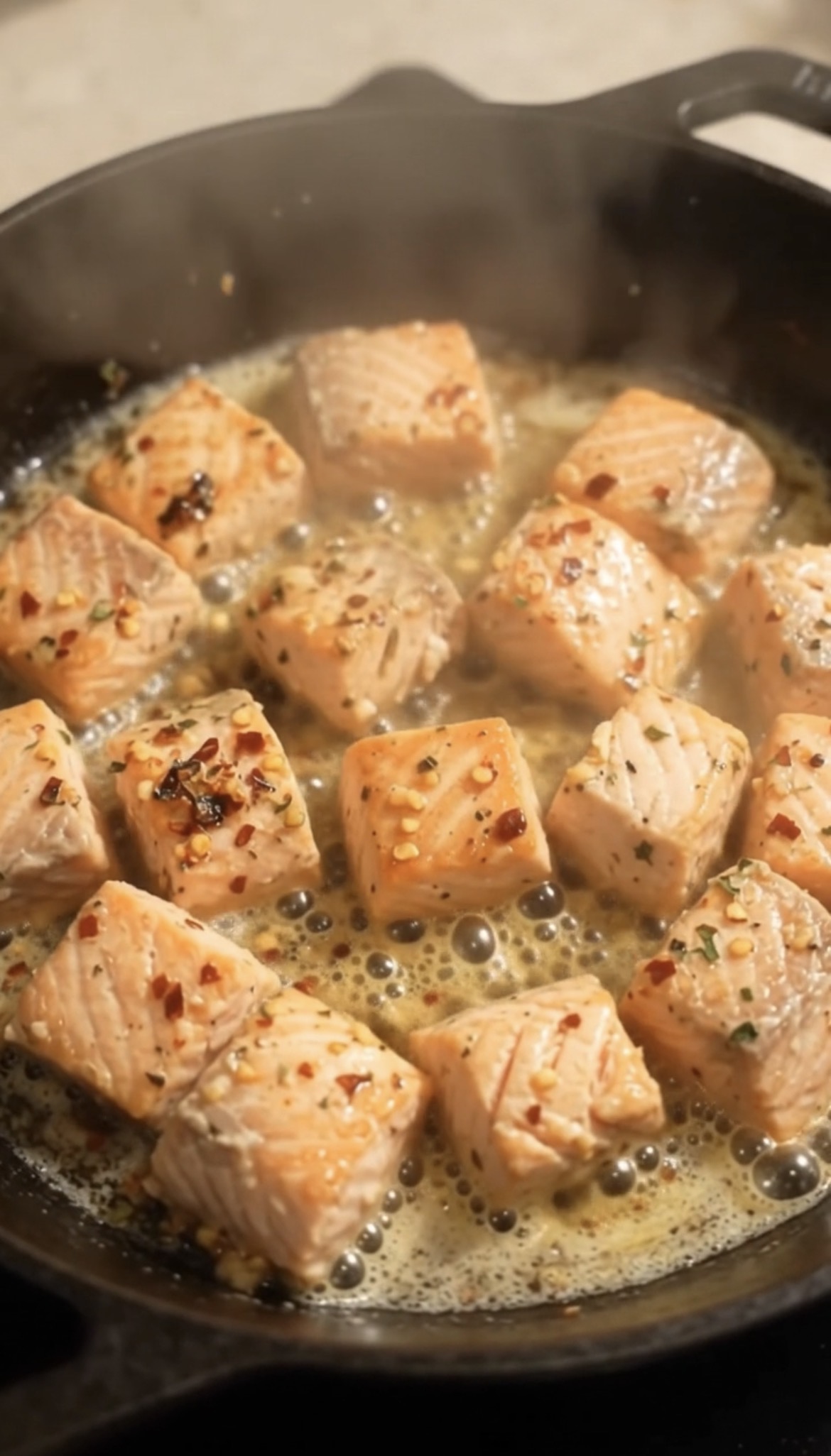
Cubing salmon for a fast, buttery skillet dinner is a great trick on its own, but skipping the thawing step entirely is what makes this version genuinely a 15-minute meal. Instead of waiting for salmon to defrost, this recipe works with the fillets still frozen, cutting them into bite-sized pieces while they’re partially frozen (which is actually easier than cutting fully thawed salmon) and searing them straight in a hot garlic butter pan.
Cooking from frozen changes the process slightly compared to using fresh or fully thawed salmon — the pieces release a bit more moisture as they cook, and timing needs a little more attention to avoid overcooking the smaller cubes. This recipe is built specifically around those differences, so you get the same crispy-edged, buttery, garlicky bites without any guesswork about whether frozen salmon will actually work here.
Because the whole thing happens in one skillet from start to finish, this is genuinely one of the fastest seafood dinners you can make on a night when you completely forgot to plan ahead. Serve the bites over rice, tossed into a salad, or straight off a toothpick as an appetizer — whatever you’re in the mood for, dinner’s ready in a quarter of an hour.
Why You’ll Love This Recipe
- Genuinely no thawing required — cubed and cooked straight from frozen.
- Ready in about 15 minutes — one of the fastest recipes in this whole collection.
- Rich, buttery, garlicky flavor — a sauce that coats every single bite.
- One skillet, easy cleanup — minimal effort for a dish that tastes indulgent.
- Endlessly versatile — serve over rice, in tacos, on salads, or as an appetizer.
Ingredient Notes
Individually frozen salmon fillets, skin removed if possible, are the easiest starting point here, since a partially frozen fillet is actually much easier to cube neatly than a fully thawed, soft one. If your salmon is rock solid, let it sit at room temperature for just 5–10 minutes before cutting — you want it firm enough to cut cleanly but not still fully frozen through.
A good quality butter forms the base of the sauce, and combining it with a bit of oil helps prevent the butter from burning at the slightly higher heat needed to sear salmon straight from frozen. Fresh garlic is worth using here as well, since it’s central to the flavor — jarred minced garlic works in a pinch, but fresh gives a brighter, more fragrant result.
Because frozen salmon releases more moisture as it cooks than fresh, patting the cubes dry with a paper towel right after cutting (even though they’re still cold) helps the sear develop better instead of steaming. A squeeze of fresh lemon juice at the end brightens up the richness of the butter, and a pinch of red pepper flakes adds a subtle warmth without making the dish spicy.
[Recipe card goes here — ingredients, step-by-step instructions, and a “Jump to Recipe” button render automatically in this spot.]
Step-by-Step Instructions
- Partially thaw and cube the salmon. Let the frozen salmon sit at room temperature for 5–10 minutes, just until firm but no longer rock solid, then cut into roughly 1-inch cubes. Tip: partially frozen salmon actually holds its shape better under the knife than fully thawed salmon, making for cleaner, more even cubes.
- Pat the cubes dry. Pat the cubed salmon dry with paper towels, even though it’s still cold, to remove surface moisture before it hits the hot pan. Tip: this step matters even more with frozen salmon than fresh, since the extra ice crystals mean extra moisture that can prevent a good sear.
- Season the salmon. Toss the cubed salmon with salt, pepper, and a little garlic powder or paprika if desired, coating evenly.
- Sear the salmon. Heat butter and oil in a large skillet over medium-high heat, then add the salmon cubes in a single layer, searing for about 2–3 minutes per side until golden and just cooked through. Tip: since the salmon started colder than fresh salmon would, give it slightly longer per side than you might expect, and don’t overcrowd the pan — cook in batches if needed.
- Make the garlic butter sauce. Remove the salmon to a plate, lower the heat slightly, add more butter to the same skillet, and stir in the minced garlic, cooking for about 30–60 seconds until fragrant. Tip: garlic burns quickly, so keep the heat moderate and stir constantly during this step.
- Toss and serve. Return the salmon bites to the skillet, tossing gently to coat in the garlic butter, then finish with a squeeze of fresh lemon juice and chopped parsley before serving immediately.
Nutrition Snapshot (Estimated, Per Serving)
These are approximate values based on a 4-serving batch and will vary depending on exact cuts and portion sizes used.
- Calories: ~320
- Protein: ~29g
- Carbs: ~1g
- Fat: ~22g
Storage & Reheating
Leftovers keep in an airtight container in the fridge for up to 2 days. Reheat gently in a skillet over low heat with a small pat of extra butter, or in the microwave at reduced power in short bursts, to help avoid drying out the salmon.
These bites can be frozen for up to 1 month, though the texture softens somewhat after thawing and reheating. If freezing, it’s best to enjoy them tossed into a rice bowl or salad afterward rather than trying to recreate the original crispy sear.
Budget Note
This recipe runs on the higher end at roughly $5–$6 per serving, since salmon tends to be one of the pricier proteins. To bring the cost down, watch for sales on frozen salmon portions or buy a larger frozen fillet and cube it yourself rather than purchasing pre-cut pieces, and serve the bites over a generous portion of rice to help the meal stretch further.
Variations to Try
Spicy honey garlic version: Stir a spoonful of honey and a dash of sriracha into the garlic butter sauce for a sweet-and-spicy variation that pairs especially well served over rice.
Air fryer method: Toss the seasoned, partially thawed salmon cubes in a little oil and air fry at 400°F for 8–10 minutes, shaking the basket halfway, then toss with a quickly made garlic butter sauce afterward for a slightly different, extra-crispy texture.
Taco night version: Serve the salmon bites in warm tortillas with shredded cabbage, a squeeze of lime, and a drizzle of the garlic butter sauce for an easy, fast take on fish tacos.
Meal-prep friendly: Portion the salmon bites into containers with rice and steamed vegetables for an easy grab-and-go lunch throughout the week, reheating gently to preserve as much texture as possible.
Frequently Asked Questions
Do I really need to partially thaw the salmon before cutting it? It helps a lot — fully frozen salmon is very difficult to cut evenly, while a 5–10 minute rest at room temperature makes it firm but workable, giving you cleaner cubes than either fully frozen or fully thawed salmon.
Why is there so much liquid in my pan? This is normal with salmon that started frozen, since it releases extra moisture as it cooks. Searing in batches and not overcrowding the pan helps that liquid evaporate instead of steaming the salmon.
Can I use fully thawed salmon instead? Yes — if your salmon is already fully thawed, skip the resting step and go straight to cubing and searing, reducing the sear time slightly since fully thawed salmon cooks a bit faster than salmon starting from frozen.
Why didn’t my salmon get crispy? This usually happens when the pan is overcrowded or the cubes weren’t patted dry enough beforehand. Cook in batches if needed, and pat the salmon thoroughly dry right after cutting.
Is this recipe spicy? Not as written, but a pinch of red pepper flakes or a dash of hot sauce in the butter sauce is an easy way to add some heat if you’d like.
Related Recipes
- Slow Cooker Honey Glazed Salmon
- One-Pot Lemon Garlic Orzo with Salmon
- Skillet Lemon Garlic Butter Shrimp