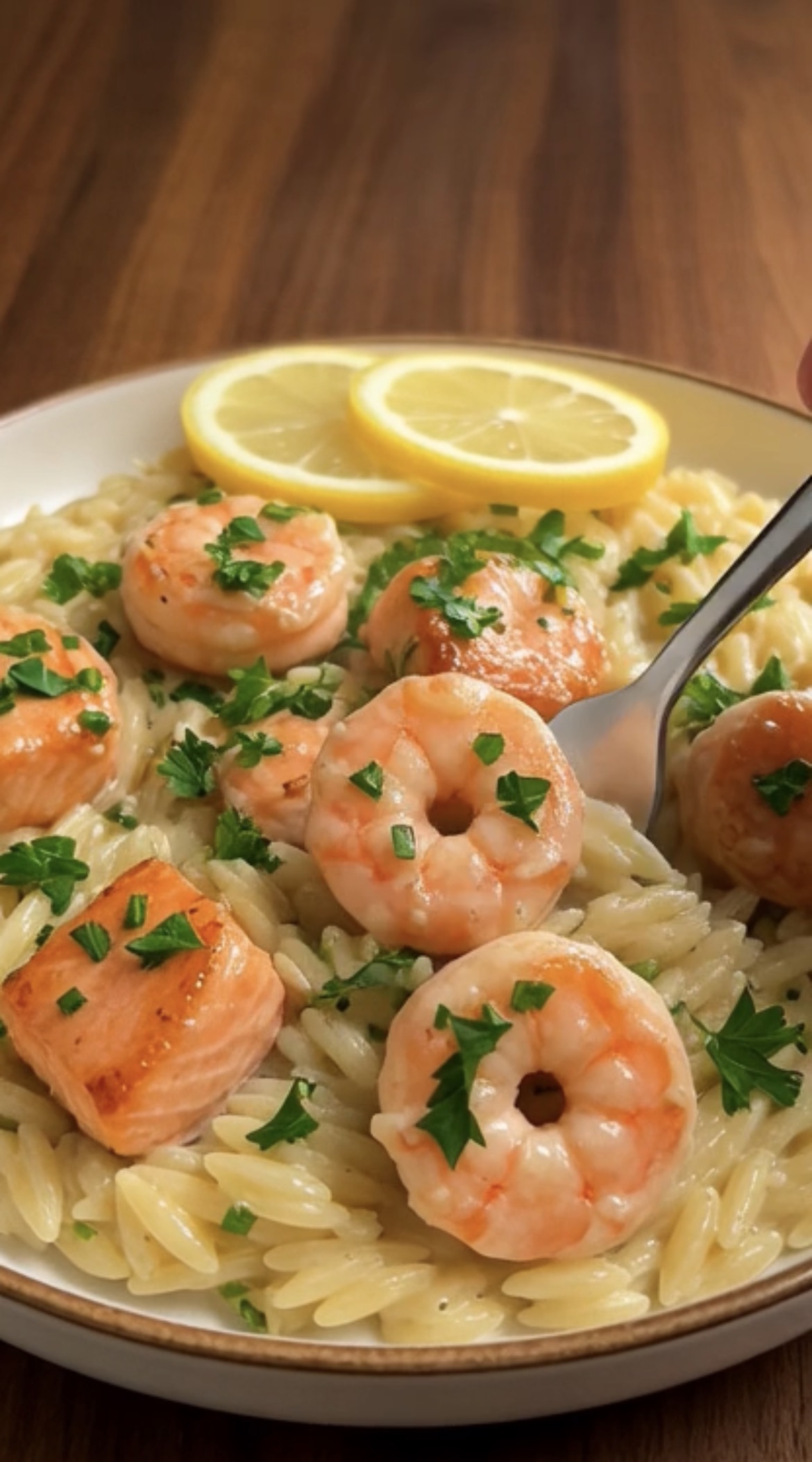
There’s something deeply satisfying about a dinner that comes together entirely in one pot, and this lemon garlic orzo with salmon delivers exactly that. The orzo cooks directly in a flavorful garlic and lemon broth, soaking up all that flavor as it goes, while salmon fillets nestle right on top to cook gently in the same pan. It’s simple, it’s bright, and it starts completely from frozen salmon, so there’s no need to plan ahead.
Unlike a heavy cream sauce, this dish keeps things lighter, relying on a good chicken or vegetable broth, plenty of garlic, and fresh lemon to build flavor as the orzo simmers away. The starch released from the orzo as it cooks naturally thickens the broth into something silky without needing any cream at all, giving you a dish that feels comforting but not overly rich.
Because everything cooks together in the same pot, this is also one of the easier cleanups in this whole seafood lineup — one pan for the orzo, the salmon, and the whole meal, with the fish finishing gently on top rather than needing a separate skillet or baking dish.
Why You’ll Love This Recipe
- One pot for everything — orzo and salmon cook together, minimal cleanup.
- No thawing required — the salmon goes in frozen.
- Bright, garlicky, lemony flavor — light without sacrificing comfort.
- Ready in about 30 minutes — a full dinner in one pan.
- Naturally dairy-free — no cream needed for a satisfying, silky texture.
Ingredient Notes
Orzo, a small rice-shaped pasta, is the star starch here, cooking directly in the broth much like a risotto would, absorbing flavor as it simmers. Because it cooks fairly quickly, it’s a great match for this one-pot method, needing only about 10–12 minutes of simmering to become tender.
Fresh lemon juice and zest bring the brightness that balances out the richness of the salmon and the savory garlic broth. Using both the zest and the juice gives a more well-rounded lemon flavor than juice alone, since the zest carries a lot of the lemon’s aromatic oils.
For the salmon, individually frozen fillets, skin-on or skinless, work well here, nestled right into the orzo partway through cooking so they finish gently rather than overcooking on direct high heat. A generous amount of fresh garlic is worth using, since it’s one of the main flavors carrying the whole dish alongside the lemon.
[Recipe card goes here — ingredients, step-by-step instructions, and a “Jump to Recipe” button render automatically in this spot.]
Step-by-Step Instructions
- Sauté the garlic. Heat olive oil or butter in a large, deep skillet or pot over medium heat, then add the minced garlic, cooking for about 30–60 seconds until fragrant. Tip: cooking the garlic briefly before adding the broth helps build a more developed base flavor for the whole dish.
- Toast the orzo. Add the dry orzo to the pot and stir for about 1 minute to lightly toast it in the garlic and oil. Tip: this quick toasting step adds a subtle nutty flavor to the orzo that plain boiling wouldn’t give you.
- Add the broth and lemon. Pour in the chicken or vegetable broth along with the lemon juice and zest, stirring to combine, and bring to a gentle simmer.
- Nestle in the frozen salmon. Once the orzo has simmered for about 5 minutes, nestle the frozen salmon fillets into the pot, spooning a bit of the liquid over the top, and cover to continue simmering. Tip: adding the salmon partway through rather than at the very start keeps it from overcooking while the orzo finishes.
- Simmer until both are done. Continue simmering, covered, for another 10–12 minutes, stirring the orzo occasionally around the salmon, until the orzo is tender and the salmon flakes easily with a fork. Tip: check the orzo for doneness by tasting a spoonful — it should be tender but still have a slight bite, similar to al dente pasta.
- Finish and serve. Remove from heat, stir in a bit of fresh parsley and an extra squeeze of lemon juice into the orzo, season with salt and pepper to taste, and serve immediately with the salmon fillets on top.
Nutrition Snapshot (Estimated, Per Serving)
These are approximate values based on a 4-serving batch and will vary depending on exact brands and portion sizes used.
- Calories: ~480
- Protein: ~34g
- Carbs: ~46g
- Fat: ~18g
Storage & Reheating
Leftovers keep in an airtight container in the fridge for up to 2 days. Reheat gently on the stovetop over low heat with a splash of broth or water to loosen the orzo, or in the microwave at reduced power in short bursts, being careful not to overcook the salmon further.
This dish isn’t a great candidate for freezing, since orzo can turn mushy and the salmon loses texture after being frozen and reheated. It’s best enjoyed fresh or as next-day leftovers rather than a make-ahead freezer meal.
Budget Note
This recipe comes out to roughly $4.50–$6 per serving, with salmon being the main cost driver. To bring the cost down, watch for sales on frozen salmon portions, and stretch the dish further with a generous amount of orzo per serving so the meal feels filling even with a smaller portion of fish per person.
Variations to Try
Vegetable-packed version: Stir in baby spinach, cherry tomatoes, or asparagus pieces during the last few minutes of cooking for a more complete one-pot meal with extra color and nutrition.
Parmesan finish: Stir in a handful of freshly grated Parmesan at the end for a richer, slightly cheesy variation that still keeps the bright lemon and garlic flavors front and center.
Shrimp swap: Substitute frozen shrimp for the salmon, adding them in during just the last 8–10 minutes of cooking, since shrimp cook faster and can turn tough if left in too long.
Meal-prep friendly: Portion the finished dish into individual containers, and it holds up reasonably well in the fridge for a day or two. A splash of broth when reheating helps loosen the orzo back to its original consistency.
Frequently Asked Questions
Can I use fresh salmon instead of frozen? Yes — if using fresh or thawed salmon, add it to the pot a bit later, around the last 6–8 minutes of the orzo’s cooking time, since it will cook faster than salmon starting from frozen.
Why is my orzo mushy? This usually happens from simmering too long or using too much liquid. Check the orzo a few minutes before the recipe’s suggested time, and remove from heat as soon as it reaches a tender, al dente texture.
Can I make this ahead of time? This dish is best made fresh, since orzo continues to absorb liquid and can turn gummy if left to sit for too long after cooking, and the salmon is best enjoyed right after it finishes cooking.
What can I use instead of orzo? A small pasta shape like ditalini or pearl couscous can work as a substitute, though cooking times may vary slightly, so check for doneness a bit earlier than the orzo timing suggests.
Is this recipe spicy? No, this is a bright, garlicky, lemony dish rather than a spicy one — a pinch of red pepper flakes added with the garlic is an easy way to add some heat if you’d like.
Related Recipes
- Slow Cooker Lemon Herb Salmon
- Skillet Creamy Garlic Salmon Pasta
- Slow Cooker Honey Glazed Salmon