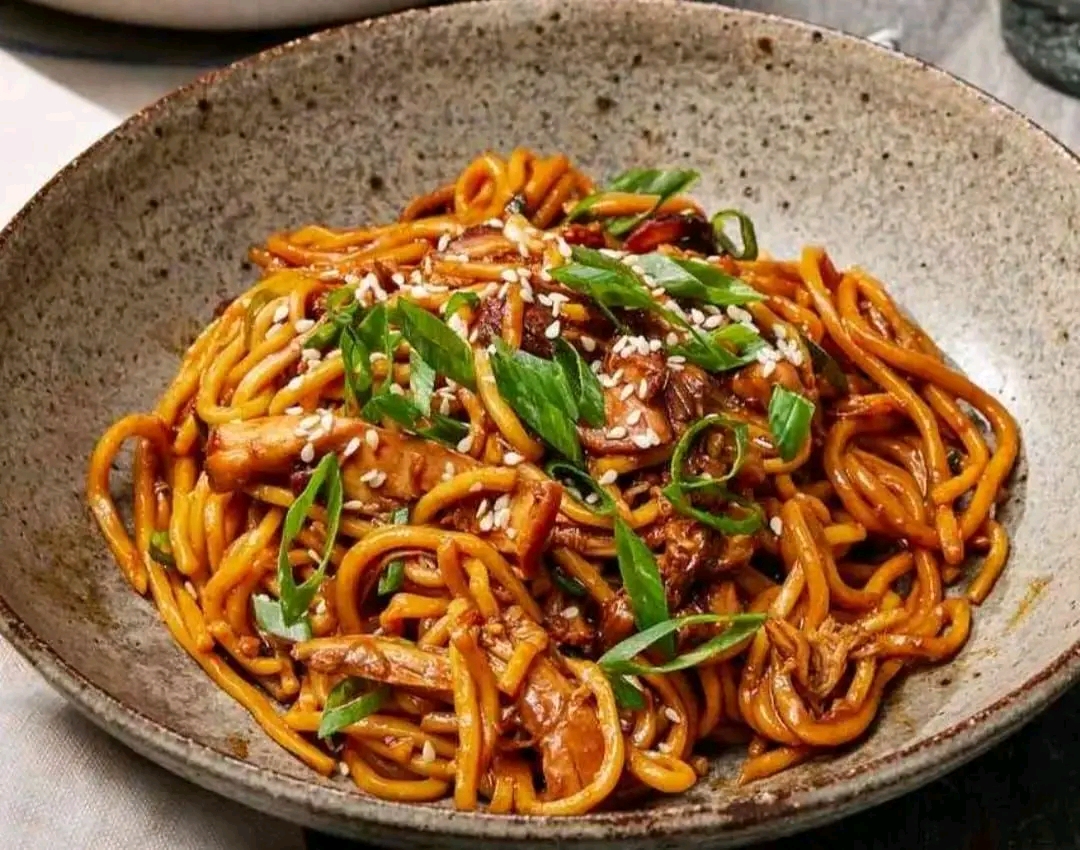
There’s a particular kind of comfort in a bowl of chicken yaki udon — thick, chewy noodles tangled up with tender chicken and a glossy, savory sauce that clings to every strand. It’s the dish I reach for when I want something that feels like restaurant takeout but comes together faster than the delivery would even arrive.
The magic of yaki udon is really in the noodles themselves. Udon’s thick, chewy texture holds up beautifully to a hot wok or skillet, soaking up a rich sauce built from soy sauce, oyster sauce, and a touch of sweetness without turning mushy the way thinner noodles can. Tender strips of chicken get seared until golden, then everything gets tossed together with a scattering of scallions and a sprinkle of sesame seeds on top for crunch and freshness.
What I love most about this recipe is how forgiving it is. There’s no delicate technique to master, no hard-to-find ingredients, and it comes together in one pan in under 30 minutes. If you’ve got a package of udon noodles and some chicken in the fridge, dinner is basically already halfway done.
Why You’ll Love This Recipe
- It tastes like your favorite takeout order — glossy, savory, and deeply satisfying.
- It’s genuinely fast — ready in about 25 minutes, making it perfect for busy weeknights.
- The noodles do a lot of the work — udon’s chewy texture makes the dish feel hearty and filling.
- It’s easy to customize — swap the protein, add extra vegetables, or adjust the spice level.
- It reheats well, making leftovers just as satisfying as the first serving.
Ingredient Notes
Fresh udon noodles (often found refrigerated or vacuum-packed near the tofu or Asian foods section) give the best chewy texture, but dried udon works well too — just be sure to follow the package cook time closely, since overcooked udon can turn soft and lose that satisfying bite. If udon isn’t available, thick lo mein noodles make a reasonable substitute, though the texture will be slightly different.
The sauce relies on a combination of soy sauce, oyster sauce, and a touch of mirin or a pinch of sugar for balance — oyster sauce adds a deep umami richness that’s hard to replicate, but a vegetarian “stir-fry sauce” or hoisin sauce can work as a substitute if needed. Low-sodium soy sauce is a good choice here since the oyster sauce already adds plenty of savory depth.
For the chicken, boneless, skinless chicken thighs stay juicier through the high-heat stir-frying process than chicken breast, though breast works fine if sliced thinly and not overcooked. Slicing the chicken against the grain into thin strips helps it cook quickly and stay tender rather than chewy.
[Recipe card goes here — ingredients, step-by-step instructions, and a “Jump to Recipe” button render in this spot.]
Step-by-Step Instructions
- Cook the udon noodles. Cook the udon noodles according to package instructions, then drain and set aside, tossing lightly with a little oil to prevent sticking. Tip: slightly undercook the noodles by about a minute, since they’ll finish cooking in the sauce later.
- Slice the chicken. Slice the chicken thinly against the grain and season lightly with salt and pepper. Tip: partially freezing the chicken for 10–15 minutes beforehand makes it much easier to slice thinly and evenly.
- Make the sauce. In a small bowl, whisk together soy sauce, oyster sauce, mirin (or a pinch of sugar), and a splash of water until combined.
- Sear the chicken. Heat oil in a large skillet or wok over high heat and cook the chicken in a single layer for 3–4 minutes per side, until golden brown and cooked through. Tip: avoid overcrowding the pan — cook in batches if needed so the chicken sears instead of steaming.
- Add aromatics. Push the chicken to one side of the pan and add minced garlic and ginger to the empty space, cooking for about 30 seconds until fragrant.
- Toss in the noodles and sauce. Add the cooked udon noodles to the pan along with the sauce, tossing everything together until the noodles are evenly coated and heated through. Tip: use tongs rather than a spoon here — they make it much easier to toss thick udon noodles without breaking them apart.
- Finish and garnish. Remove from heat and top with sliced scallions and a sprinkle of sesame seeds before serving hot.
Nutrition Snapshot (Per Serving, Estimated)
- Calories: approximately 480–520
- Protein: approximately 30–34g
- Carbs: approximately 52–56g
- Fat: approximately 14–18g
These are estimates based on standard ingredient measurements and will vary depending on exact brands and portion sizes used.
Storage & Reheating
Leftovers keep well in an airtight container in the fridge for up to 3 days. Reheat in a skillet over medium heat with a splash of water or broth to loosen the sauce, since the noodles tend to absorb moisture as they sit. Microwaving works too, though the noodles may turn slightly firmer than freshly made.
This dish isn’t ideal for freezing, since the texture of the udon noodles can turn mushy or rubbery once thawed. If you want to prep ahead, cook the chicken and sauce separately and freeze those, then cook fresh noodles when you’re ready to serve.
Budget Note
This recipe runs roughly $2.50–3.50 per serving, with the chicken and udon noodles being the main costs. To stretch it further, bulk up the dish with shredded cabbage, carrots, or bean sprouts, which add volume and nutrition without much added cost, or substitute a portion of the chicken with scrambled egg for a more budget-friendly protein boost.
Variations to Try
Healthy/Lighter Version: Load up on extra vegetables like bell peppers, broccoli, and snap peas, and use a reduced-sodium soy sauce to keep the dish lighter without sacrificing flavor.
Spicy Kick: Add a spoonful of chili garlic sauce or a drizzle of chili oil to the sauce mixture for a spicier version with real heat throughout.
Vegetarian Swap: Replace the chicken with firm tofu (pressed and pan-fried until golden) or extra vegetables, and use a vegetarian oyster sauce alternative to keep the same rich, savory flavor.
Meal-Prep Friendly: Cook a double batch of chicken and sauce ahead of time, storing them separately from freshly cooked noodles, so you can quickly toss together a fresh bowl throughout the week.
Frequently Asked Questions
Can I make this ahead of time? The chicken and sauce can be made a day or two ahead and refrigerated separately, but it’s best to cook the noodles fresh right before serving for the best texture.
What can I use instead of udon noodles? Thick lo mein noodles or even thick spaghetti in a pinch can work as substitutes, though the chewy texture won’t be quite the same as authentic udon.
Why did my noodles turn mushy? This usually happens from overcooking the noodles before adding them to the sauce, or from letting them sit too long in the hot pan. Slightly undercooking them initially and tossing quickly in the sauce helps prevent this.
Can I use a different protein? Yes — shrimp, thinly sliced beef, or pork all work well in place of chicken, adjusting the cook time slightly based on the protein you choose.
What can I use instead of oyster sauce? Hoisin sauce or a vegetarian stir-fry sauce both work as substitutes, though the flavor will be slightly sweeter and less deeply savory than traditional oyster sauce.
Related Recipes You Might Like
- Chicken Teriyaki Casserole
- Beef and Broccoli Stir-Fry
- Spicy Garlic Shrimp Lo Mein