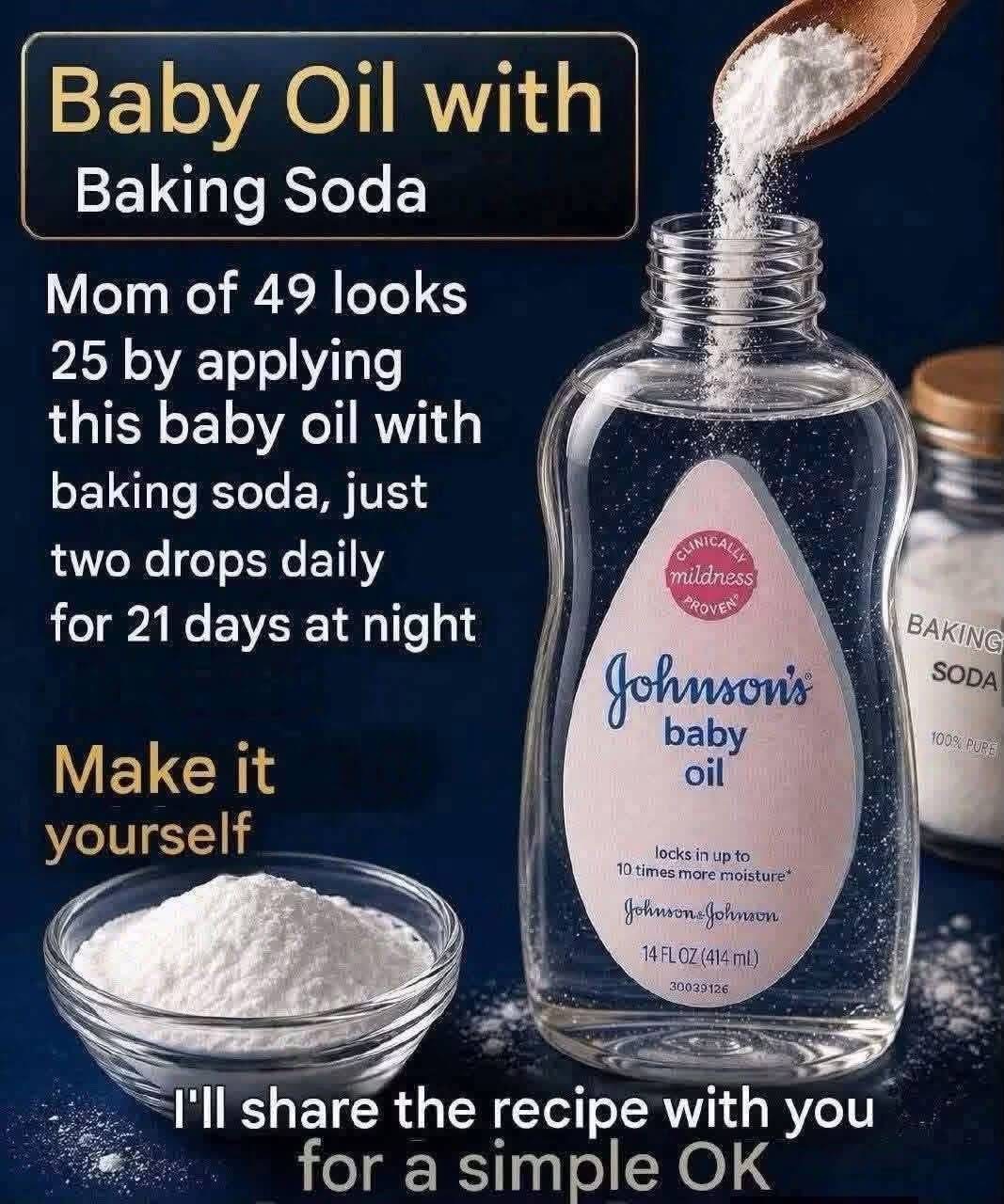
In the vast and colorful world of social media beauty hacks, sensational claims frequently circulate promising miraculous transformations. One common type of viral advertisement features bold text like “Mom of 49 looks 25 by applying this baby oil with baking soda, just two drops daily for 21 days at night.” These posts often display everyday household products—such as mineral-based baby oil and a bowl of sodium bicarbonate (baking soda)—and invite users to type a simple keyword to receive a secret homemade recipe.
The Reality Behind Viral Skincare Claims
- Dermatological Impossibility: No combination of baby oil and baking soda can structurally reverse aging or make a 49-year-old look 25 in 21 days. True biological aging involves collagen degradation, loss of elastin, and structural changes in the dermal layer that topical kitchen mixtures cannot alter.
- The Hazards of Physical Exfoliation with Baking Soda: Baking soda is highly alkaline and has a coarse, crystalline structure. Scrubbing it onto facial skin can disrupt the skin’s natural acidic mantle (pH balance), cause micro-tears, strip essential moisture, and lead to severe irritation, redness, or contact dermatitis.
- The Role of Mineral Oil: Baby oil is primarily formulated with mineral oil, which acts as an occlusive barrier to lock in existing surface moisture. While it can help soften dry skin on the body, it does not possess active anti-aging properties, cell-turnover capabilities, or wrinkle-reversing qualities.
- The Appeal of Clickbait Marketing: Sensationalized age-reversal claims are designed to capture curiosity, drive high comment counts, and boost algorithmic engagement rather than provide medically sound skincare advice.
Ingredient Notes for Safe Home Care
While baby oil and baking soda can be useful for certain cleaning tasks or heavy-duty body moisturization, using them as a daily facial anti-aging treatment is generally discouraged by dermatologists.
Baby oil (mineral oil) is non-comedogenic for many people when used on the body, but on the face, it can trap dead skin cells, dirt, and sebum, potentially leading to breakouts or clogged pores. Baking soda is far too abrasive for the delicate facial epidermis, though some people occasionally use it in heavily diluted body scrubs—even then, milder exfoliants like jojoba beads or fine sugar are vastly preferred.
When pursuing radiant, healthy skin, dermatologists consistently recommend gentle cleansers, broad-spectrum daily sun protection, hydrating moisturizers containing ceramides or hyaluronic acid, and proven retinoids rather than harsh kitchen experiments.
Step-by-Step Guide: Gentle Exfoliating Body Scrub (Alternative Home Care)
If you are looking to utilize household items for a spa-like exfoliating treatment, it is always safer to use gentle, skin-friendly ingredients on non-facial areas like hands, elbows, or legs rather than harsh alkaline mixtures on your face.
- Choose a gentle base: In a clean glass mixing bowl, combine 1/2 cup of fine white sugar or brown sugar (instead of harsh baking soda) with 1/4 cup of sweet almond oil or baby oil.
- Add nourishing elements: Stir in 1 tablespoon of raw honey to provide natural humectant hydration and soothing antioxidant properties.
- Enhance the scent (Optional): Add 2 to 3 drops of a skin-safe essential oil, such as lavender or chamomile, for a relaxing aromatic experience.
- Mix thoroughly: Stir all the ingredients together until they form a thick, cohesive paste.
- Application: Gently massage a small amount onto rough areas like elbows or legs using circular motions in the shower or evening routine.
- Rinse and moisturize: Rinse thoroughly with warm water, pat dry gently with a clean towel, and follow up with a soothing body lotion.
Skincare & Wellness Snapshot
Please note that DIY body treatments are intended solely for surface pampering and do not replace professional dermatological care or clinical anti-aging treatments.
- Primary Uses: Gentle surface exfoliation and body moisturization.
- Key Elements: Natural humectants, carrier oils, and mild physical exfoliants.
- Recommended Usage: Limit body scrubs to once or twice a week to protect the skin barrier.
Storage & Preservation Instructions
Because homemade body scrubs and mixtures made with natural ingredients lack chemical preservatives, they are susceptible to bacterial and mold growth, especially when exposed to water in a bathroom or shower environment. Mix your scrubs in small, single-use portions. If you prepare a small jar for multi-day use, store it tightly sealed in the refrigerator and discard any remaining product after one week.
Budget Note
One of the main reasons viral DIY beauty hacks gain popularity is their incredible affordability. Everyday household staples like oils, sugars, and baking soda cost mere pennies compared to luxury commercial cosmetics, making home-spa experiments accessible on any budget—provided safety and skin sensitivity are prioritized.
Variations to Try
If you have dry winter skin and need extra nourishment, substitute the baby oil with extra-virgin coconut oil or shea butter to create a richer, deep-conditioning body treatment.
For a bright, refreshing scent, add a teaspoon of fresh lemon zest and a splash of citrus juice to your sugar scrub base, remembering to use it only in the evening to avoid photosensitivity.
If you prefer a calming botanical infusion, mix finely ground oatmeal into your carrier oil to soothe irritated or sensitive skin.
Frequently Asked Questions
Can baking soda and baby oil make you look 25 again? No. This claim is completely false and serves as viral clickbait. No topical kitchen mixture can reverse decades of aging or replicate the effects of clinical skincare procedures.
Is baking soda safe to use on facial skin? Dermatologists generally advise against using baking soda on the face. Its high alkalinity disrupts the skin barrier, and its coarse texture can cause micro-abrasions and irritation.
What does baby oil actually do for the skin? Baby oil acts as an occlusive agent, meaning it sits on top of the skin to trap moisture and prevent water loss. While it softens dry skin, it does not possess anti-aging or wrinkle-reducing properties.
How can I safely improve my skin’s texture and appearance? Achieving healthy, youthful-looking skin relies on consistent daily habits: wearing sunscreen with broad-spectrum SPF, staying hydrated, eating a balanced diet, using gentle cleansers, and incorporating dermatologist-recommended ingredients like retinoids or vitamin C.
Related Articles & Recipes