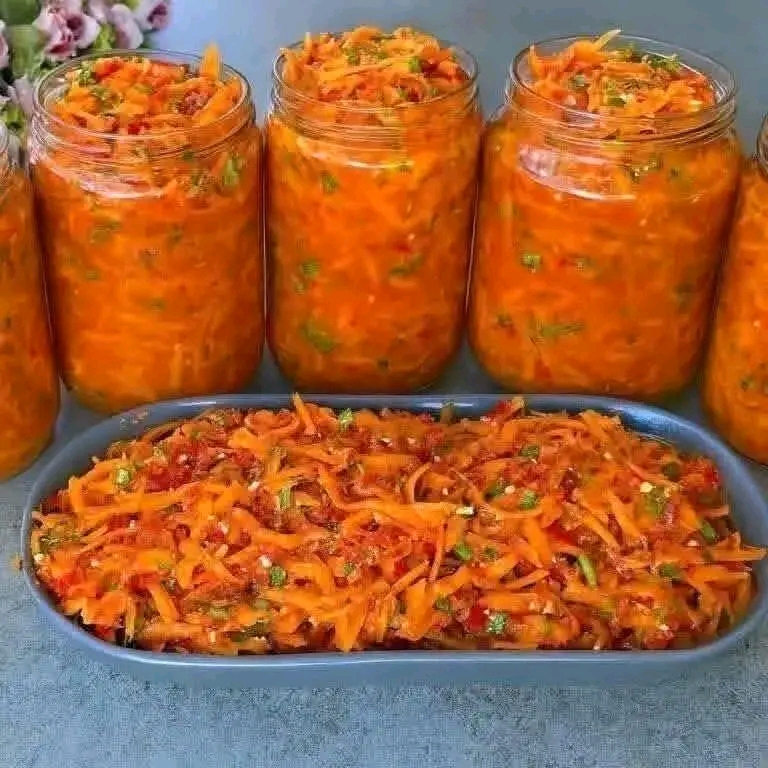
I wish I could tell you there’s some secret technique behind this no-cook marinated carrot salad, some trick that makes it worth the hype. There isn’t. It’s shredded carrots, a few punchy seasonings, a simple oil-and-vinegar marinade, and time — that’s genuinely it. And yet every single person who tries a spoonful straight out of the jar asks for the recipe within about thirty seconds.
This is one of those old-world, no-waste kitchen recipes that gets handed down because it works so reliably: no stove, no canning equipment, no babysitting a pot. You shred the carrots, toss them with garlic, herbs, a bit of chili for warmth, and a bright vinegar-oil dressing, then pack it into jars and let the fridge do the rest of the work. Within a day, the carrots soften just slightly, soak up all that garlicky, tangy flavor, and turn into something you’ll want spooned onto literally everything — sandwiches, rice bowls, grilled meats, or just eaten by the forkful standing at the fridge.
The best part is how far it stretches. A few bags of carrots turn into jar after jar of something that keeps for weeks, tastes better the longer it sits, and costs next to nothing to make. People aren’t exaggerating when they say a hundred jars still wouldn’t be enough — once you make a batch, you’ll understand exactly why.
Why You’ll Love This Recipe
- Zero cooking required — everything happens with a knife, a grater, and a mixing bowl.
- Gets better with time — the flavor deepens the longer it marinates, making it a genuine make-ahead recipe.
- Incredibly versatile — eat it as a side, a sandwich topping, a salad base, or a garnish for grilled meats.
- Keeps for weeks — properly jarred and refrigerated, this salad has serious staying power.
- Budget-friendly and low-effort — a few humble ingredients turn into jar after jar of something people beg you for.
Ingredient Notes
Carrots are obviously the star here, and shredding them on the large holes of a box grater (or with a food processor’s grating attachment) gives you the ideal texture — thin enough to soften slightly in the marinade, but with enough bite to stay crisp for weeks. Pre-shredded bagged carrots from the store work in a pinch, but freshly grated carrots have a sweeter flavor and hold up noticeably better over time.
The red flecks you see throughout come from a combination of finely diced red bell pepper or tomato and crushed chili flakes, which add color, a touch of sweetness, and gentle heat without overwhelming the carrots. If you’re sensitive to spice, cut the chili flakes in half or leave them out entirely — the salad is just as good with a milder profile. Fresh garlic is non-negotiable here; it’s what gives this salad its signature punch, so don’t substitute garlic powder if you can help it.
For the marinade, a simple combination of neutral oil, vinegar, sugar, and salt creates the bright, tangy base that ties everything together. White vinegar or apple cider vinegar both work well, though apple cider vinegar adds a slightly rounder, less sharp tang. A neutral oil like sunflower or vegetable oil keeps the dressing from competing with the other flavors, though a light olive oil works fine too if that’s what you have on hand.
[Recipe card goes here — Jump to Recipe]
Step-by-Step Instructions
- Peel and shred 3 lbs of carrots on the large holes of a box grater, or use a food processor’s shredding attachment for speed. Tip: shred them into long, thin strands rather than short bits — it gives the salad a nicer texture and lets it soak up the marinade evenly.
- Finely dice 1 red bell pepper (or 2 medium tomatoes, seeds removed) and roughly chop a handful of fresh parsley or cilantro. Add both to the shredded carrots in a large mixing bowl.
- Mince 6–8 cloves of garlic and add them to the bowl along with 1–2 teaspoons of crushed red chili flakes, adjusting for your preferred spice level. Tip: mince the garlic very finely, or grate it, so it distributes evenly through the salad instead of clumping in spots.
- In a separate small bowl, whisk together ½ cup neutral oil, ⅓ cup vinegar, 2 tablespoons sugar, and 1½ tablespoons salt until the sugar and salt fully dissolve. Tip: taste the marinade before adding it — it should taste slightly too strong on its own, since the carrots will mellow it out as they marinate.
- Pour the marinade over the carrot mixture and toss thoroughly with your hands or a large spoon, making sure every strand of carrot gets coated. Tip: massaging the carrots gently for a minute helps them start releasing moisture and absorbing flavor faster.
- Let the mixture sit at room temperature for 30–60 minutes, tossing once or twice, to let the carrots begin softening and soaking up the marinade.
- Pack the salad tightly into clean glass jars, pressing down as you go so the liquid rises to cover the carrots. Leave about half an inch of space at the top of each jar. Tip: use a spoon to press out any air pockets — carrots exposed to air can discolor faster.
- Seal the jars and refrigerate for at least 24 hours before eating, though the flavor keeps improving through day 3 or 4. Tip: resist eating it too early — the magic really happens after that first full day of marinating.
- Store in the refrigerator and give the jars a gentle shake or stir every few days to redistribute the marinade.
Nutrition Snapshot (Per Serving, Estimated)
Based on roughly ½ cup servings, about 12 servings per batch:
- Calories: ~70
- Protein: ~1g
- Carbohydrates: ~9g
- Fat: ~4g
These figures are approximate estimates and will vary depending on exact ingredient brands and oil quantity used.
Storage & Reheating
This salad is meant to be eaten cold and requires no reheating. Properly jarred and refrigerated, it keeps well for 3–4 weeks, with the flavor actually improving over the first week or two. Always use a clean utensil when serving to avoid introducing bacteria that could shorten its shelf life, and keep the carrots submerged in their marinade as much as possible for the longest-lasting results.
Budget Note
This recipe costs roughly $0.20–$0.30 per serving, making it one of the cheapest homemade condiments you can keep stocked in your fridge. To stretch it even further, buy carrots in bulk bags when they’re on sale, and use budget vinegar and oil — the marinating process does most of the flavor work, so pricier ingredients aren’t necessary here.
Variations to Try
Healthy/Lighter Version: Reduce the oil by half and add a splash of water to the marinade to keep the carrots well coated without as much added fat. You can also cut the sugar down slightly, since the natural sweetness of the carrots carries most of the flavor on its own.
Allergy-Friendly Swap: This recipe is naturally dairy-free and gluten-free as written, making it an easy addition to most dietary restrictions. Just double-check that your vinegar and any added seasoning blends don’t contain hidden gluten if you’re cooking for someone with a sensitivity.
Meal-Prep Friendly: Double or triple the batch and portion it into smaller jars for easy grab-and-go sides throughout the week. It holds up beautifully in the fridge, so making a large batch on a Sunday sets you up with a ready-made topping for days of meals.
Spicy Kick Variation: Add a finely diced fresh chili pepper (like jalapeño or Fresno) along with the crushed red pepper flakes for a fresher, more vibrant heat. This works particularly well if you plan to use the salad as a topping for grilled meats or tacos.
Frequently Asked Questions
Can I make this ahead of time? Yes, in fact it’s better made ahead — the flavor deepens significantly after the first 24 hours and continues improving over the following days. Many people consider it best after 3–4 days of marinating.
What can I use instead of fresh chili flakes? A pinch of cayenne pepper or a small amount of hot sauce can stand in for chili flakes if that’s what you have on hand. Start with less than you think you need, since these substitutes can be more concentrated in heat.
How long does this salad actually keep? Stored properly in sealed jars in the refrigerator, it typically lasts 3–4 weeks, sometimes longer since the vinegar and salt act as natural preservatives. Always check for any off smell or appearance before eating older batches.
Can I can this for long-term shelf storage instead of refrigerating? This particular recipe is designed as a refrigerator salad, not a shelf-stable canned product, since it isn’t processed with proper canning techniques for safety. If you want a true shelf-stable version, you’d need to follow a tested canning recipe with the correct acidity and processing time.
Why did my carrots turn out too watery? This usually happens if the carrots weren’t shredded finely enough or the jars weren’t packed tightly, leaving too much air and space for liquid to pool. Pressing the carrots down firmly as you jar them helps keep everything compact and evenly marinated.
Related Recipes You’ll Love
- Quick Pickled Cucumber Salad — another no-cook, fridge-friendly recipe with the same bright, tangy appeal.
- Garlicky Marinated Cabbage Slaw — a similar raw, marinated vegetable side that keeps just as well.
- Spicy Korean-Style Cucumber Kimchi — for another crunchy, garlicky, make-ahead condiment to keep stocked in your fridge.