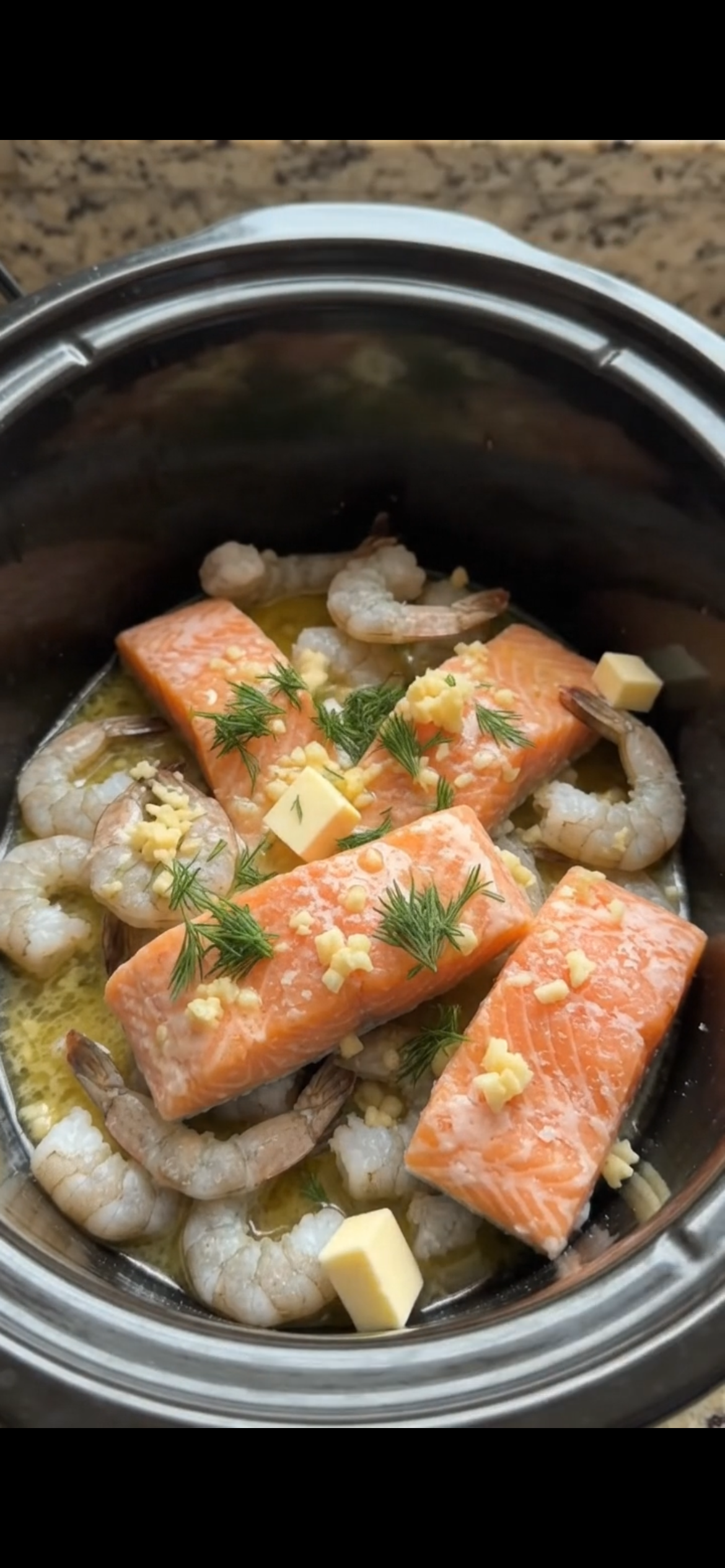
Some nights you just can’t decide between salmon and shrimp, so why not have both? This slow cooker salmon and shrimp surf combo lets you cook two different seafood favorites together in one rich, buttery, garlicky sauce, and the best part is that everything goes in straight from frozen. No juggling separate pans, no thawing schedule to plan around — just two proteins, one pot, and a sauce that ties it all together.
The trick with combining salmon and shrimp in a slow cooker is timing, since the two cook at slightly different rates and have different tolerances for overcooking. This recipe is built around staggering when each protein goes in, so the salmon comes out flaky and moist while the shrimp stay tender rather than tough, all while soaking in the same flavorful garlic butter sauce.
What you end up with is a dinner that feels like a special-occasion seafood boil, but comes together with almost no hands-on effort. Serve it over rice, alongside crusty bread, or with a simple green salad, and you’ve got a meal that feels far more impressive than the actual effort it took.
Why You’ll Love This Recipe
- No thawing required — both the salmon and shrimp go in frozen.
- Two seafood proteins in one dish — great for mixed seafood lovers at the table.
- Rich, buttery garlic sauce — simple ingredients, big flavor.
- Mostly hands-off cooking — the slow cooker does the bulk of the work.
- Feels special without much effort — a great option for a low-key date night in.
Ingredient Notes
For the salmon, individually frozen fillets (skin-on or skinless, your preference) work best here, since they’re easy to portion and cook evenly. Look for fillets of roughly similar thickness so they finish cooking at the same time; a few thin tail-end pieces mixed in with thicker center-cut pieces can lead to uneven results.
For the shrimp, frozen, peeled, and deveined shrimp in the medium-to-large range (31/40 or 26/30 count) hold up well during the shorter cooking window this recipe uses for them. Since shrimp cook much faster than salmon, they’re added later in the process — timing is really the key detail that makes this combo work well rather than turning out overcooked seafood.
A good quality butter and fresh garlic form the backbone of the sauce, and a splash of white wine or extra lemon juice adds brightness that cuts through the richness of the butter. If you’d like a touch of extra flavor, Old Bay seasoning or a similar seafood seasoning blend pairs beautifully with both salmon and shrimp without overpowering either one.
[Recipe card goes here — ingredients, step-by-step instructions, and a “Jump to Recipe” button render automatically in this spot.]
Step-by-Step Instructions
- Build the garlic butter sauce. Add the melted butter, minced garlic, lemon juice, seafood seasoning, and a splash of broth or white wine directly to the slow cooker insert and stir to combine. Tip: mixing the sauce right in the insert saves a dish and makes sure the seasoning is evenly distributed before the seafood goes in.
- Add the frozen salmon first. Place the frozen salmon fillets into the sauce, spooning some of the butter mixture over the top, and cover to cook on LOW for 1.5–2 hours or on HIGH for 45–60 minutes, since salmon needs a bit more time than shrimp. Tip: salmon is more forgiving than shrimp but can still dry out if left too long, so check for doneness starting at the low end of the range.
- Check the salmon for doneness. The salmon is ready when it flakes easily with a fork and reaches an internal temperature of about 145°F. Tip: if some fillets are thicker than others, remove the thinner ones first and let the thicker pieces finish for a few extra minutes.
- Add the frozen shrimp. Once the salmon is nearly done, add the frozen shrimp around the salmon, breaking apart any large clumps, and stir gently so they’re coated in the sauce.
- Cook the shrimp until just opaque. Cover and cook on HIGH for an additional 30–40 minutes, checking at 30 minutes, until the shrimp turn pink and opaque throughout. Tip: this is the step to watch closely — shrimp overcook fast, so pull them the moment they’re done rather than leaving them in with the salmon any longer than necessary.
- Finish and serve. Spoon the buttery sauce over both the salmon and shrimp, sprinkle with fresh parsley and an extra squeeze of lemon, and serve immediately over rice or with crusty bread.
Nutrition Snapshot (Estimated, Per Serving)
These are approximate values based on a 4-serving batch (one salmon fillet plus a portion of shrimp per person) and will vary depending on exact brands and portion sizes used.
- Calories: ~410
- Protein: ~38g
- Carbs: ~2g
- Fat: ~27g
Storage & Reheating
Leftovers keep in an airtight container in the fridge for up to 2 days — seafood doesn’t hold up quite as long as some other proteins, so it’s best enjoyed within that window. Reheat gently in a low oven (around 275°F) covered with foil, or in the microwave at reduced power in short bursts, to avoid drying out the salmon or turning the shrimp rubbery.
Freezing leftovers isn’t recommended for this dish, since both salmon and shrimp lose texture noticeably after being cooked, frozen, and reheated a second time. This one is best made fresh and enjoyed within a couple of days.
Budget Note
This recipe runs on the higher end at roughly $6–$8 per serving, since salmon tends to be pricier than most other proteins. To bring the cost down, look for frozen salmon portions on sale or in bulk bags, and consider using a slightly smaller amount of salmon paired with a larger portion of the more budget-friendly shrimp to balance the plate.
Variations to Try
Lighter version: Reduce the butter slightly and add extra lemon juice and fresh herbs in its place, keeping the dish lighter while still flavorful. A splash of broth can also help thin the sauce without losing much richness.
Cajun-spiced version: Swap the seafood seasoning for a Cajun seasoning blend for a spicier, smokier take on this same surf combo, pairing nicely with a squeeze of lime instead of lemon.
Vegetable-packed version: Add cherry tomatoes, asparagus pieces, or thin lemon slices to the slow cooker alongside the seafood for a more complete one-pot meal with minimal extra effort.
Meal-prep friendly: Since this dish doesn’t reheat quite as well as some others, it’s best portioned and eaten within a day or two rather than prepped far in advance — treat it as a fresher, near-term meal-prep option rather than a freeze-ahead one.
Frequently Asked Questions
Can I use fresh salmon and shrimp instead of frozen? Yes — if using fresh or thawed seafood, reduce the cooking times significantly: about 45 minutes on LOW for the salmon, then an additional 15–20 minutes for the shrimp.
Why did my salmon turn out dry? This usually happens when the salmon cooks too long or the slow cooker runs hotter than expected. Start checking for doneness at the earlier end of the time range, especially with thinner fillets.
Can I make this ahead of time? The garlic butter sauce can be mixed ahead of time and refrigerated, but the seafood itself is best cooked fresh, since both salmon and shrimp lose quality when reheated after being fully cooked once already.
What can I use instead of white wine? Extra chicken or vegetable broth with a splash of lemon juice works well as a non-alcoholic substitute, adding brightness without the wine.
Is this recipe spicy? Not as written, but swapping in a Cajun or Old Bay seasoning blend, or adding red pepper flakes, gives it an easy spicy variation if you’d like more heat.
Related Recipes
- Creamy Slow Cooker Garlic Parmesan Shrimp
- Slow Cooker Creamy Tuscan Shrimp
- Skillet Creamy Lemon Shrimp