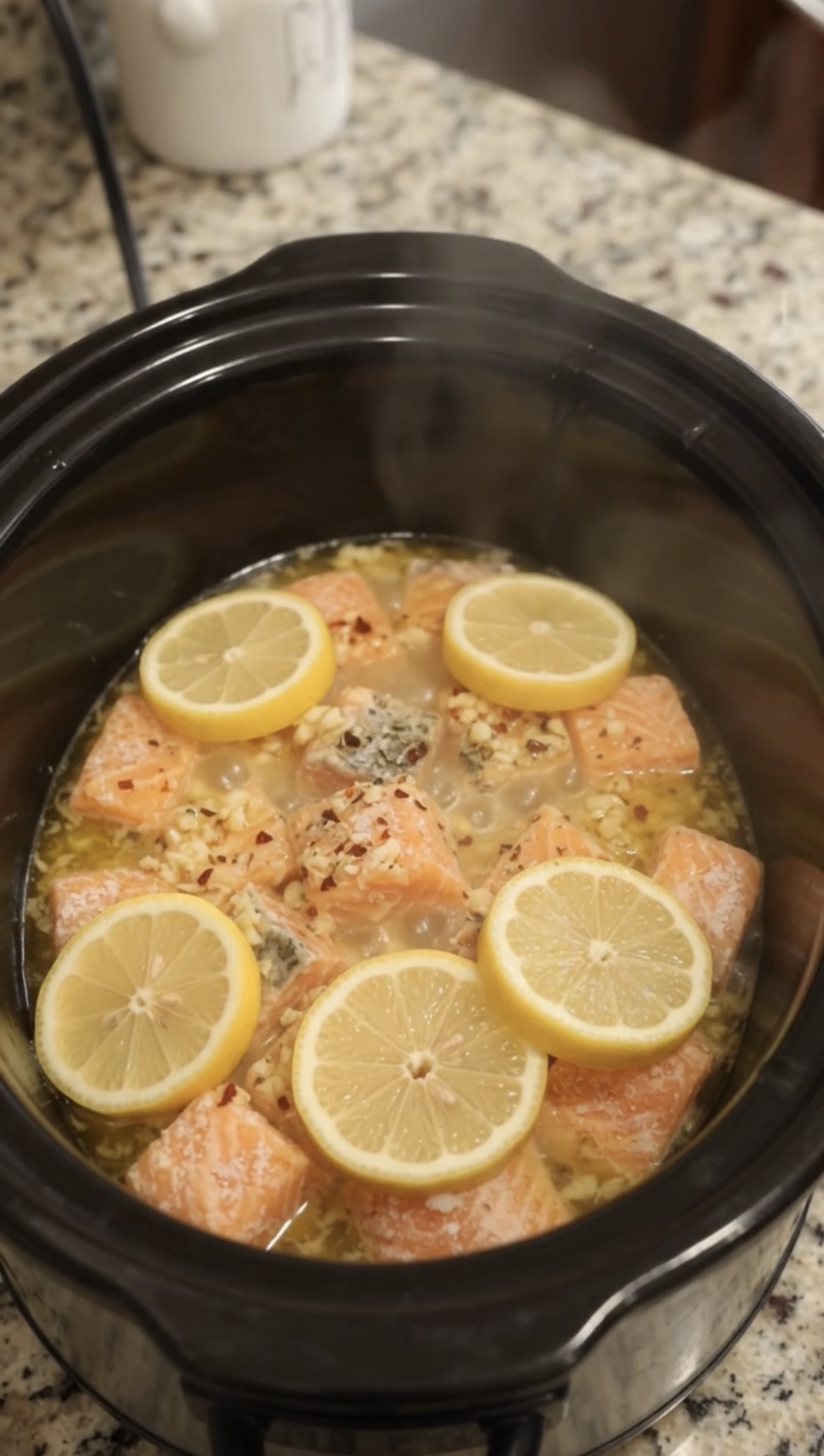
If you’ve ever wished salmon could be as low-effort as your favorite slow cooker chicken dinner, these crockpot garlic butter salmon bites are the answer. Rich garlic butter, a hint of lemon, and tender bite-sized salmon come together with barely any active cooking time — and yes, you can start with salmon straight from the freezer.
I’ll be honest: my first instinct with salmon used to be to avoid the slow cooker altogether, since fish has a reputation for turning dry or mushy with long cook times. But once I figured out the right approach — building a rich garlic butter sauce first, then giving the salmon just enough time in that hot, flavorful bath — it became one of my favorite “I forgot to plan dinner” recipes. It’s genuinely hard to mess up once you know the timing trick.
That timing trick is really the heart of this recipe, so we’ll walk through it carefully below. Salmon, like most seafood, doesn’t want to sit in a slow cooker for hours the way a chicken thigh does — but it’s absolutely doable with a smarter method, and that’s exactly what this recipe is built around.
Why You’ll Love This Recipe
- Rich, buttery flavor — garlic butter and lemon make salmon taste indulgent with almost no work.
- Freezer-friendly — no need to remember to thaw salmon ahead of time.
- Short actual cook time for the fish — the sauce does the slow work; the salmon itself cooks quickly.
- Great for meal prep — bite-sized pieces are easy to portion into bowls or wraps.
- Naturally low-carb — pairs well with rice, potatoes, or a simple salad depending on your needs.
Ingredient Notes
The garlic butter base comes together from butter, minced garlic, a splash of broth or white wine, lemon juice, and a little Dijon mustard for depth. If you’d rather skip the wine, chicken or vegetable broth with an extra squeeze of lemon works just as well and keeps things family-friendly.
For the salmon, look for frozen salmon fillets or pre-cut salmon bites, ideally skin-off if you want the pieces to be easy to eat straight out of the sauce. Wild-caught and farm-raised salmon both work fine here; wild-caught tends to be slightly leaner, so keep an eye on it toward the end of cooking so it doesn’t dry out. If you’re cutting your own bites from frozen fillets, it’s easiest to let them sit for just a few minutes at room temperature first so a sharp knife can get through cleanly.
A quality tip that makes a real difference: fresh garlic and fresh lemon juice give a noticeably brighter, more fragrant sauce than the jarred or bottled versions, and since this dish only has a handful of ingredients, each one really carries its weight. If you like a little richness on top, a sprinkle of fresh parmesan or chopped parsley just before serving finishes the dish nicely.
An important note on timing and safety: salmon, like shrimp, is a delicate protein that doesn’t hold up well to hours of slow cooking, and raw fish shouldn’t sit in the slow cooker’s gradual warm-up phase for too long before it reaches a safe temperature. The method below handles this by building and heating the garlic butter sauce on its own first, then adding the salmon — often wrapped loosely in foil packets to protect the texture — only for a shorter finishing stretch once the sauce is already hot. Cook just until the salmon flakes easily and reaches an internal temperature of about 145°F (63°C), checked with a meat thermometer at the thickest part.
[Recipe card goes here]
Step-by-Step Instructions
- Build the garlic butter base. In the crockpot, combine melted butter, minced garlic, broth (or white wine), lemon juice, and Dijon mustard. Stir well. Tip: whisking the mustard in fully now prevents little streaks of it showing up unmixed later.
- Heat the sauce. Cover and cook on LOW for 1–1.5 hours, or until the sauce is fully hot and the garlic has softened and become fragrant. Tip: resist the urge to add the salmon during this stage — the sauce needs to be hot first for the timing in the next steps to work.
- Prepare the salmon. While the sauce heats, cut the frozen salmon into large bite-sized pieces if it isn’t pre-cut. Tip: a sharp knife and a few minutes of partial thawing at room temperature make cutting through frozen salmon much easier and safer than trying to force a dull knife through a solid block.
- Add the salmon to the hot sauce. Once the sauce is hot, add the salmon pieces in a single layer as much as possible, spooning some of the garlic butter over the top. Tip: arranging pieces in a single layer helps them cook evenly instead of steaming unevenly in a crowded pile.
- Cook on HIGH for a short finish. Switch the crockpot to HIGH and cook for 25–40 minutes, checking at the earlier end of that window, until the salmon turns opaque and flakes easily with a fork. Tip: thinner or smaller bites will finish faster than thick fillet chunks, so check the smallest pieces first.
- Confirm doneness. Check that the internal temperature reaches about 145°F (63°C) at the thickest part, or that the flesh flakes apart easily and is no longer translucent in the center. Tip: it’s easy to overcook salmon in the last few minutes, so start checking a little earlier than you think you need to.
- Baste before serving. Spoon extra garlic butter sauce from the bottom of the crockpot over the salmon bites just before serving. Tip: a squeeze of fresh lemon juice at this stage brightens the richness of the butter beautifully.
- Serve right away. Plate the salmon bites with the sauce spooned over the top, garnished with parsley or parmesan if desired. Tip: salmon continues to firm up as it cools, so serve promptly for the best texture.
Nutrition Snapshot (Per Serving, Estimated)
Based on about 5–6 ounces of salmon with sauce per serving:
- Calories: ~360
- Protein: ~30g
- Carbohydrates: ~2g
- Fat: ~26g
These figures are estimates only and will vary based on the cut and fat content of the salmon used, plus the exact amount of butter in the sauce.
Storage & Reheating
Store leftover salmon bites in an airtight container in the fridge for up to 2 days. To reheat, warm gently in a covered skillet over low heat or in the microwave in short bursts, since salmon can dry out quickly with high heat. This dish is best enjoyed fresh, but if you do want to freeze it, cooked salmon can be frozen for up to 1 month; thaw in the fridge overnight and reheat gently.
Budget Note
This recipe generally costs around $5–$8 per serving, since salmon is the priciest ingredient here. To make it more budget-friendly, watch for sales on frozen salmon (often cheaper than fresh, especially in bulk bags), choose smaller portions and stretch the meal with rice or potatoes, and consider farm-raised salmon, which is typically less expensive than wild-caught.
Variations to Try
Lighter Version: Cut the butter by about half and replace the rest with extra broth and lemon juice; you’ll still get plenty of garlicky flavor with noticeably less richness.
Keto/Low-Carb: This recipe is naturally low-carb as written; serve the salmon bites over cauliflower rice or alongside roasted asparagus to keep the whole plate keto-friendly.
Meal-Prep Friendly: Portion the cooked salmon bites into containers with rice and steamed vegetables, spooning a little extra sauce over each portion; reheat gently to avoid drying the salmon out.
Dairy-Free Swap: Replace the butter with a good dairy-free butter alternative or extra olive oil — the garlic, lemon, and mustard still carry plenty of flavor without the dairy.
Frequently Asked Questions
Can I really start with frozen salmon? Yes — the key is heating the garlic butter sauce fully first, then adding the salmon for a shorter finishing stretch, rather than letting raw fish sit in the crockpot for hours the way you might with chicken.
How do I know when the salmon is done? Salmon is done when it turns opaque, flakes easily with a fork, and reaches an internal temperature of about 145°F (63°C) at the thickest part.
Can I use a whole salmon fillet instead of bites? Yes, though a whole fillet will need a slightly longer finishing time than small bites, so check for flaking and internal temperature rather than relying on the time range given for cut pieces.
What can I use instead of Dijon mustard? A small spoonful of whole grain mustard or a pinch of mustard powder both work as substitutes, or you can simply leave it out for a milder, more purely garlic-butter flavor.
What should I serve this with? Steamed rice, roasted potatoes, garlic bread, or a simple green salad all pair nicely and help turn the salmon bites into a complete, satisfying meal.
Related Recipes
- Crockpot Creamy Garlic Parmesan Shrimp
- One-Pot Lemon Garlic Shrimp
- Baked Honey Garlic Salmon Fillets