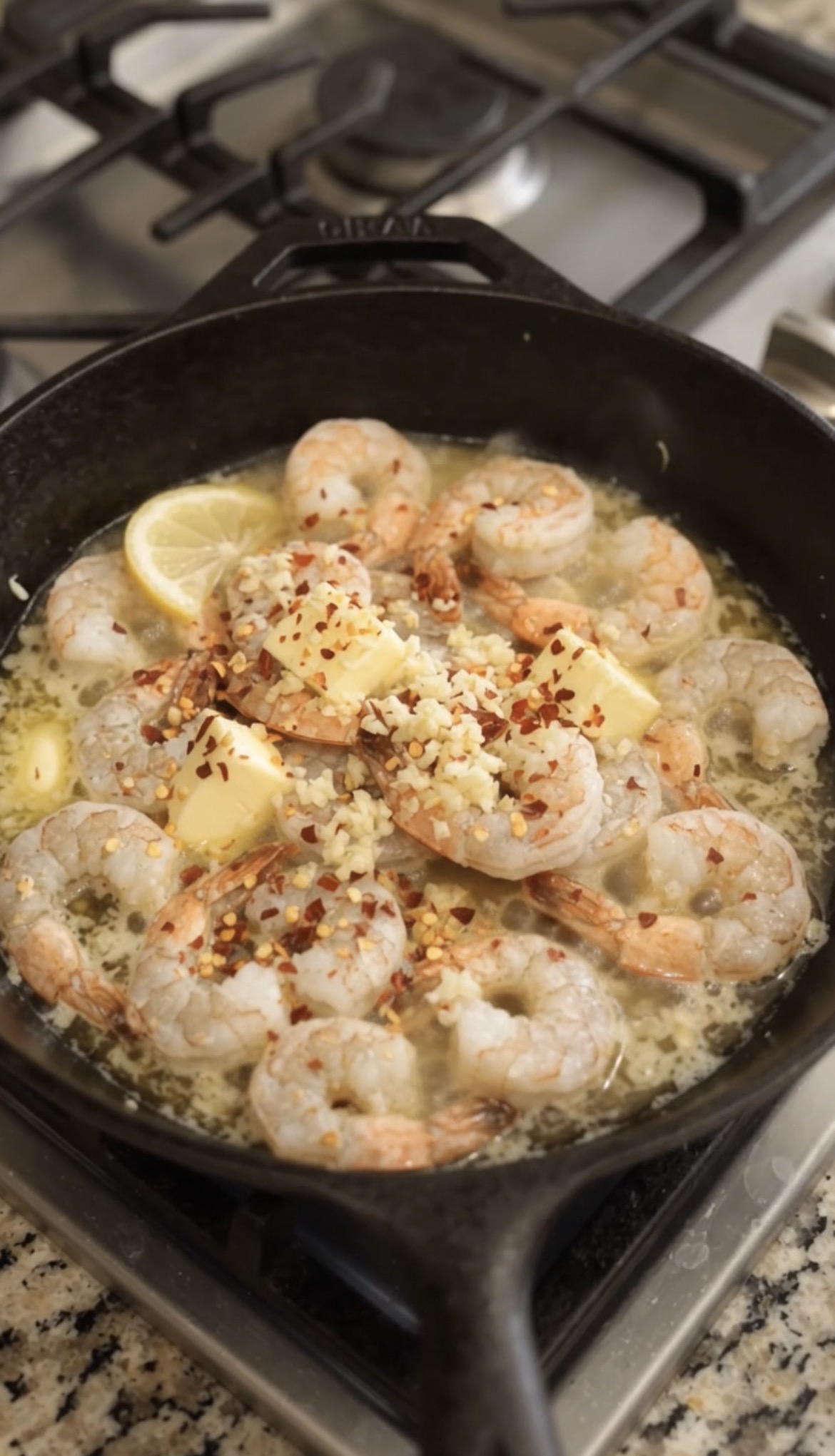
Some nights you need dinner to be fast, simple, and genuinely good, and this one-pot lemon garlic shrimp checks every box. Bright lemon, plenty of garlic, a touch of butter, and tender shrimp come together in a single skillet with almost no cleanup — and the best part is you don’t even need to remember to thaw anything ahead of time.
I started making this recipe on the nights when 5 p.m. rolls around and dinner is still a complete mystery. A bag of frozen shrimp sitting in the freezer turns into a genuinely impressive meal in the time it takes to boil pasta or toast a loaf of bread. There’s no marinating, no multi-step process, and no dishes beyond the one pan you cooked it in.
What makes this version so foolproof is a simple trick for cooking shrimp straight from frozen without ending up with a watery pan or rubbery bites. A few small technique choices — how you thaw (or don’t), how hot the pan is, and how closely you watch the clock — make all the difference between “meh” shrimp and genuinely restaurant-worthy shrimp. Let’s get into it.
Why You’ll Love This Recipe
- Truly one pot — minimal cleanup, maximum flavor.
- No thawing required — cook the shrimp straight from the freezer.
- Ready in under 20 minutes — perfect for last-minute weeknight dinners.
- Bright, crave-worthy flavor — garlic, lemon, and butter never miss.
- Versatile — serve over pasta, rice, salad, or with crusty bread to mop up the sauce.
Ingredient Notes
The ingredient list here stays intentionally short: frozen shrimp, butter, olive oil, garlic, lemon, red pepper flakes, salt, and pepper, with fresh parsley to finish. Using a mix of butter and olive oil gives you the flavor of butter without it burning as easily, since olive oil has a higher smoke point.
For the shrimp, frozen peeled and deveined shrimp is the easiest option, and there’s no need to size up to jumbo — medium to large shrimp (about 31–40 count per pound) cook quickly and evenly, which matters most in a fast one-pot method like this. Tail-on shrimp look nicer for serving, while tail-off is easier to eat straight off the fork, so pick whichever suits your table.
For the lemon, fresh is worth it here since both the juice and the zest go into the pan — bottled lemon juice works in a pinch but won’t give you that fragrant, slightly floral quality that fresh zest brings. If you like a little heat, a pinch of red pepper flakes balances the richness of the butter beautifully without overpowering the lemon and garlic.
A quick technique tip that makes a real difference with frozen shrimp: if you have even a couple of minutes, running the frozen shrimp under cool water for 30–60 seconds before cooking helps knock off excess ice, which keeps the pan from steaming instead of searing. If you’re truly starting straight from the freezer with no rinse, just pat the shrimp dry with a paper towel once it hits the pan and gives up its first bit of moisture, and give the liquid a chance to cook off before adding the butter and garlic, so you still get some color on the shrimp rather than a watery sauce.
[Recipe card goes here]
Step-by-Step Instructions
- Heat the pan. Warm the olive oil in a large skillet over medium-high heat until shimmering. Tip: a wide, heavy-bottomed skillet helps the shrimp cook evenly instead of steaming in a crowded pile.
- Add the frozen shrimp. Place the shrimp in a single layer in the hot pan; a little extra liquid will release as they thaw, and that’s completely normal. Tip: avoid stirring constantly at first — let them sit for a minute so they can start to sear once the surface liquid cooks off.
- Cook until nearly opaque. Cook for 3–4 minutes, flipping once, until the shrimp turn mostly pink and opaque. Tip: if a lot of liquid has pooled in the pan, drain most of it off before moving to the next step so the sauce doesn’t turn watery.
- Push shrimp to the side, add butter and garlic. Push the shrimp to one side of the pan, add the butter, and once melted, stir in the minced garlic and red pepper flakes. Cook for about 30 seconds until fragrant. Tip: garlic burns fast, so keep it moving and don’t walk away during this step.
- Combine and add lemon. Toss the shrimp back through the garlic butter, then add the lemon juice and half the zest. Stir to coat everything evenly. Tip: add the lemon juice off direct high heat if possible, since too much heat can mute its brightness.
- Check for doneness. Cook for one more minute, just until the shrimp are fully opaque and curled into a loose “C” shape. Tip: a shrimp curled tightly into an “O” shape is a sign it’s overcooked, so pull the pan off the heat as soon as they look done.
- Season and finish. Season with salt and pepper to taste, then stir in the fresh parsley and remaining lemon zest. Tip: taste before adding extra salt — the butter and any liquid released from the shrimp can already carry a good amount of seasoning.
- Serve immediately. Spoon the shrimp and pan sauce over pasta, rice, or crusty bread right away, since shrimp firms up quickly as it sits. Tip: if serving over pasta, reserve a splash of pasta water beforehand to loosen the sauce if needed.
Nutrition Snapshot (Per Serving, Estimated)
Based on about 5–6 ounces of shrimp with sauce per serving, not including pasta or sides:
- Calories: ~290
- Protein: ~27g
- Carbohydrates: ~3g
- Fat: ~19g
These figures are estimates only and will vary based on shrimp size, exact butter and oil amounts, and any sides served alongside.
Storage & Reheating
Leftover shrimp keeps in an airtight container in the fridge for up to 2 days. To reheat, warm it gently in a skillet over low heat for just a minute or two, or microwave in short 15-second bursts — shrimp turns rubbery fast with too much reheating, so low and quick is the way to go. This dish isn’t a great candidate for freezing, since previously frozen shrimp that’s been cooked and then frozen again tends to lose texture; it’s really at its best fresh from the pan.
Budget Note
This recipe usually costs around $3–$5 per serving, with shrimp being the main expense. To keep costs down, look for sales on large bags of frozen shrimp and portion them out yourself, choose a smaller shrimp size (which is typically less expensive per pound than jumbo), and bulk up the meal with pasta, rice, or crusty bread so a smaller amount of shrimp stretches further.
Variations to Try
Lighter Version: Cut the butter in half and use a bit more olive oil instead, and lean on extra lemon zest and fresh herbs for flavor rather than added fat — you’ll still get a bright, satisfying dish.
Keto/Low-Carb: This recipe is naturally low-carb as written; serve it over sautéed spinach, zucchini noodles, or a simple green salad instead of pasta to keep the whole meal keto-friendly.
Air Fryer Shrimp Version: Toss the frozen shrimp with the oil, garlic, salt, and pepper, then air fry at 400°F for 8–10 minutes, shaking the basket halfway, before tossing with the lemon butter sauce made separately in a small saucepan — a great hands-off alternative on a hot day.
Meal-Prep Friendly: Cook the shrimp as directed, then portion it into containers with rice and steamed vegetables for quick lunches through the week; add a fresh squeeze of lemon juice right before eating to brighten the flavor back up.
Frequently Asked Questions
Do I really not need to thaw the shrimp first? You don’t have to, though a quick 30–60 second rinse under cool water helps remove excess ice and keeps the pan from steaming instead of searing; either way, just be sure to drain off excess liquid partway through cooking.
How do I know when the shrimp is fully cooked? Fully cooked shrimp turns pink and opaque all the way through and curls into a loose “C” shape; if you have a thermometer, the center should read about 145°F (63°C).
Can I use a different protein instead of shrimp? Bite-sized chicken pieces or scallops both work well with this same garlic-lemon-butter approach, though chicken will need a few extra minutes to cook through fully.
What can I use instead of fresh lemon? Bottled lemon juice can stand in for the juice, though you’ll lose some of the fragrant brightness that fresh zest adds, so consider adding a little extra fresh parsley to compensate.
What should I serve this with? Angel hair or linguine, steamed rice, garlic bread, or a simple arugula salad all make great pairings and help turn the shrimp into a complete meal.
Related Recipes
- Crockpot Creamy Garlic Parmesan Shrimp
- One-Pan Garlic Butter Chicken and Rice
- 15-Minute Lemon Garlic Salmon